Federal Reserve Takes Action Against Regional Banks and Employees Over Financial Misconduct
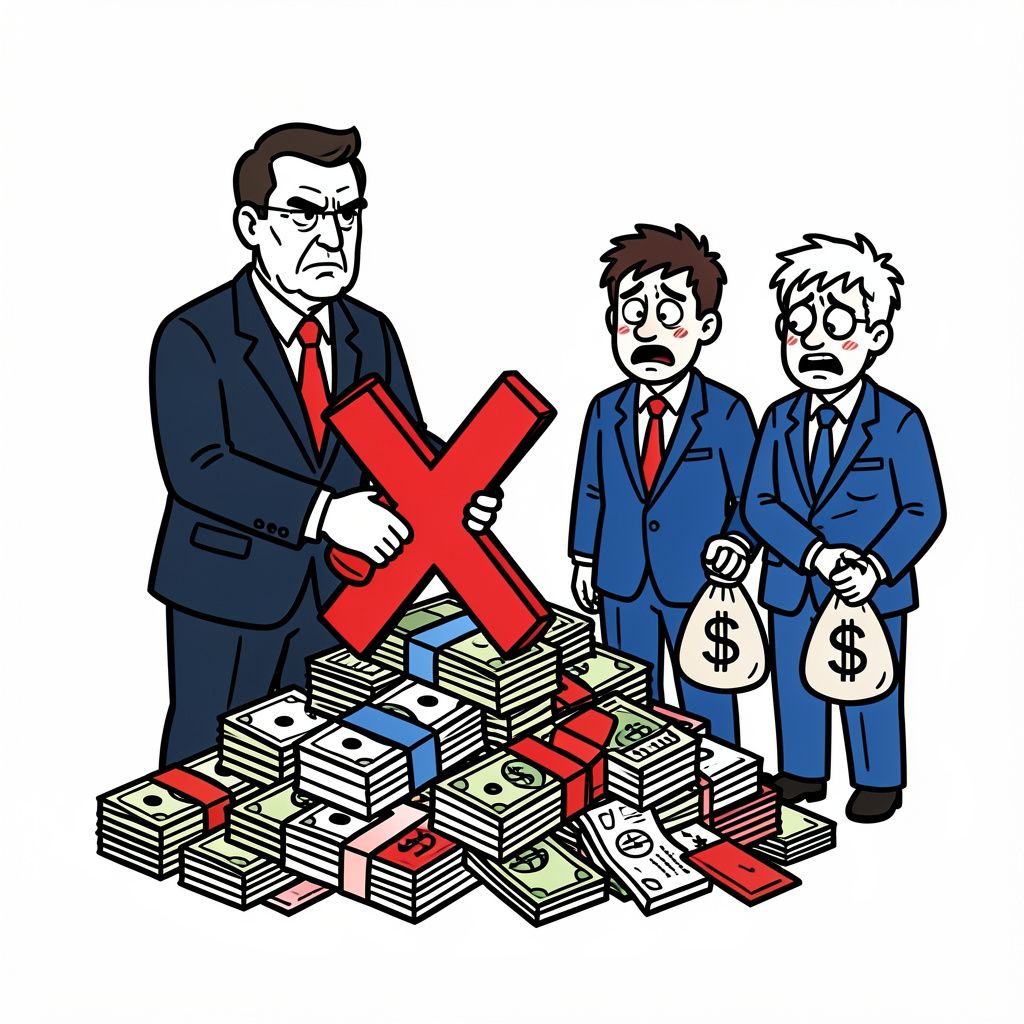
Washington, Thursday, 30 July 2026.
In July 2026, the Federal Reserve issued several enforcement actions against regional banks and former staff, cracking down on serious violations like loan appraisal fraud and stolen customer funds.
Federal Reserve Takes Action Against Regional Banks and Employees Over Financial Misconduct
In July 2026, the Federal Reserve issued several enforcement actions against regional banks and former staff, cracking down on serious violations like loan appraisal fraud and stolen customer funds [1][2][5]. These regulatory actions highlight the central bank’s continued focus on operational oversight, risk management protocols, and executive accountability within small-to-midsize commercial banks across the United States [1][2]. The enforcement measures were executed throughout the month, with significant announcements occurring on July 16 and July 30, 2026 [2][5]. By targeting both institutions and individuals, the Federal Reserve Board signals a comprehensive approach to maintaining financial stability and public trust [1][5].
Specific Enforcement Actions and Agreements
On July 30, 2026, the Federal Reserve Board announced a written agreement with Iuka Bancshares, Inc. and The Iuka State Bank, both based in Salem, Illinois [1]. This agreement, dated July 15, 2026, addresses specific regulatory concerns identified during oversight procedures [1]. Earlier in the month, on July 16, 2026, a prohibition order was issued against James Burns, the former Chief Lending Officer of Heritage State Bank in Lawrenceville, Illinois [2]. This order was issued due to appraisal-related lending misconduct, demonstrating the Fed’s scrutiny on lending practices [2]. These actions underscore the regulatory expectation for strict adherence to lending standards and internal controls [1][2].
Individual Accountability and Misconduct
Further emphasizing individual accountability, the Federal Reserve executed consent prohibition orders against former employees of larger regional institutions on July 30, 2026 [5]. Simon Alberto Gonzalez, a former employee of Regions Bank in Birmingham, Alabama, was subject to a consent prohibition order for misappropriation of customer funds [5]. Simultaneously, Ralph A. Mojica, a former employee of First Interstate Bank in Billings, Montana, faced a consent prohibition order for misappropriation of customer funds and embezzlement of bank funds [5]. These cases illustrate the breadth of the Fed’s enforcement reach, extending from community banks to larger regional entities [5].
Regulatory Context and Timeline
The Federal Reserve’s recent postings confirm a cluster of enforcement activities throughout July 2026 [3]. While the specific press release for Iuka Bancshares is dated July 30, 2026, summary postings noted the action around July 29, 2026, indicating a tight sequence of regulatory disclosures [1][3]. Additionally, the Board held closed meetings regarding monetary policy and financial markets earlier in the month, on July 20 and July 21, 2026 [3]. This timeline suggests that enforcement actions are part of a broader, coordinated regulatory agenda discussed at the highest levels of the Federal Reserve System [3].
Leadership and Economic Implications
Public communication regarding these economic measures is being managed through modern channels, including social media platforms like Threads [4]. Press conferences featuring FOMC Chairman Warsh have been utilized to discuss broader monetary policy alongside these regulatory updates [4]. The convergence of enforcement actions with high-level policy discussions indicates that regulatory compliance is being treated as a component of overall economic stability [3][4]. For the broader economy, these actions serve as a deterrent against financial misconduct while reinforcing the integrity of the banking sector [1][5].
Sources
- www.federalreserve.gov
- www.federalreserve.gov
- www.federalreserve.gov
- www.threads.com
- www.federalreserve.gov