Federal Reserve Chief Refuses to Rule Out Interest Rate Hikes as Inflation Risks Persist
Washington, Thursday, 30 July 2026.
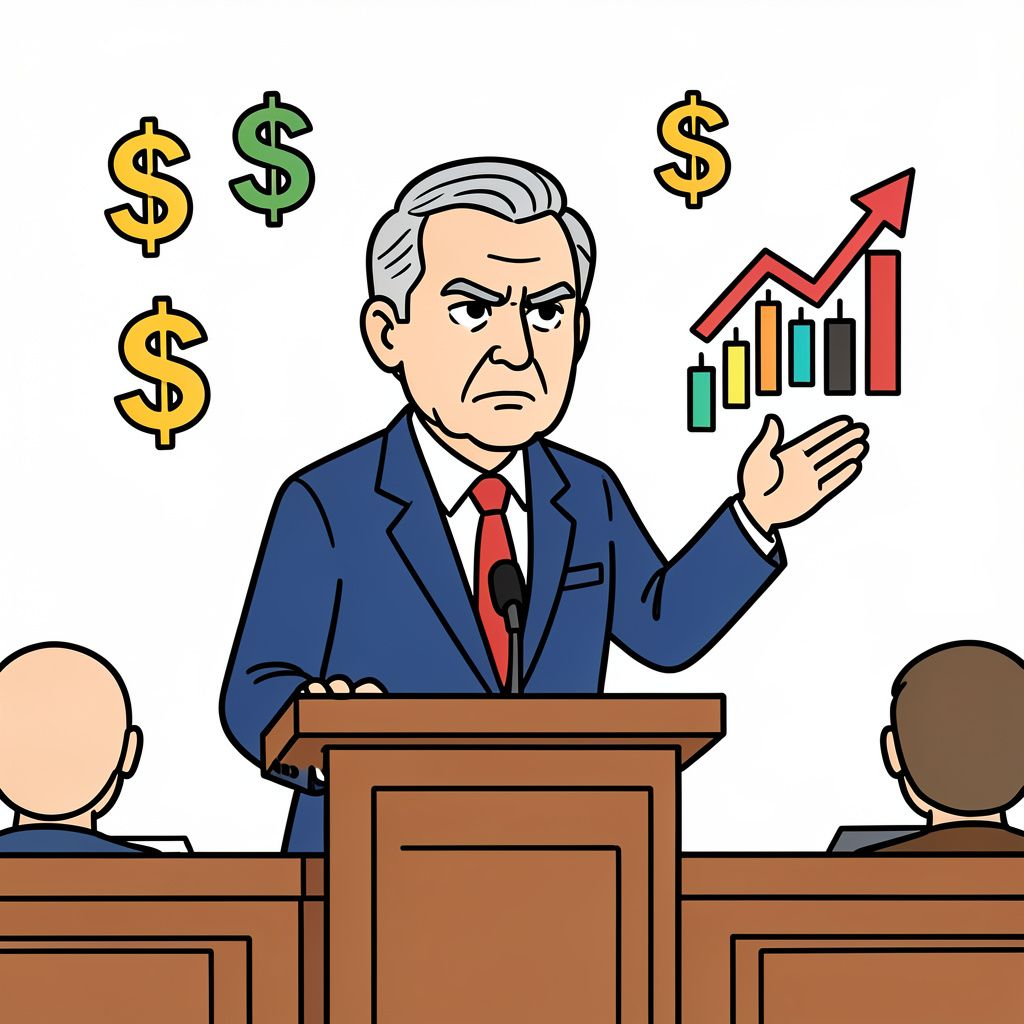
Federal Reserve Chair Kevin Warsh warned Congress that borrowing costs may rise further to fight persistent inflation, despite political pressure and an evenly split rate-setting committee.
A Divided Committee Confronts Shifting Economic Signals
In his debut congressional appearance on Tuesday, July 28, 2026, Federal Reserve Chair Kevin Warsh presented a firm stance on monetary policy before the House Financial Services Committee [1]. Having assumed leadership of the central bank on May 22, 2026, after replacing former Fed Chair Jerome Powell, Warsh now guides a deeply fractured rate-setting body [1]. Out of the 19 Fed policymakers, approximately 50% forecasted higher interest rates by the end of the year, while the remaining half supported keeping rates unchanged or lowering them [1]. This internal division underscores the challenges the Federal Reserve faces as it navigates a highly volatile macroeconomic environment [1].
Analyzing the Progress of Disinflation
The central bank’s policy direction is heavily dependent on incoming data, which shows progress but remains above target levels [1]. In June 2026, headline inflation fell to 3.5%, down from 4.2% in May 2026, representing a drop of 0.7 percentage points [1]. During the same period, core inflation, which strips out volatile food and energy costs, rose by 2.6%, down from 2.9% in May 2026—a decrease of 0.3 percentage points [1]. Despite these declines, both metrics remain stubbornly above the Federal Reserve’s long-term target of 2.0% [1][GPT]. Warsh explicitly rejected early celebrations of victory, stating that while some might look at the data and declare ‘mission accomplished,’ that is not his view, reiterating that policymakers maintain no tolerance for persistently elevated inflation [1].
Geopolitical Pressures and Energy Market Volatility
The economic outlook is further complicated by external supply-side shocks and geopolitical tensions [1]. Following a U.S. military attack on Iran on February 28, renewed conflict in the Middle East has threatened to drive global oil prices upward [1]. Domestic retail energy markets have already felt the impact, with gas prices currently sitting approximately 35% higher than their February 28 levels, despite having previously fallen about 20% from their peak [1]. This volatility has kept central bank officials on high alert [1]. On Monday, July 27, 2026, Fed Governor Christopher Waller warned that a ‘hot’ inflation report on Tuesday would necessitate the consideration of near-term rate hikes [1]. This cautious outlook contrasted with comments made last week, around July 20, 2026, by New York Fed President John Williams, who suggested that rates could remain steady if core inflation maintains a stable 0.2% monthly pace for the remainder of the year [1].
Political Independence and the AI Investment Boom
Beyond market dynamics, the Federal Reserve is navigating intense political scrutiny and structural economic shifts [1]. Amid mounting pressure from President Donald Trump’s administration, Representative Gregory Meeks, a Democrat from New York, questioned Warsh on his readiness to withstand political influence [1]. Warsh responded with a commitment to follow the law, the data, and the committee’s best judgment [1]. He also addressed institutional stability following a recent Supreme Court ruling that allowed Fed Governor Lisa Cook to remain on the board, stating that the court had answered any outstanding questions regarding her tenure [1]. Concurrently, the Fed is monitoring the macroeconomic implications of massive artificial intelligence infrastructure investments by tech ‘hyperscalers’ like Alphabet, Microsoft, Amazon, and Meta [1]. Warsh described AI investment as ‘the most striking feature of the economy right now,’ noting that the central bank is actively tracking its impact on jobs and inflation, particularly as soaring semiconductor demand drives up consumer electronics prices [1].