Strong Economic Data Fails to Convince Struggling American Consumers
Washington, Saturday, 3 October 2026.
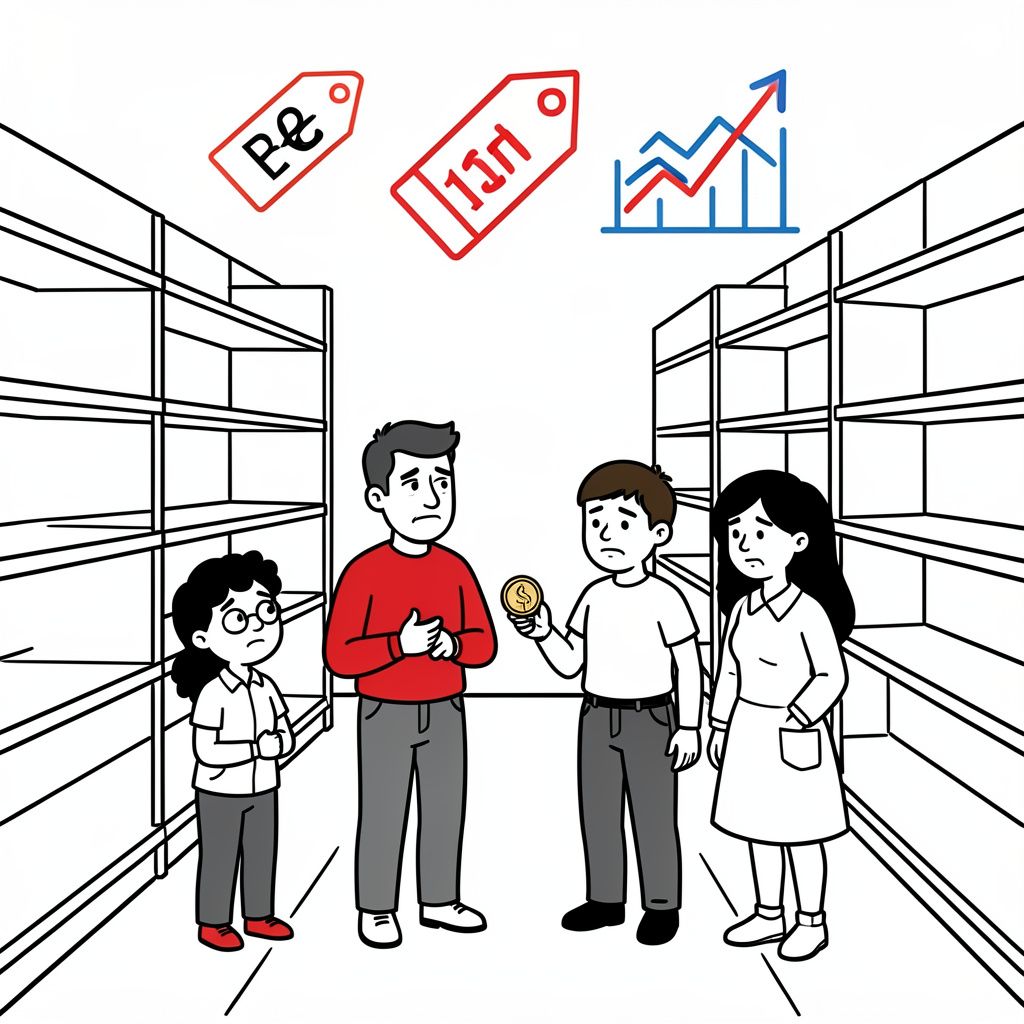
Despite strong economic indicators and low unemployment, only 24% of Americans rate the economy favorably as inflation-adjusted earnings lag and everyday costs for essential goods remain high.
The Macroeconomic Sentiment Disconnect
As of October 2026, a sharp divergence has emerged between robust macroeconomic indicators and American public sentiment regarding the economy. While metrics such as job reports, unemployment rates, and stock market performance remain relatively strong, only 24% of Americans rate current economic conditions as ‘good’ or ‘excellent’ according to a recent Pew Research Center survey [1]. This disconnect poses strategic challenges for policymakers as the Federal Reserve navigates interest rate adjustments, having recently raised the federal funds rate by 0.25 percentage points to combat inflation [1]. Lonnie Golden, Professor of Economics at Penn State Abington, assesses the economy as “3.5 stars out of 5” based on data from September 2026, noting that while the economy is fairly healthy by the numbers, earnings from labor have lagged behind inflation rates over the months leading up to October 1, 2026 [1]. This sentiment is reflected in political polling, where six in ten Americans stated as of July 2026 that President Trump’s economic policies have worsened economic conditions, a figure up from roughly 53 percent the previous fall [2].
Inflation’s Cumulative Impact on Households
The core of consumer frustration lies in the cumulative effect of price increases rather than the annual inflation rate alone. Although the annual inflation rate was reported at 3.4% in August 2026, down from pandemic-era peaks, the cumulative price increase since December 2019 stands at approximately 30% [8]. This means a $100 item from 2019 now costs $130, a change represented by the calculation 30 [8]. Consumers are responding to this cost-of-living squeeze by purchasing fewer goods or utilizing credit cards with interest rates as high as 28% [8]. Furthermore, the cost of raising a child increased 150% between 2000 and 2025, rising from $165,630 to $414,000, which outpaces wage growth of 112% over the same period [6]. Median U.S. single-family home prices have also seen significant volatility, rising from $164,000 in January 2026 to $357,275, contributing to the perception that traditional middle-class milestones are becoming unattainable [6].
Political Repercussions and Voter Priorities
Economic concerns are dominating voter priorities heading into the midterm elections, with 51% of voters citing inflation, prices, and household affordability as critical campaign issues [4]. On October 1, 2026, Senator Patty Murray publicly challenged President Donald Trump’s claims of having the “best economy anywhere in the world,” stating via social media that “It’s not a PR problem when people can read their grocery receipts” [7]. An AP-NORC poll indicated that only 26% of Americans approved of President Trump’s handling of the economy, while 17% approved of his management of the cost of living [7]. Voter alignment on economic management remains tightly split, with 37% favoring Democratic policies compared to 36% supporting Republicans, erasing the GOP’s previous economic advantage [4]. Americans are deeply frustrated with the handling of the economy and rising prices, with most blaming current policies as higher costs threaten political standings [5].
Federal Reserve Policy and Future Outlook
The Federal Reserve’s decision to raise interest rates marks the first such increase in three years, aimed at slowing consumer borrowing to curb inflation [1]. While U.S. retail sales increased by 1.2% in August 2026 following a decline in July, consumer spending shifts serve as a warning sign for broader economic health due to increased reliance on debt [8]. The University of Michigan’s consumer sentiment index fell by over 7% in September 2026, marking a year-over-year decrease of nearly 13%, highlighting the divergence between macroeconomic data and household perceptions [8]. As the September 2026 jobs report remains pending, economists caution that expectations play a major role in sentiment, with inflation continuing to climb at rates experienced over the last few years [1]. Ultimately, the source of the current rate of inflation is identified not necessarily as an overheated economy but mostly coming from the supply side, where costs are increasing [1].
Sources
- phys.org
- www.npr.org
- www.facebook.com
- x.com
- www.facebook.com
- www.investopedia.com
- www.instagram.com
- thehill.com