American Consumers Expect Higher Inflation as Gas and Energy Prices Rise
New York, Thursday, 8 October 2026.
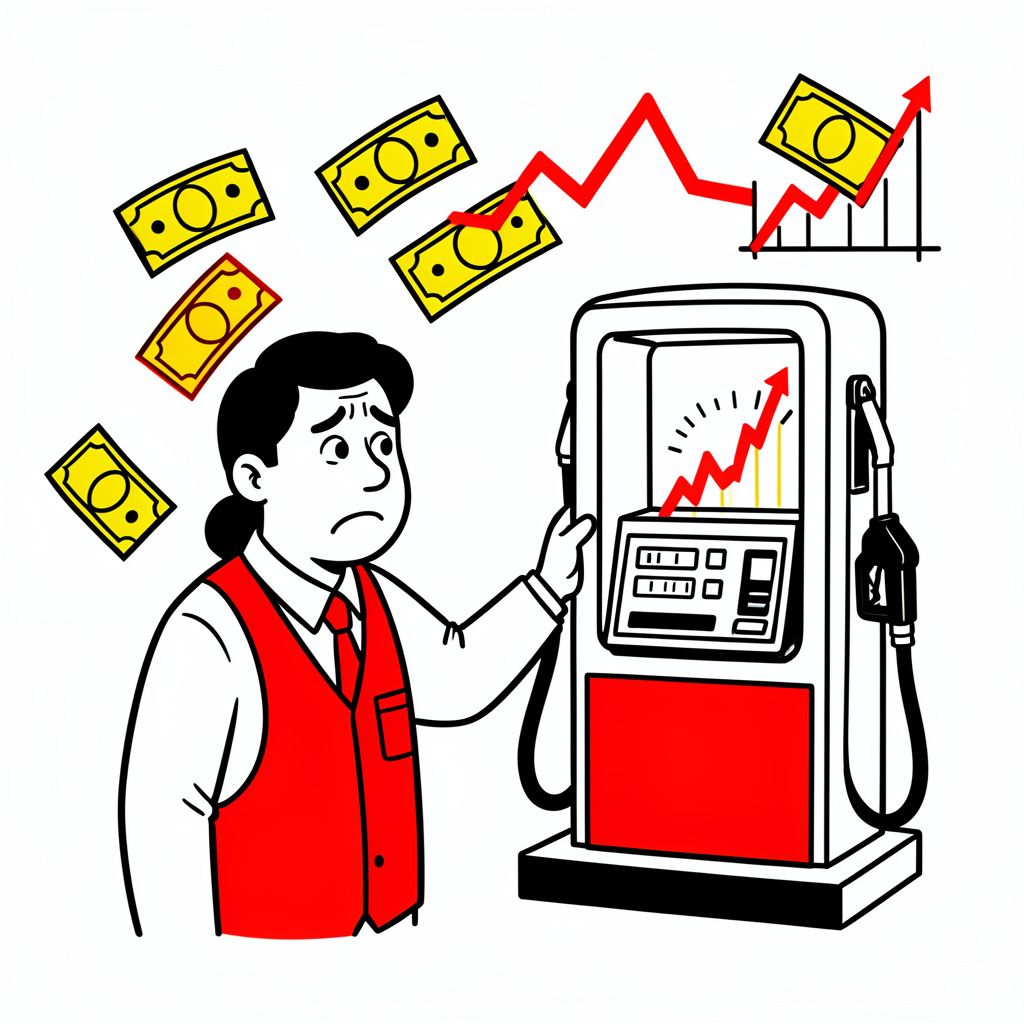
Short-term consumer inflation expectations jumped to 3.9% in September 2026—the highest level since May 2023—driven largely by rising energy costs and elevated utility price hike requests.
Energy Costs Drive Inflation Expectations
Surging energy costs are at the core of the inflation problem, with gasoline prices rising nearly 4% in August 2026 alone [1]. According to the Bureau of Labor Statistics, fuel oil surged more than 10% during the same period, contributing significantly to consumer anxiety [1]. At the consumer level, utilities have filed for $23.1 billion in increases so far in 2026, according to PowerLines, a nonpartisan consumer advocacy group [1]. The third quarter alone saw requests for $4.5 billion, the largest sum for the period on record [1]. Consumers expect gas prices to rise by 4.8% over the next year, an increase of 0.2 percentage point from August [1]. Data indicates that as of October 7, 2026, the national average for gas was $4.37 per gallon, compared to approximately $3.12 per gallon one year prior [3]. This represents a year-over-year increase of 40.064 percent [3].
Labor Market and Spending Dynamics
Despite inflation concerns, labor market indicators shifted positively in September 2026 [2]. The mean probability of losing a job dropped 0.3 percentage points to 13.5%, the lowest level since December 2024 [2]. Conversely, the expected quit rate rose 0.4 percentage points to 19.9%, suggesting workers feel confident enough to seek new opportunities [2]. The mean probability that the U.S. unemployment rate will be higher one year from now decreased 0.5 percentage points to 43.9% [2]. However, this remains above the 12-month trailing average of 42.4%, indicating some lingering caution among consumers [2].
Monetary Policy and Future Outlook
The results come with Fed officials grappling over the proper setting of monetary policy as inflation holds well above the central bank’s 2% target [1]. Markets largely expect the Federal Open Market Committee to keep benchmark rates steady when it meets later in October [1]. Inflation in August came in lower than expected, according to the Fed’s preferred gauge [1]. In recent days several key officials, including New York Fed President John Williams, have said policymakers can afford to take their time when evaluating where interest rates should be set [1].