Trump Declares National Emergency to Ban Foreign Power Equipment
Washington, Thursday, 27 August 2026.
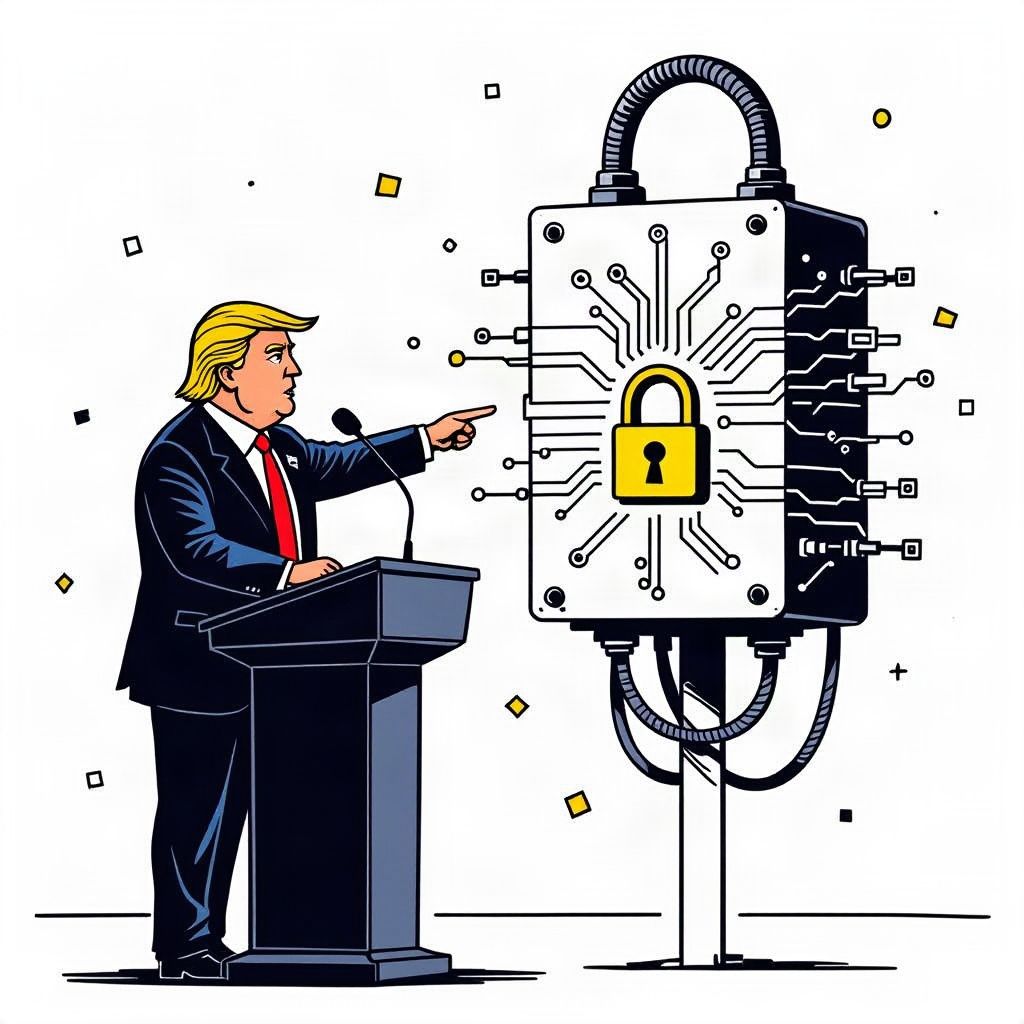
President Trump declared a national emergency banning foreign-made electric grid equipment from high-risk countries like China, citing digital backdoor cyber threats. The Energy Department may force utilities to replace existing hardware.
Executive Order Declares National Emergency
President Donald Trump signed an executive order on August 26, 2026, declaring a national emergency to restrict foreign-made electrical infrastructure within the United States bulk-power system [1][4]. The order cites an “unusual and extraordinary threat” to national security posed by foreign supply chains, specifically targeting equipment that could enable sabotage or unauthorized access [6]. This policy marks a significant escalation in efforts to secure critical energy infrastructure against potential cyber threats and physical vulnerabilities [3].
Scope of Restricted Equipment
The restrictions apply to high-voltage equipment operating at 69 kV or higher, including transformers, inverters, circuit breakers, and battery energy storage systems [2][6]. Facilities used solely for local electric energy distribution are excluded, focusing the mandate on the transmission-level bulk-power system [3]. The Department of Energy (DOE) is authorized to determine whether specific pieces of equipment pose a risk to grid security or electricity supply [1].
Regulatory Framework and Timelines
Energy Secretary Chris Wright is tasked with coordinating the implementation of these restrictions in consultation with other cabinet officials [1]. The DOE is mandated to publish formal implementation rules within 120 days of the order, setting a deadline of approximately December 2026 [2][4]. Additionally, within 180 days, the energy secretary must recommend revisions to federal procurement rules to mitigate national security risks in energy infrastructure purchases [5][6].
Supply Chain and Geopolitical Context
While the order targets 24 nations currently on U.S. arms embargo and sanctions lists, China is identified as the primary commercial supplier affected [2][4]. According to the International Energy Agency, China holds 80 percent of the world’s lithium-ion battery supply chain production capacity and 85 percent of its solar production capacity [1]. This concentration of manufacturing creates significant supply chain vulnerabilities that the administration aims to address through domestic sourcing and allied partnerships [3].
Market Implications and Grid Stability
Legal analysts note that the executive order adds regulatory complexity for clean energy developers already navigating Foreign Entity of Concern restrictions and domestic content rules [2]. The DOE may establish a pre-qualified vendor white-list or licensing framework, and could mandate the isolation or removal of previously installed gear if necessary [4]. However, any mandate to remove existing equipment would likely be phased to ensure grid stability and continuity of service [5].
Sources
- thehill.com
- pv-magazine-usa.com
- www.whitehouse.gov
- www.projectfinance.law
- www.foxbusiness.com
- www.whitehouse.gov