Panama Canal Limits Daily Ship Crossings to Save Water During Historic Drought
Panama City, Friday, 21 August 2026.
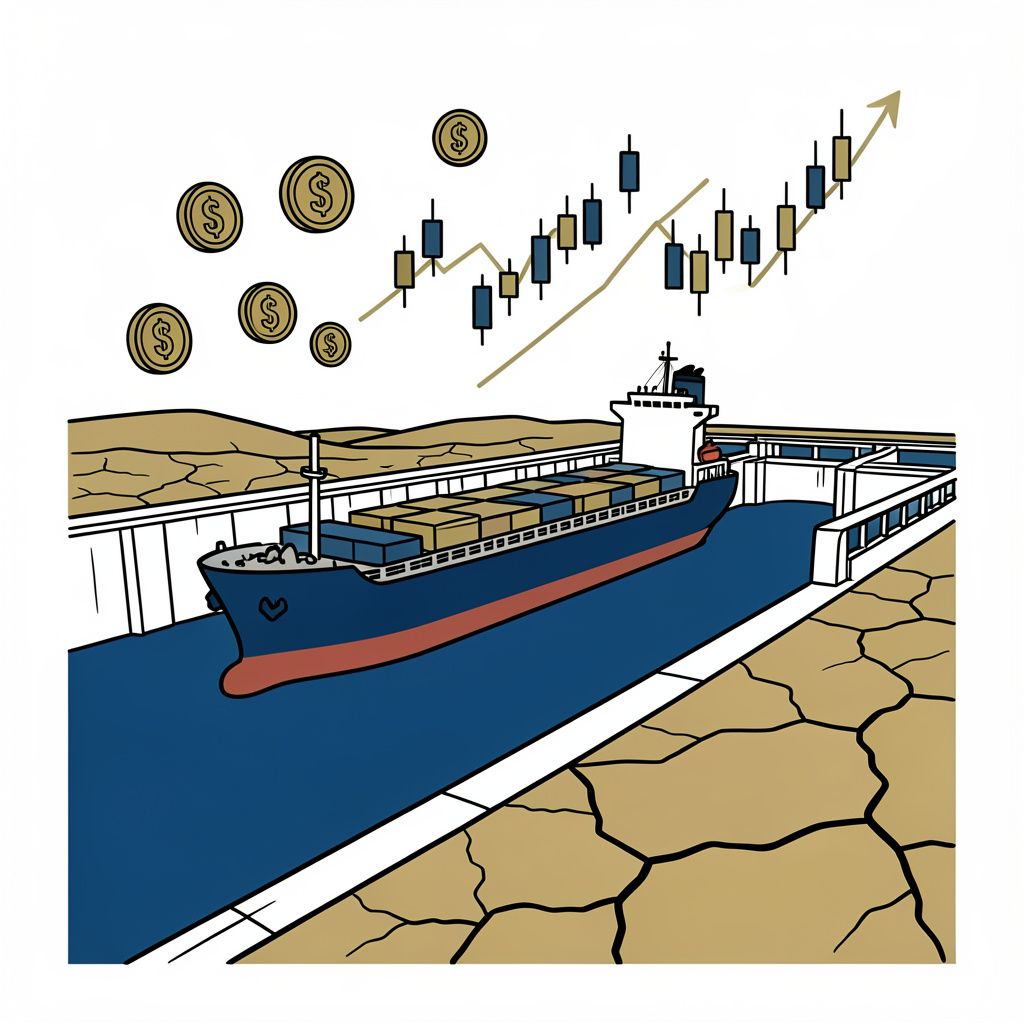
To combat severe drought, the Panama Canal will reduce daily ship crossings from 36 to 32 starting in September 2026, pushing last-minute passage auction fees to $4 million.
Panama Canal Authority Announces Transit Reductions
The Panama Canal Authority announced on Thursday, 20 August 2026, that daily vessel transits will be reduced due to severe drought conditions affecting the waterway [1][2]. Starting 3 September 2026, the daily limit will drop from 36 ships to 34, before decreasing further to 32 ships on 15 September 2026 [1][3]. This reduction represents a -11.111 percent decrease in daily capacity compared to previous averages [1][3]. The decision comes as an intensifying El Niño-driven drought severely impacts the freshwater reservoirs required to operate the canal lock system [1][4].
Operational Adjustments and Water Conservation
To manage water levels, the Authority is implementing specific draft restrictions alongside transit cuts [2][4]. The maximum vessel draft will be limited to 14.63 meters effective 2 September 2026, and further reduced to 14.48 meters by 1 October 2026 [2][4]. These measures aim to reduce water consumption from the Gatún and Alhajuela lakes, which supply the canal [3][4]. During the hydrological year from May 2026 to August 2026, rainfall in the watershed was 34 percent below the historical average [3][4].
Economic Impact on Global Trade
The reduction in canal capacity threatens to delay freight shipments and increase spot container rates for global supply chain executives [1][2]. Market uncertainty has already pushed auction prices for transit slots significantly, with some last-minute payments reaching as high as $4,000,000 [2][4]. The canal handles approximately five percent of global maritime trade, making these restrictions critical for U.S. importers and maritime carriers [1][3]. Authorities warned that wait times could increase for vessels arriving without confirmed reservations [2][4].
Historical Context and Future Outlook
This situation mirrors conditions in November 2023, when daily transits were reduced to 22 ships during a previous El Niño event [3][4]. The current El Niño phenomenon is categorized as strong and forecasts indicate it could persist until 2027 [3][4]. The Authority stated that lower than forecast rainfall necessitates these actions to support the long-term sustainability of the waterway [1][4]. No new restrictive measures were ruled out if rainfall conditions continue to deteriorate [3].