Trade Conflict Triggers Supply Chain Shifts for Canadian Businesses
Toronto, Sunday, 23 August 2026.
New 50% U.S. tariffs on $20 billion of Canadian goods have forced domestic enterprises to audit operations and switch to local vendors, avoiding severe trade friction.
Trade Conflict Triggers Supply Chain Shifts for Canadian Businesses
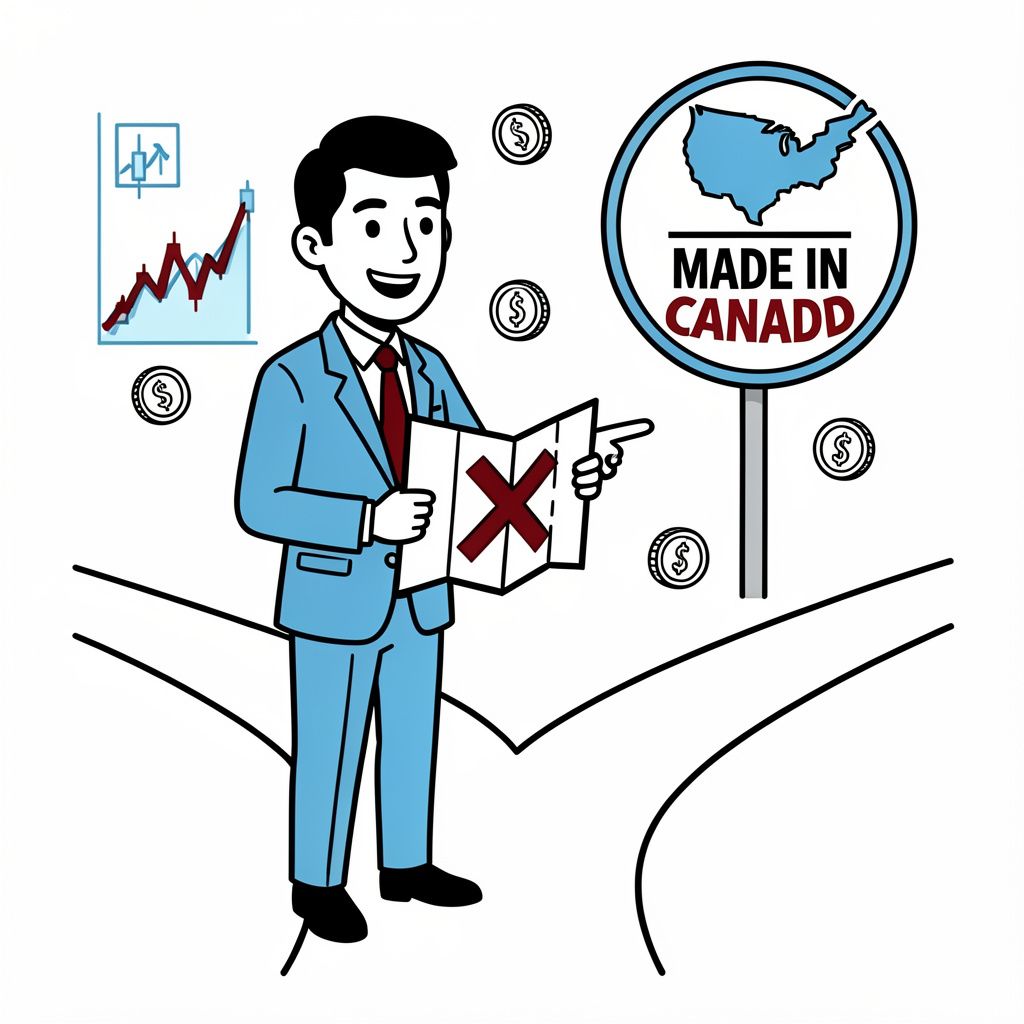
Following the collapse of trade negotiations documented in previous reporting, the United States has implemented significant import tariffs on Canadian goods, fundamentally altering the economic landscape for cross-border enterprises [2][3]. As of August 21, 2026, a 50 percent levy applies to approximately $20 billion worth of Canadian products, marking a decisive escalation in trade friction between the two nations [2][4]. This development forces Canadian enterprise leaders to actively re-evaluate cross-border operational expenditures and vendor relationships to mitigate rising regulatory costs [1]. The fresh trade measures have prompted comprehensive supply chain audits across key sectors, driving a notable shift toward domestic Canadian suppliers and localized digital service providers [1].
Retaliatory Measures and Timeline
In response to the U.S. action, Canadian Prime Minister Mark Carney announced on August 22, 2026, that Canada will initiate retaliatory tariffs on American sectors starting September 8, 2026 [2][3]. The Canadian government intends to match the U.S. tariffs dollar for dollar, targeting industries including steel, dairy, appliances, agricultural equipment, pulp, paper, and electronics [2][4]. Prime Minister Carney stated that last-minute changes in the U.S. proposed terms were unfair and uneconomic, calling into question the reliability of any deal [2][3]. The Canadian government plans to release specific details of these retaliatory measures in the days leading up to the September 8 enforcement date [2][4].
Corporate Supply Chain Audits
The implementation of these tariffs has immediate implications for business operations, prompting companies to audit their digital service providers to determine ownership, location of work, and payment destination [1]. WebMax Canada, a Victoria-based firm, is urging businesses to review website management, SEO, and AI visibility services to ensure they are not inadvertently supporting foreign entities amidst the trade climate [1]. Susan Jones, Co-Founder and CEO of WebMax Canada, noted that while most owners know their physical suppliers, fewer verify who owns the company running their website or where monthly payments land [1]. To assist with this transition, WebMax Canada is offering a 50 percent tariff match program for new and existing clients affected by the uncertainty, providing discounts on qualifying plan fees for a three-month duration [1].
Economic Implications
The economic impact of these measures is projected to be significant, with financial analysts projecting a 0.3 percent to 0.6 percent reduction in Canadian GDP following the breakdown of negotiations [5]. Bilateral trade between the two nations totaled $880 billion in 2025, highlighting the scale of potential disruption as 73 percent of Canadian exports went to the U.S. market in 2025 [3][4]. The U.S. government invoked Section 338 of the Tariff Act of 1930 to justify the levies, a measure that allows up to 50 percent tariffs without investigation or duration limits [4]. Experts warn that costs and prices are likely to rise, with unemployment potentially increasing as businesses adjust to the new trade environment [3]. The total value of the tariffs imposed on the initial $20 billion of goods amounts to 10 billion dollars in additional taxes, illustrating the immediate financial burden on affected industries [2][4].