U.S. Navy Escorts in Strait of Hormuz Spark Global Energy Market Watch
Washington, D.C., Sunday, 3 May 2026.
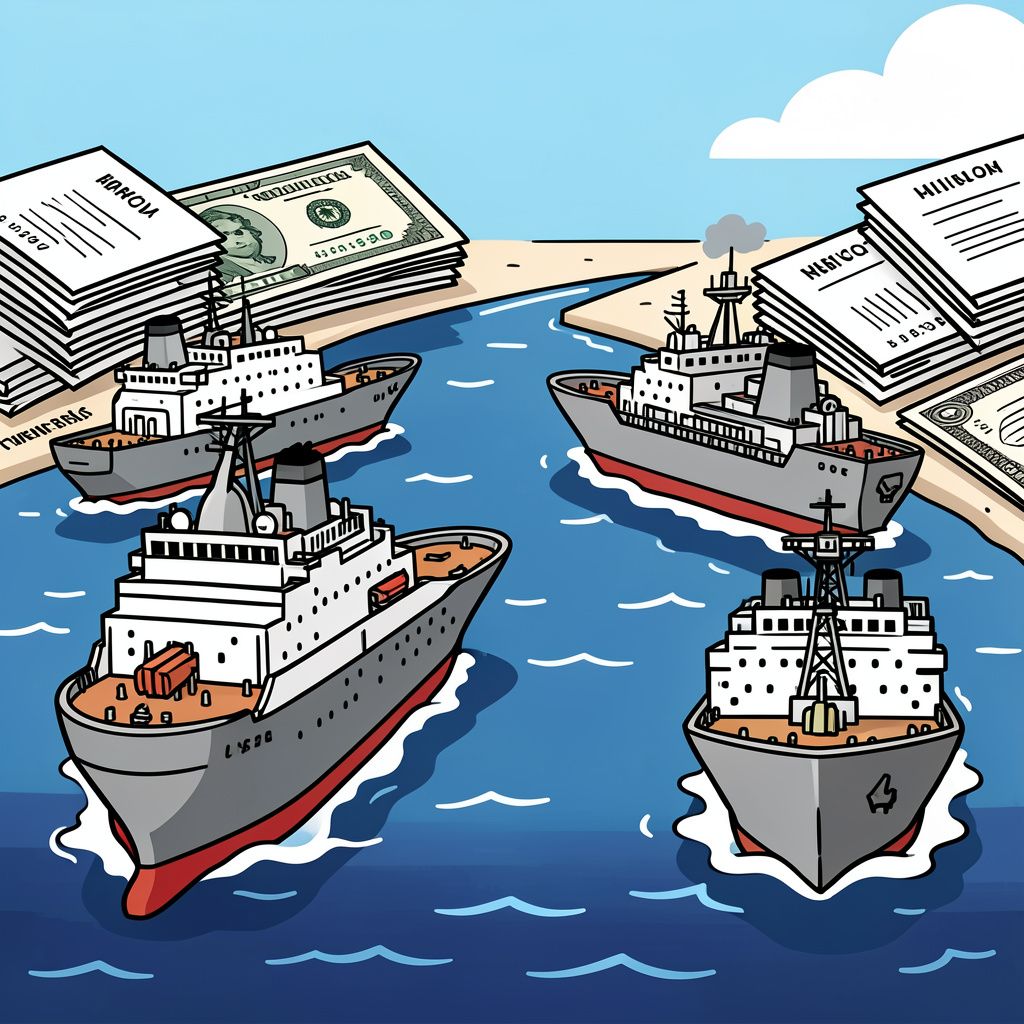
Starting Monday, the U.S. Navy will escort commercial ships through the Strait of Hormuz, risking military escalation that could severely disrupt the route for 20% of global oil.
Military Risks and Diplomatic Channels
While framed as a rescue mission for victims of circumstance, the deployment of the U.S. Navy poses a direct challenge to Tehran’s operational control over the strait [1]. The administration has drawn a firm red line, warning that any Iranian interference with the escort process will be met with a forceful military response [1]. This brinkmanship introduces severe tail-risk for global markets, as any miscalculation could ignite a direct confrontation or trigger a broader escalation of the war [1].
The Uncertainty of Tehran’s Response
A critical unknown for energy sector analysts evaluating the risk premium is whether this naval operation has been quietly facilitated through diplomatic backchannels [alert! ‘It is not immediately clear whether this move was coordinated with Iran in any way’] [1]. As of Sunday evening, Iranian officials have not issued a public response to the planned escorts [1]. This silence leaves commodity traders and freight insurers bracing for potential market volatility when the U.S. Navy officially commences operations on Monday [GPT].