Cargo Ship Attacked in the Strait of Hormuz as Blockade Tensions Escalate
Dubai, Sunday, 3 May 2026.
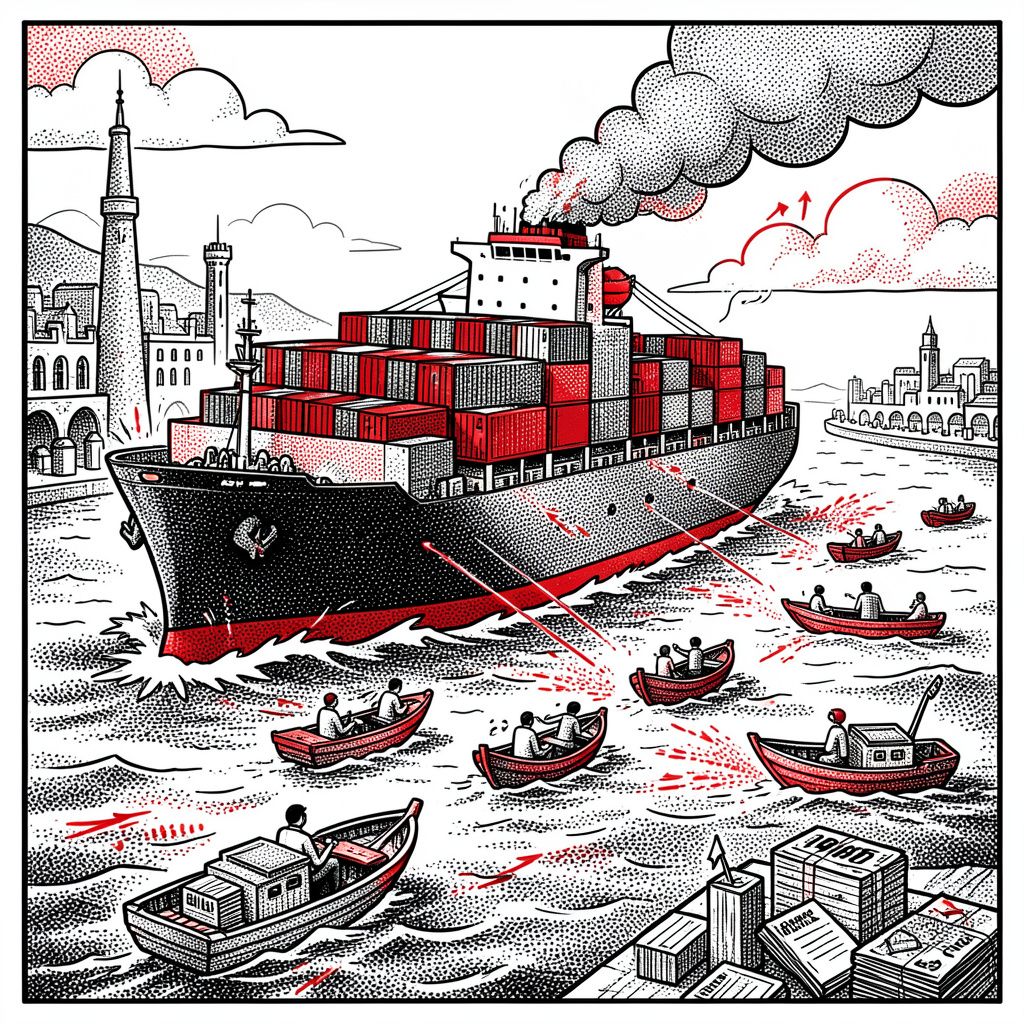
Breaking a fragile weeks-long quiet, small boats attacked a cargo ship near the Strait of Hormuz, threatening global oil shipments amid escalating U.S.-Iran blockades and tense peace negotiations.
Resurgence of Maritime Hostilities
On Sunday, May 3, 2026, the United Kingdom Maritime Trade Operations (UKMTO) reported that a northbound commercial bulk carrier was attacked by multiple small craft approximately 11 nautical miles (20 kilometers) west of Sirik, Iran [3]. The crew remains safe, and no environmental damage has been reported in the immediate aftermath [1][3]. This incident marks the first reported attack in the area since April 22, 2026, breaking a fragile three-week ceasefire and reigniting concerns over the security of one of the world’s most critical maritime chokepoints [1].
Resurgence of Maritime Hostilities
The waters of the Strait of Hormuz have been a volatile flashpoint since the United States and Israel initiated military operations against Iran on February 28, 2026 [1][2]. As detailed in our previous coverage, US Treasury Bans Disguised Toll Payments to Iran Amid Strait of Hormuz Blockade, Washington has aggressively targeted Tehran’s attempts to circumvent sanctions by collecting transit fees [4]. U.S. Treasury Secretary Scott Bessent recently noted that this toll strategy has yielded less than $1.3 million—a figure he described as a “pittance” compared to Tehran’s former daily oil revenues [1].
Economic Chokepoints and Global Energy Markets
The broader economic ramifications of the naval standoff are intensifying. On Sunday, the U.S. Central Command confirmed that it had redirected the 49th commercial vessel attempting to navigate Iranian ports as part of a strict counter-blockade enforced since April 13, 2026 [1][3]. The financial strain on Tehran is becoming acutely visible; on May 2, the Iranian rial plummeted to 1,840,000 per U.S. dollar [1][2]. This represents a severe currency devaluation of 41.538 percent since December, when the exchange rate stood at 1,300,000 rials to the dollar [2]. According to White House National Economic Council Director Kevin Hassett, the blockade is pushing Iran toward “extreme calamity,” characterized by hyperinflation and widespread economic distress [2].
Economic Chokepoints and Global Energy Markets
The conflict’s ripple effects continue to disrupt global energy markets. Average U.S. gasoline prices reached $4.39 per gallon on May 1, an increase of $0.09 from the previous day, while Brent crude traded above $111 per barrel [2]. In an attempt to stabilize the market, seven OPEC+ nations agreed on Sunday to a modest production increase of 188,000 barrels per day starting in June, with plans to review market conditions again on June 7 [alert! ‘OPEC+ meeting scheduled for June 7, pending future status updates’] [2]. Meanwhile, Secretary Bessent warned that Iran’s domestic oil storage is rapidly reaching capacity, potentially forcing the country to shut in operational wells within the coming week [1].
Diplomatic Maneuvering Amid a Fragile Ceasefire
On the diplomatic front, Tehran has submitted a revised 14-point peace proposal via Pakistani mediators [1][2]. The proposal demands the lifting of U.S. sanctions, the termination of the naval blockade, a withdrawal of U.S. forces, and a cessation of all hostilities—including Israeli operations in Lebanon—within a 30-day window [alert! ‘30-day resolution timeline proposed by Iran, pending U.S. agreement’] [1][2]. President Donald Trump confirmed on May 2 that he is reviewing the plan but expressed heavy skepticism about reaching an acceptable deal, stating that Iran has “not yet paid a big enough price” for its actions [2].
Diplomatic Maneuvering Amid a Fragile Ceasefire
The protracted conflict is also fueling domestic political friction in Washington. A critical 60-day deadline under the War Powers Resolution expired on May 1, 2026 [2]. While President Trump informed Congress that hostilities had “terminated” due to a lack of direct fire since April 7, Democratic leaders like Senator Chuck Schumer vehemently rejected this interpretation, labeling the ongoing military engagement “illegal” [2]. Defense Secretary Pete Hegseth has argued that the current ceasefire effectively pauses the 60-day statutory clock [2], though Senator Jack Reed criticized the administration’s approach, stating the U.S. remains in a “much worse position” without a coherent strategic plan [2].