Tehran Offers to Reopen Vital Global Shipping Lane to End U.S. Blockade
Tehran, Monday, 27 April 2026.
Iran has proposed reopening the Strait of Hormuz and delaying nuclear talks to end the U.S. naval blockade. This breakthrough could rapidly stabilize disrupted global oil markets.
Transitioning from Kinetic Force to Backchannel Diplomacy
Following recent escalations where President Trump authorized lethal force against Iranian vessels bypassing the U.S. blockade, the geopolitical standoff in the Middle East has entered a delicate diplomatic phase. Through Pakistani mediators, Tehran has delivered a new proposal aimed at reopening the Strait of Hormuz and ending the broader conflict that began on February 28, 2026 [1][2][7]. By separating immediate maritime security from intractable nuclear negotiations, the initiative attempts to break a stalemate that has severely disrupted global energy markets [1][3].
A Three-Stage Diplomatic Pivot
The Iranian proposal relies on a sequenced, three-stage formula [4]. The first phase demands a complete end to the war and guarantees against the resumption of hostilities against Iran and Lebanon [4]. This would be followed by discussions on the management of the Strait of Hormuz, and only in the final stage would nuclear negotiations resume [4]. This framework is reportedly designed to circumvent internal divisions within Iran’s leadership, particularly opposition from the Islamic Revolutionary Guard Corps (IRGC), regarding nuclear concessions to the United States [1][5].
Washington’s Strategic Calculus
The United States has met the proposal with profound skepticism. President Donald Trump, who convened a Situation Room meeting with his national security and foreign policy teams on April 27, 2026, abruptly canceled plans to dispatch envoys Steve Witkoff and Jared Kushner to Islamabad [1][3][6]. Trump emphasized that the U.S. will not chase negotiations, stating, “I see no point of sending them on an 18-hour flight in the current situation… The Iranians can call us if they want” [1][8]. Furthermore, U.S. Vice President JD Vance noted that Washington had already presented its “final and best offer” during a previous round of failed talks in mid-April [4].
Market Jitters and Broader Economic Impacts
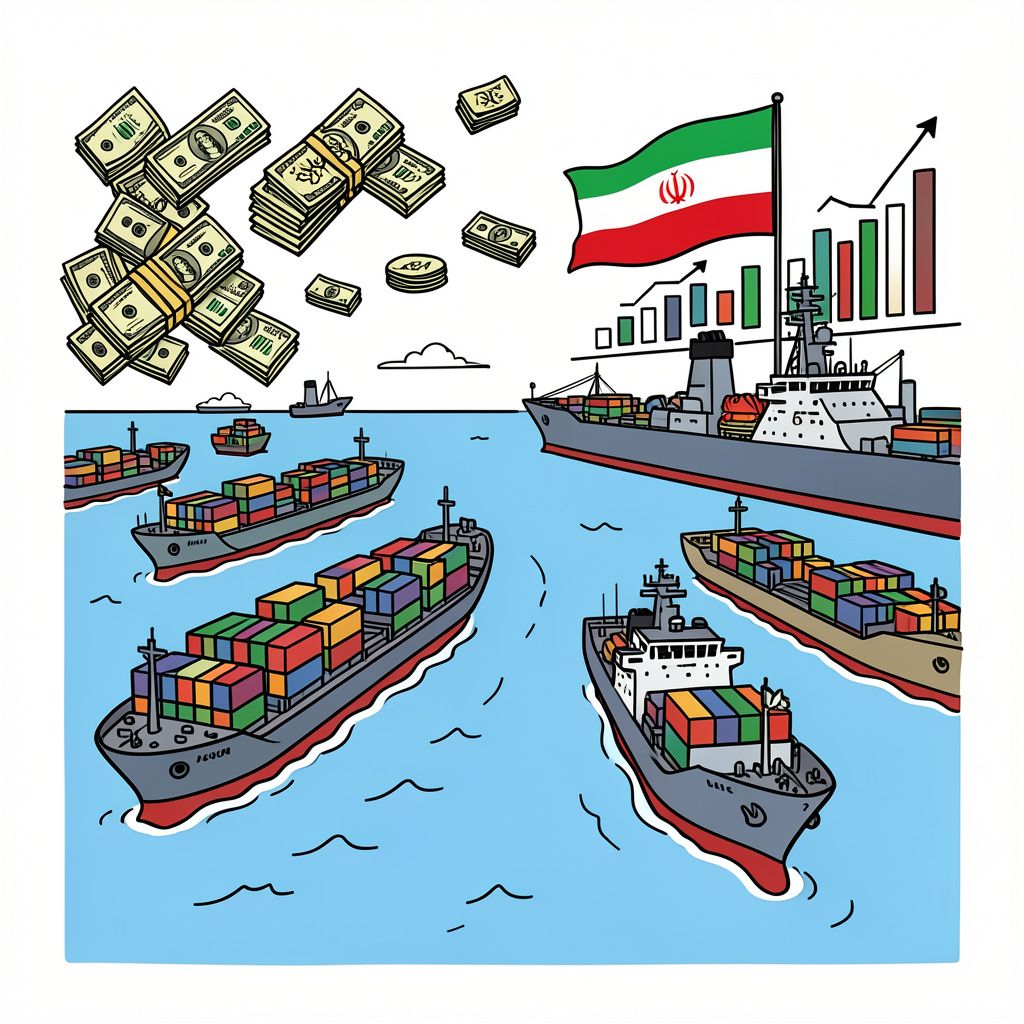
The economic ramifications of the standoff remain severe. The Strait of Hormuz is a critical global chokepoint that normally accommodates roughly 20 percent of global petroleum and liquified natural gas supplies [7]. Since the conflict erupted, commercial shipping through the strait has plummeted to approximately 5 percent of pre-war levels, dropping from about 100 vessels daily to just five or six [7]. Consequently, June Brent crude was trading at roughly $107 per barrel on April 26, 2026, a staggering 48.611 percent increase from its $72 pre-war baseline [3][6]. On the same day, U.S. crude oil also rose 0.88 percent to $95.23 per barrel [3].
Sources
- www.axios.com
- www.reuters.com
- www.cnbc.com
- www.ndtv.com
- gulfnews.com
- wtop.com
- researchbriefings.files.parliament.uk
- parsi.euronews.com