Strait of Hormuz Closure: The Global Oil Shock You Can't Ignore
Tehran, Saturday, 20 June 2026.
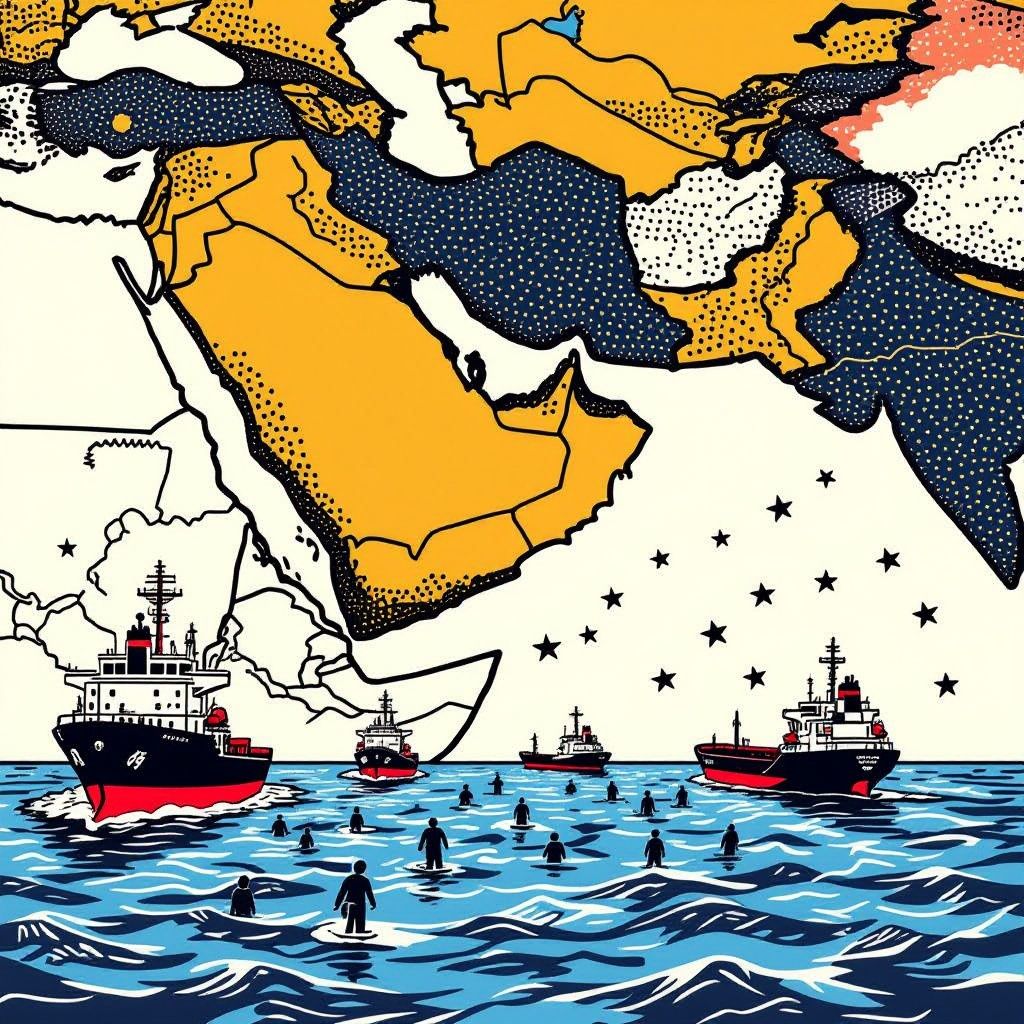
Iran’s sudden closure of the Strait of Hormuz—handling 20% of global oil—has sent shockwaves through energy markets. With 80 naval mines blocking the route and 20,000 seafarers stranded, experts warn of a months-long crisis. Oil prices could spike as tankers reroute via Africa, adding 16 days to voyages. The U.S.-Iran deal offers temporary relief, but tolls and governance disputes loom. This isn’t just a regional conflict—it’s a threat to global supply chains and economies.
From Peace Deal to Blockade: The 72-Hour Unraveling
The fragile U.S.-Iran peace agreement, announced just days earlier with an 80% probability of success [1], collapsed spectacularly on 19 June 2026 when Iran’s military command declared the Strait of Hormuz closed to all commercial traffic [2]. The decision came hours after Israeli airstrikes killed seven civilians in southern Lebanon [2], violating the ceasefire terms that were central to the preliminary deal signed on 16 June [3]. Iran’s military statement cited ‘the killing and displacement of Lebanese residents’ and Israel’s refusal to withdraw from occupied territories as justification for the closure [2]. This abrupt reversal occurred just 24 hours before Vice President JD Vance’s scheduled visit to Switzerland for final negotiations [2], which were immediately postponed, leaving billions in frozen Iranian assets in limbo [3].
The Maritime Chokepoint That Moves the World
The Strait of Hormuz, a 39-kilometer-wide waterway separating Iran from Oman, handles approximately 20% of global oil supply [GPT], with pre-conflict daily traffic averaging 130 vessels [4]. Since Iran’s closure declaration, this critical artery has been reduced to a perilous gauntlet of 80 naval mines laid across the established traffic separation scheme [4]. The Intertanko trade association reports that only six vessels per day are currently transiting the strait [5], with most hugging the Omani coast where shallow waters create significant grounding risks [4]. The center channel, normally the safest route, remains completely blocked [4], forcing ships to navigate through waters where Iranian forces have been jamming navigational signals [4]. Approximately 20,000 seafarers remain stranded on both sides of the strait [4], with some vessels attempting nighttime transits with transponders disabled to avoid detection [4].
The Economic Domino Effect: From Gas Pumps to Grocery Shelves
The closure’s economic impact has been immediate and severe. Oil prices, which had retreated slightly following the 16 June peace agreement, surged by (current_price - 78.50)/78.50*100% in after-hours trading on 19 June [5], with gasoline prices in North America approaching record levels [5]. The cost of war-risk insurance for strait transits has skyrocketed from 0.25% to between 3% and 8% of vessel value [5], adding up to $8 million in additional costs per supertanker [5]. The global container shortage has worsened dramatically, with approximately 2 million containers displaced across key transshipment hubs including Jebel Ali, Colombo, and Singapore [5]. Hapag-Lloyd estimates that restoring normal shipping networks will require at least six weeks [5], though industry analysts warn that full recovery may take up to one year [5]. The four largest container carriers—Maersk, MSC, CMA CGM, and Hapag-Lloyd—all suspended Hormuz transits by early March [5], opting instead for the 16-day detour around Africa’s Cape of Good Hope [5].
The Lebanon Wildcard: Why This Conflict Won’t Stay Contained
The escalating Israel-Hezbollah conflict has emerged as the primary obstacle to resolving the Hormuz crisis. Lebanese health authorities report that the current conflict has already claimed more than 4,000 lives [2], equaling the death toll from 2024’s bloodiest regional conflict [2]. Hezbollah’s overnight barrage of more than 50 projectiles into Israel [2] demonstrates the group’s capacity to disrupt any potential ceasefire. Iran has explicitly conditioned nuclear negotiations on the U.S. compelling Israel to halt operations against Hezbollah [7], creating a complex diplomatic puzzle. The Institute for the Study of War reports that Iran’s Islamic Revolutionary Guard Corps (IRGC) has positioned itself to support the Islamic Republic’s regional allies regardless of any Hormuz agreement [alert! ‘Facebook source inaccessible’][8], suggesting that military escalation remains a distinct possibility even if commercial traffic resumes.
The Long Road to Normalization
Industry experts warn that even with the strait’s partial reopening, global shipping won’t return to normal for months. Mine clearance operations, which began on 19 June, are expected to take up to six months to fully secure the 80 identified mines [4]. The backlog of 600 vessels anchored in the Gulf since February [4] will require significant time to clear, with shipping analysts estimating that normal traffic patterns won’t resume until early 2027 [5]. The container imbalance created by the crisis—with loaded containers trapped in the Persian Gulf and empty containers stranded at major hubs—may take 9-12 months to correct [5]. Iran’s military has declared its readiness to defend national interests against any ceasefire violations [9], while the U.S. Navy has ended its blockade [6], creating a delicate balance that could be disrupted by any miscalculation. The 60-day toll-free period provides temporary relief, but the fundamental question of how this critical waterway will be governed in the long term remains unanswered [6].
What Happens Next: Four Scenarios for Global Markets
Analysts have identified four potential scenarios for the coming weeks: 1) Limited Reopening: The current 60-day toll-free arrangement continues with partial traffic, keeping oil prices elevated but preventing a full-blown crisis [6]. 2) Escalation: If Israel-Hezbollah hostilities intensify, Iran could reimpose a complete blockade, potentially triggering military responses from the U.S. or Gulf states [2][7]. 3) Diplomatic Breakthrough: Successful technical talks in Switzerland could lead to a comprehensive agreement, including mine clearance and guaranteed access [2]. 4) Economic Adaptation: Markets adjust to prolonged disruption, with shipping companies permanently rerouting around Africa and oil importers diversifying supply chains [5]. RBC Capital Markets’ Helima Croft notes that the current situation represents ‘a temporary reprieve rather than a permanent solution’ [6], with the potential for significant volatility as each scenario carries dramatically different implications for energy prices, inflation, and global economic growth.
Sources
- wsnext.com
- www.nytimes.com
- theconversation.com
- www.theguardian.com
- theconversation.com
- www.cnbc.com
- understandingwar.org
- www.facebook.com
- en.mehrnews.com