U.S. Intervention in Venezuela Threatens Billions in Chinese Oil Investments
Beijing, Sunday, 27 September 2026.
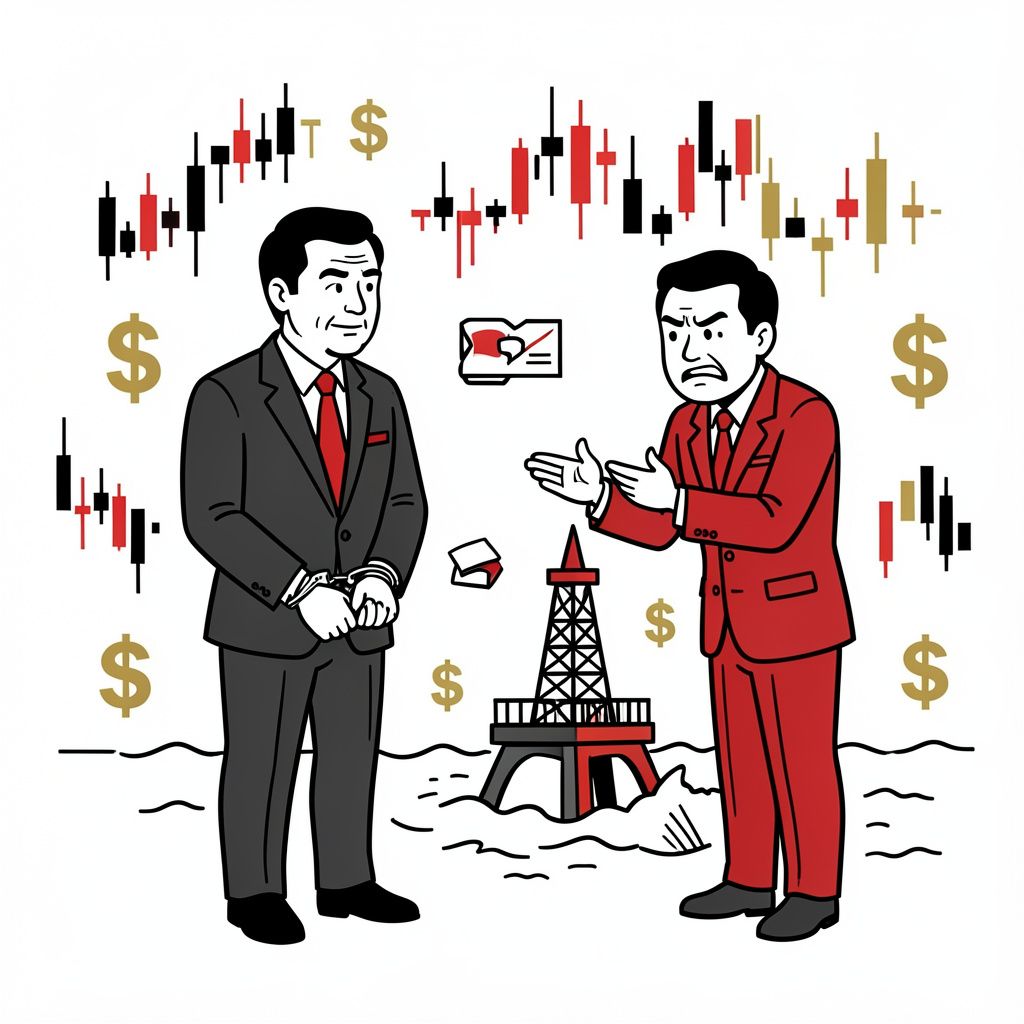
Following the U.S. capture of Venezuelan President Nicolás Maduro in January 2026, Beijing demanded his release to protect over $67 billion in Chinese energy investments and critical oil imports.
Escalating Tensions Over Caracas
Following the U.S. capture of Venezuelan President Nicolás Maduro in January 2026, Beijing demanded his release to protect over $67 billion in Chinese energy investments and critical oil imports [1][3]. China has urged the United States to respect its economic investments and halt intervention in Venezuelan crude operations following the U.S. military operation [1]. Beijing expressed sharp concern over energy supply disruptions and debt recovery, as Chinese state-backed enterprises hold substantial long-term debt-for-oil agreements with Caracas [1]. The geopolitical confrontation highlights increasing volatility in global energy markets and heightens tension between Washington and Beijing over access to strategic Latin American resources [1][2].
Strategic Energy Dependence
Chinese economic exposure in Venezuela is significant, with approximately $67 billion invested since 2007, primarily in the energy sector [3]. By early 2026, projections indicated 90% of Venezuela’s oil exports were destined for China, underscoring the critical nature of this supply chain [3]. A $1 billion, 20-year agreement to develop new Venezuelan oil fields was signed in late 2025, representing 1.493 percent of the total historical investment portfolio just months before the intervention [3]. This recent capital commitment highlights the depth of reliance on Venezuelan crude stability for Chinese energy security [3].
The Donro Doctrine and Geopolitical Shift
US President Donald Trump announced the operation and introduced the ‘Donro Doctrine,’ asserting the Western Hemisphere as an exclusive US sphere of influence and defining foreign economic expansion as a threat to national security [3]. Following the arrest, China condemned the operation at the UN Security Council as ‘unilateral and authoritarian’ and a violation of the UN Charter [3]. In January 2026, China condemned the United States’ capture and arrest of Venezuelan president Nicolás Maduro, marking a formal diplomatic rift [2]. The Trump administration deployed special forces to Caracas, marking a strategic shift toward exercising hard military power to reaffirm US global supremacy [3].
Market Implications and Future Scenarios
Total trade volume between China and Latin America reached approximately $518 billion in 2024, indicating the scale of potential disruption from such geopolitical friction [3]. Beijing is currently evaluating future scenarios including withdrawal, resistance, or ‘creative chaos’ involving ongoing competition where China expands economic investment while the US maintains security superiority [3]. China has urged Donald Trump to stay away from Venezuela’s oil after the US said it would run the country following the operation [1]. The situation remains a focal point for analysts monitoring the balance of power in the Western Hemisphere as of September 2026 [1][2].