US Revives Civil War Law to Claim Seized Iranian Oil Tankers
Washington, Monday, 21 September 2026.
The Justice Department is preparing to reactivate 19th-century maritime prize courts to claim seized Iranian oil ships, aiming to bypass civil legal delays and enforce a strict naval blockade.
DOJ Prepares Civil War-Era Prize Courts for Iranian Oil Seizures
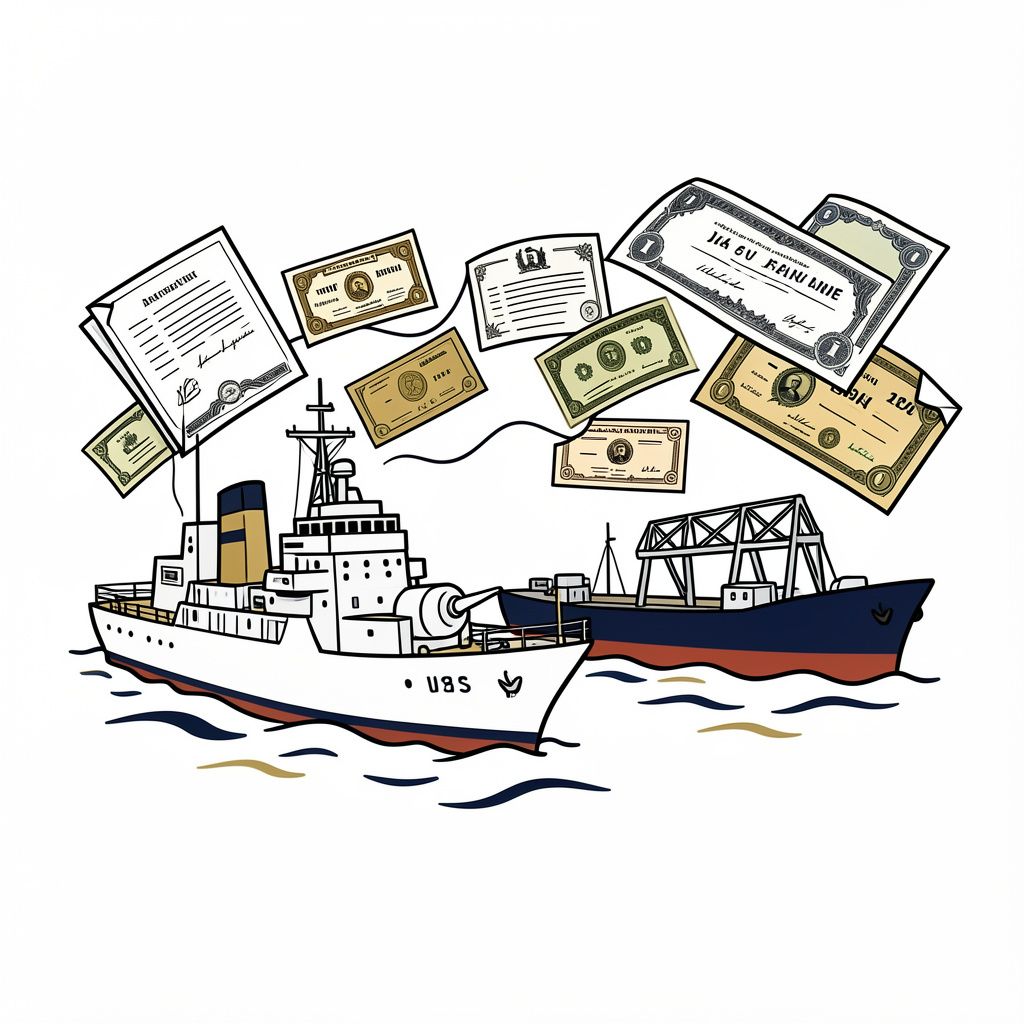
The United States Department of Justice is moving to reactivate a nineteenth-century maritime prize court framework to facilitate the military capture and forfeiture of Iranian oil tankers [1]. This legal maneuver aims to allow the federal government to officially claim seized vessels and crude cargoes as prizes of war, potentially reshaping enforcement dynamics in global shipping lanes [1]. The initiative represents a shift from standard civil forfeiture law, which legal experts deem insufficient for current blockade objectives involving state-linked assets [1]. As of September 21, 2026, the DOJ is coordinating this initiative with the Pentagon to streamline the process of converting seized military captures into federal property [1].
Escalation Following February Combat Announcements
This legal preparation follows a period of heightened tension beginning earlier in the year. On February 28, 2026, President Donald Trump announced “major combat operations” against Iran, involving massive joint U.S.-Israeli strikes on military and government sites [2]. By April 2026, public sentiment reflected the strain of these operations, with an Ipsos poll conducted between April 10 and April 12, 2026, finding that 51% of Americans believe U.S. military action in Iran has not been worth it [2]. Furthermore, 54% of respondents reported a negative impact on their personal financial situation due to the conflict [2]. The administration maintains that these measures are necessary to counter Iranian influence, with Vice President JD Vance and Secretary of State Marco Rubio leading diplomatic and strategic communications [2].
Legal Mechanisms and Historical Precedent
Prize courts were last used during the Spanish-American War in 1898 and have been dormant since World War II [1]. The DOJ is focusing on the Southern District of Texas federal trial court as the primary venue for these prize claims, leveraging the district’s proximity to the nation’s largest petrochemical complex [1]. Aaron Reitz, the U.S. Attorney for the Southern District of Texas appointed in July 2026, stated that federal courts must be ready to adjudicate the disposition of captured vessels if national security interests require military seizure [1]. Legal experts warn that invoking the Prize Act could prompt challenges regarding congressional authorization for the conflict [1]. Additionally, law professors note that while it helps offset the price of war, it could open the door for adversaries like China to apply prize law against the United States [1].
Escalation in the Strait of Hormuz
Tensions in critical energy transit chokepoints have mirrored the legal developments. On April 22, 2026, Iran attacked three ships in the Strait of Hormuz, seizing two and leaving a third stranded on the Iranian coast [3]. Iran justified the attacks as retaliation for a U.S. naval blockade of Iranian ports and the U.S. seizure of an Iranian vessel that failed to stop for inspection [3]. Since mid-March 2026, Iran has effectively controlled the strait, often demanding cargo details and imposing a tax on transiting ships [3]. Reports indicate vessels have been paying between $1 million and $2 million each this year to traverse the zone [4]. The percentage increase from the lower bound to the upper bound of these fees is 100 [4]. As of April 21, 2026, the U.S. military had intercepted 20 Iran-linked vessels, though some tankers successfully bypassed the blockade [3].
Financial Sanctions and Crypto Infrastructure
In parallel with military and legal actions, the U.S. Treasury has targeted the financial infrastructure supporting these operations. On September 16, 2026, the Treasury’s Office of Foreign Assets Control imposed secondary sanctions on the Tehran-based cryptocurrency exchange BitBank [4]. The exchange was accused of facilitating payments related to Iranian oil tanker transit since June 2026 [4]. Treasury Secretary Scott Bessent stated that the designations make clear that efforts to finance the Iranian regime using cryptocurrencies are not beyond OFAC’s reach [4]. Unlike previous designations, this measure initially lacked specific on-chain wallet addresses, complicating compliance screening for financial institutions [4]. The DOJ’s current preparation of prize courts serves as a complementary enforcement tool to these financial sanctions, aiming to secure physical assets where digital trails are obscured [1][4].