The Hidden Cost of Groceries: How Companies Use Smaller Packages to Mask Price Hikes
New York, Sunday, 7 June 2026.
A new study confirms companies deliberately reduce product sizes to hide inflation. Surprisingly, this tactic increases sales by 6% because shoppers rarely notice the missing grams.
The Anatomy of a Stealth Price Hike
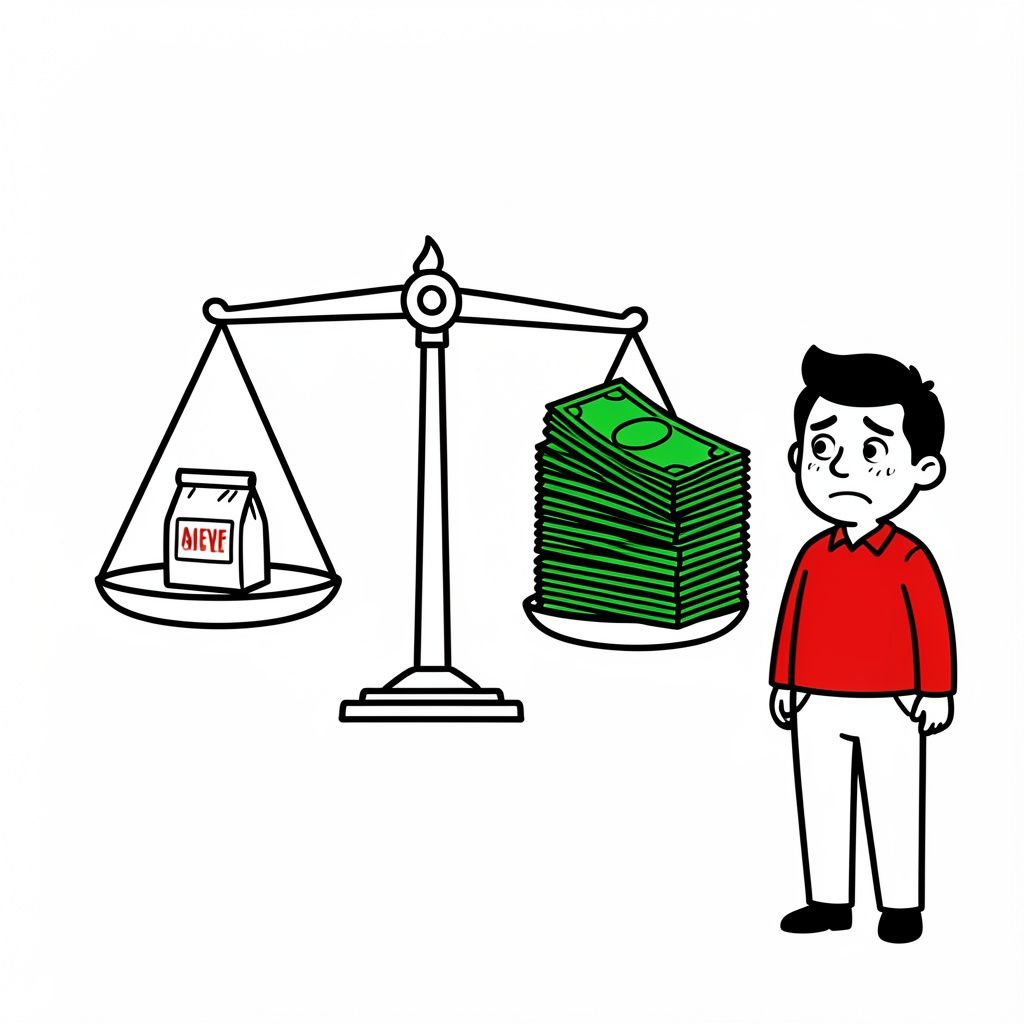
During the first week of June 2026, grocery shoppers purchasing a standard bag of chips are taking home 255.15 grams of product for the exact same price they paid for 297.67 grams in 2025 [1]. This quiet reduction of 42.52 grams exemplifies the calculated corporate strategy of shrinkflation. As the October 2025 INFORMS Marketing Science study highlighted, the 6 percent sales increase associated with downsizing relies on a fundamental behavioral economics principle: consumers are significantly less responsive to subtle volume reductions than they are to explicit price hikes [1]. Consequently, product downsizing occurs more than five times as often as upsizing across the retail sector [1].
Corporate Margins and Consumer Blind Spots
The effectiveness of shrinkflation relies heavily on consumer habits and blind spots. An October 2024 survey of 1,200 US consumers conducted by Purdue University found that while 82 percent of respondents believed shrinkflation was common and 76 percent understood it was utilized to boost corporate profits, only 44 percent regularly checked product weights [1]. This disconnect allows consumer packaged goods companies to protect or even expand their margins during periods of economic volatility. Financial reports illustrate the upside of this strategy: PepsiCo reported an 8.7 percent net revenue growth in 2023, Nestlé achieved a 17.3 percent operating profit margin that same year, and General Mills successfully expanded its gross margins following reductions in cereal box sizes [1]. The Federal Reserve further contextualized this trend, attributing 42 percent of inflation between the third quarter of 2020 and the second quarter of 2022 to corporate profit expansion rather than direct supply chain costs [1].
The Macroeconomic Impact and Regulatory Pushback
While shrinkflation is highly visible at the individual product level, its broader macroeconomic footprint is complex. The July 2025 GAO report analyzed Bureau of Labor Statistics data from 2015 through 2024 and found that size reductions drove between 1.6 and 3.0 percentage points of inflation in the five most severely impacted categories [1]. Specifically, shrinkflation accounted for 3.0 percentage points of price inflation in household paper products and 1.6 percentage points in cereal [1]. However, when looking at the broader economy, the GAO determined that shrinkflation accounted for less than 0.1 percentage point of the massive 34.5 percent total consumer price increase observed between 2019 and 2024 [1].
Shifting Consumer Behaviors and Future Outlook
As economic pressures persist into 2026, there are signs that consumers in some markets are actively rejecting these stealth price hikes. In South Africa, shoppers faced steep price increases on daily essentials from 2021 through early 2026, leading to a highly price-sensitive consumer base that actively monitors product sizes and has begun switching to generic brands in response to shrinkflation tactics.