Retailers Prepare for Price Increases as U.S. Economic Growth Stalls
Washington, D.C., Monday, 1 June 2026.
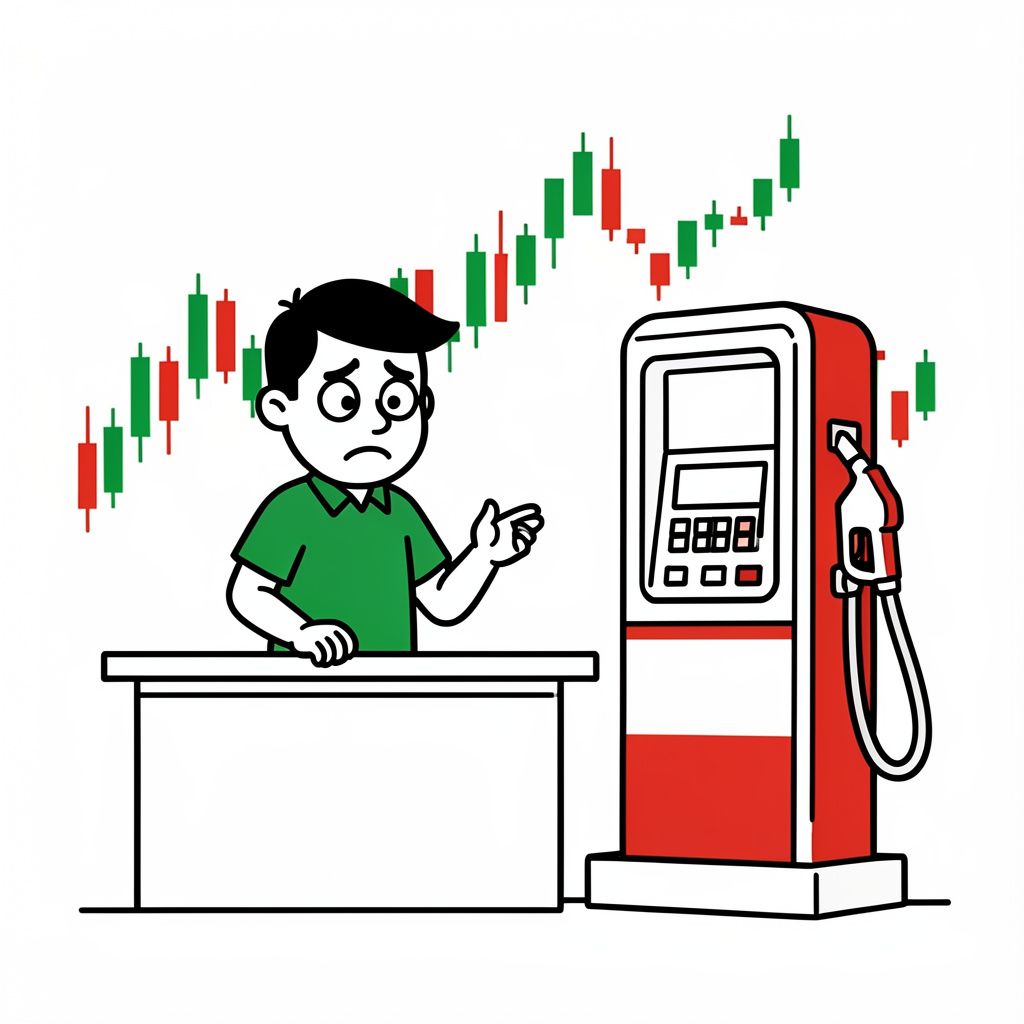
As U.S. economic growth slows to 1.6% and inflation climbs, major retailers warn of impending price hikes, noting consumer stress has pushed average fuel purchases below 37.9 liters.
A Stalling Economic Engine
The macroeconomic landscape for the United States has grown increasingly complex, marked by a combination of slowing economic output and stubbornly high inflation [GPT]. On May 27, 2026, the U.S. Bureau of Economic Analysis (BEA) reported that the annualized gross domestic product (GDP) growth for the first quarter of 2026 was revised down to 1.6 percent [2][3][4]. This represents a 0.4 percentage point drop from the initial advance estimate of 2.0 percent, though it remains an improvement over the 0.5 percent growth recorded in the fourth quarter of 2025 [2]. The deceleration in the first quarter was primarily attributed to weaker-than-expected consumer spending and investment, even as government expenditure and exports provided some support [2].
The Consumer Squeeze and Corporate Outlook
The strain on household budgets is becoming increasingly evident in consumer behavior. Real disposable income fell by 0.5 percent in April 2026, marking the third consecutive monthly decline, while the personal savings rate plummeted to 2.6 percent—its lowest level since June 2022 [4]. Energy prices have been a significant driver of this squeeze, surging 17.9 percent year-over-year in April [4]. The retail sector is witnessing the direct fallout; prior to May 31, 2026, Walmart reported that average fuel purchases at its stations dropped below 37.85 liters per transaction for the first time since 2022, which Walmart Chief Financial Officer John David Rainey identified as a clear indication of consumer stress [1].
Trade Policy and Market Reactions
Compounding the fundamental economic pressures are looming shifts in trade policy. Corporate outlooks are pricing in anticipated tariff hikes under Donald Trump’s administration [1]. Retailers like Dollar Tree are specifically forecasting that current tariff rates will remain steady through July 2026, before escalating in the second half of the year to levels that predate a February 20, 2026 Supreme Court decision [1]. These geopolitical and trade uncertainties have severely impacted corporate profit margins, with first-quarter current production profits increasing by just $40.4 billion, a stark decline from the $246.9 billion increase seen in the preceding quarter, representing a -83.637 percent contraction in profit growth momentum [2].