Iran Faces Highest Inflation Since World War II Amid Ongoing Conflict
Tehran, Saturday, 6 June 2026.
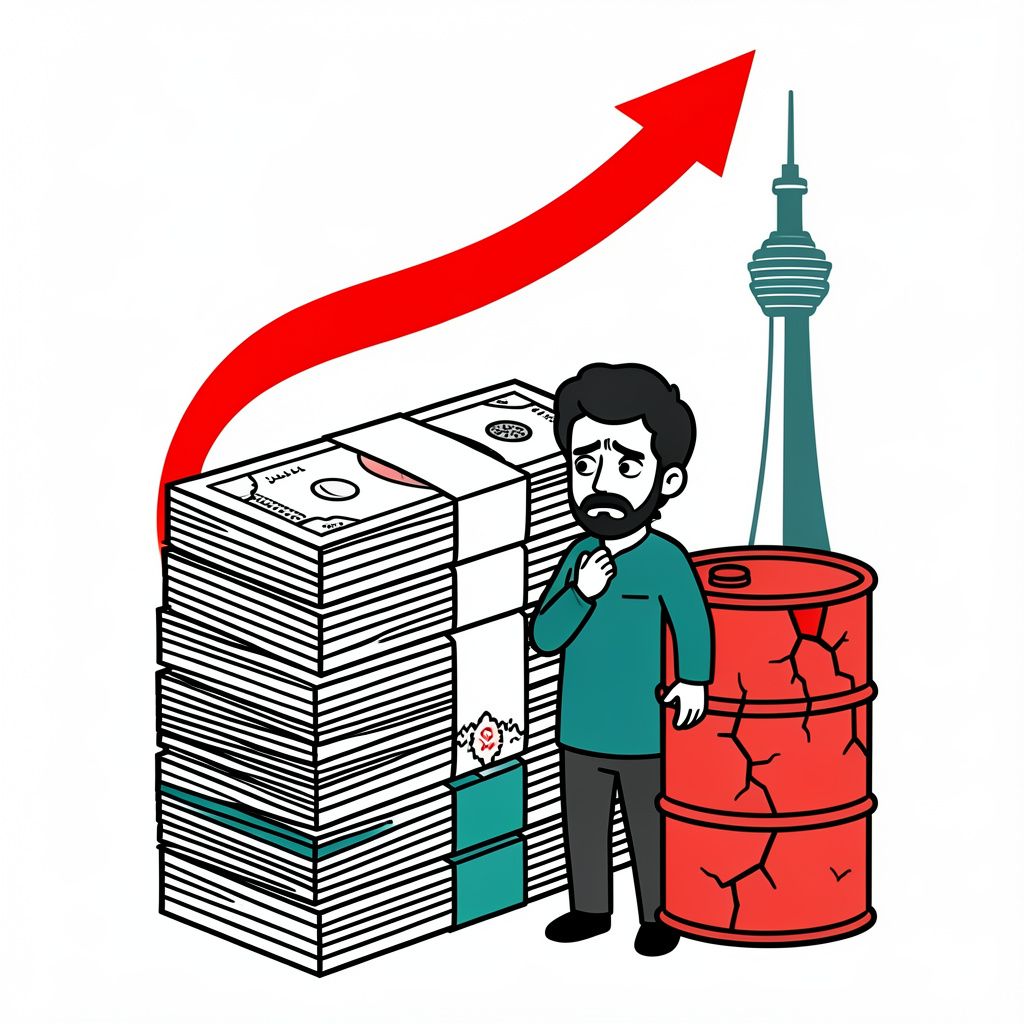
Iran’s inflation has surged to 113%, marking its highest level since 1942. This historic crisis, fueled by recent conflicts, severely threatens domestic stability and global energy markets.
The Anatomy of a Historic Price Surge
The raw data emerging from Iran paints a stark picture of an economy in freefall. According to a Central Bank of Iran report covering the period from April 21 to May 20, 2026, the annual inflation rate reached 77.2 percent year-on-year, accompanied by an 8.5 percent monthly increase [1]. More alarmingly, point-to-point inflation for consumer goods hit 113 percent [1], while another domestic statistical report noted overall point-to-point inflation crossing 83 percent to reach 83.9 percent [2]. The cost of basic sustenance has skyrocketed as a result; the price of one kilogram of rice surged from approximately 1.8 million rials in June 2025 to over 5 million rials by June 4, 2026 [1], representing a staggering price increase of 177.778 percent. Similarly, a bottle of cooking oil jumped from 700,000 rials in the spring of 2025 to over 3 million rials by early June 2026 [1], a leap of 328.571 percent.
A ‘Deadly Intersection’ of Economic Shocks
Arman Khaleghi, head of Iran’s Chamber of Commerce, Industries and Mines, attributes the crisis to a “deadly intersection” of policy shifts, domestic unrest, and international conflict [1]. A primary catalyst was the government’s elimination of the preferential currency exchange rate for basic goods, which immediately sent food prices soaring [1]. In an attempt to preserve the working class’s purchasing power, Iranian authorities raised wages and salaries on January 1, 2026 [1]. However, economic experts note this increase was entirely insufficient against the rising tide of costs, resulting in depleted household savings and compromised health and education budgets [1].
Global Reverberations and the Cost of Conflict
The economic fallout of the conflict is not contained within Iran’s borders; it is actively reshaping Western financial realities. The Strait of Hormuz serves as a critical chokepoint for global oil transit [GPT], and its disruption has direct consequences for international energy markets. On June 2, 2026, the Islamic Revolutionary Guard Corps (IRGC) Navy seized the American-owned cargo ship Arista in the Strait [7]. An economic advisor to Donald Trump has explicitly cited Iran’s closure of the Strait of Hormuz as a primary driver of recent inflation in the United States [3].