How Artificial Intelligence Is Transforming Jobsite Readiness in Commercial Construction
New York, Tuesday, 17 November 2026.
Labarna AI’s new SiteFrame platform deploys twelve daily software agents to stress-test construction schedules against real-time site readiness, targeting the industry’s costly logistical bottlenecks and chronic labor constraints.
SiteFrame: A Paradigm Shift in Construction Project Oversight
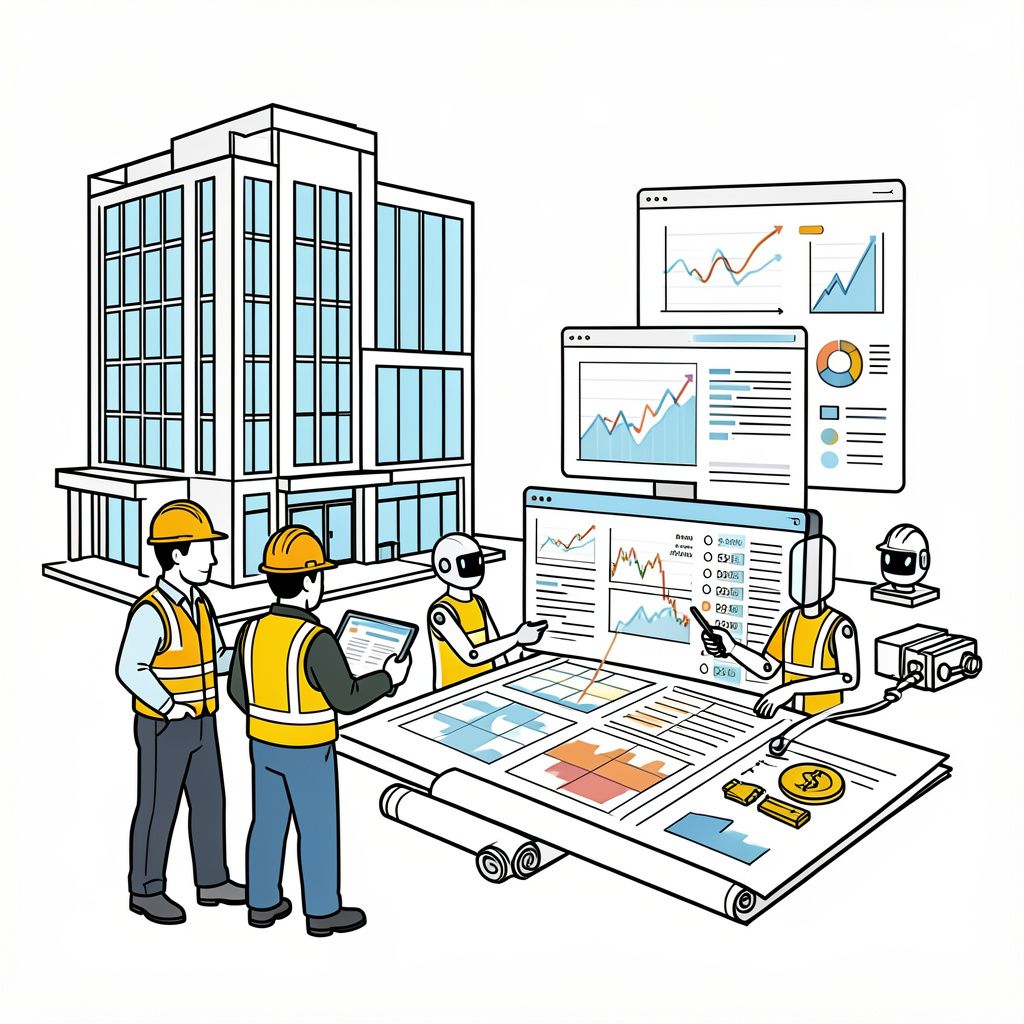
Labarna AI, a Dubai-based artificial intelligence venture operating under TFSF Ventures FZ-LLC [GPT], has introduced SiteFrame, a groundbreaking platform that integrates every facet of a construction project into a single, dynamic model. Released on 16 November 2026 and publicly showcased on 17 November 2026 [1], SiteFrame is designed to revolutionize how commercial construction projects are managed by providing real-time tracking of building materials, specialized equipment, construction crews, and individual site personnel [1]. This innovation comes at a critical juncture for the industry, which is grappling with tight profit margins and persistent labor shortages [GPT]. The platform’s ability to consolidate disparate data streams into a unified interface addresses long-standing inefficiencies in project oversight and accountability [1]. Steven Foster, Founder and CEO of Labarna AI, emphasized the platform’s transformative potential, stating, ‘A tower is tens of thousands of components, hundreds of people and one programme that moves every single day. On most projects, that picture lives in separate files, separate calls and somebody’s memory. SiteFrame puts the whole job into one living model’ [1].
The Mechanics of SiteFrame: Twelve Agents for Predictive Project Management
At the core of SiteFrame’s functionality are twelve specialized software agents that operate in tandem to evaluate the feasibility of the next day’s construction plan each afternoon [1]. These agents assess site readiness by cross-referencing factors such as released areas, access points, material availability, and crew skill sets against the proposed schedule [1]. While the agents provide critical pre-validation, human oversight remains indispensable, as all actions require explicit approval from project managers [1]. This hybrid approach ensures that predictive insights are actionable while maintaining accountability in high-stakes construction environments. The platform’s design also incorporates robust data protection measures, ensuring that contractor-specific project data remains isolated and controlled by role [1]. Decisions are logged, and upon project handover, full ownership of the data reverts to the contractor under the Ghost Architecture model, mitigating risks associated with data privacy and proprietary information [1].
Beyond Tracking: Modular Adaptability and Industry Implications
SiteFrame is not a rigid, one-size-fits-all solution but a modular platform that can be customized to meet the unique demands of each project [1]. Foster highlighted this adaptability, noting, ‘It is not a fixed product. If you need a module that does not exist, it gets built’ [1]. This flexibility is particularly valuable in an industry where project specifications can vary dramatically, from single residential villas to sprawling commercial districts [1]. The platform’s versatility extends to its integration capabilities, as it can generate structurally accurate building plans that account for complex systems such as beams, plumbing, electrical wiring, HVAC, and life safety measures [3]. This level of detail ensures that all components of a project are accounted for in a cohesive manner, reducing the likelihood of costly oversights or rework. Additionally, SiteFrame’s data isolation policies ensure that contractor information remains secure, with no external use or learning from the data, addressing concerns about data sovereignty and competitive intelligence [1].
Strategic Vision and Market Positioning
The launch of SiteFrame aligns with broader trends in the construction technology sector, where AI-driven solutions are increasingly being adopted to address industry-wide challenges [GPT]. Labarna AI’s positioning as a pioneer in this space is bolstered by its strategic location in Dubai, a global hub for innovation and trade, and its backing by TFSF Ventures FZ-LLC [1]. The company’s emphasis on data security and modular design reflects a nuanced understanding of the construction industry’s needs, particularly in regions like the GCC, where large-scale infrastructure projects are prevalent [1][3]. Steven Foster’s assertion that ‘The agents prepare. Your people decide’ underscores the platform’s role as an enabler of human expertise rather than a replacement [1]. This approach is likely to resonate with industry stakeholders who prioritize control and customization in their project management tools. As SiteFrame continues to evolve, its impact on jobsite readiness and operational efficiency could set a new standard for AI integration in commercial construction [GPT].