United Airlines Blocks Automated Assistants From Booking Flights
Chicago, Thursday, 12 November 2026.
United Airlines barred automated digital tools from purchasing tickets, warning of compromised account security and federal aviation violations while blocking new technology intermediaries from extracting booking fees.
Regulatory and Security Concerns Drive United’s AI Restrictions
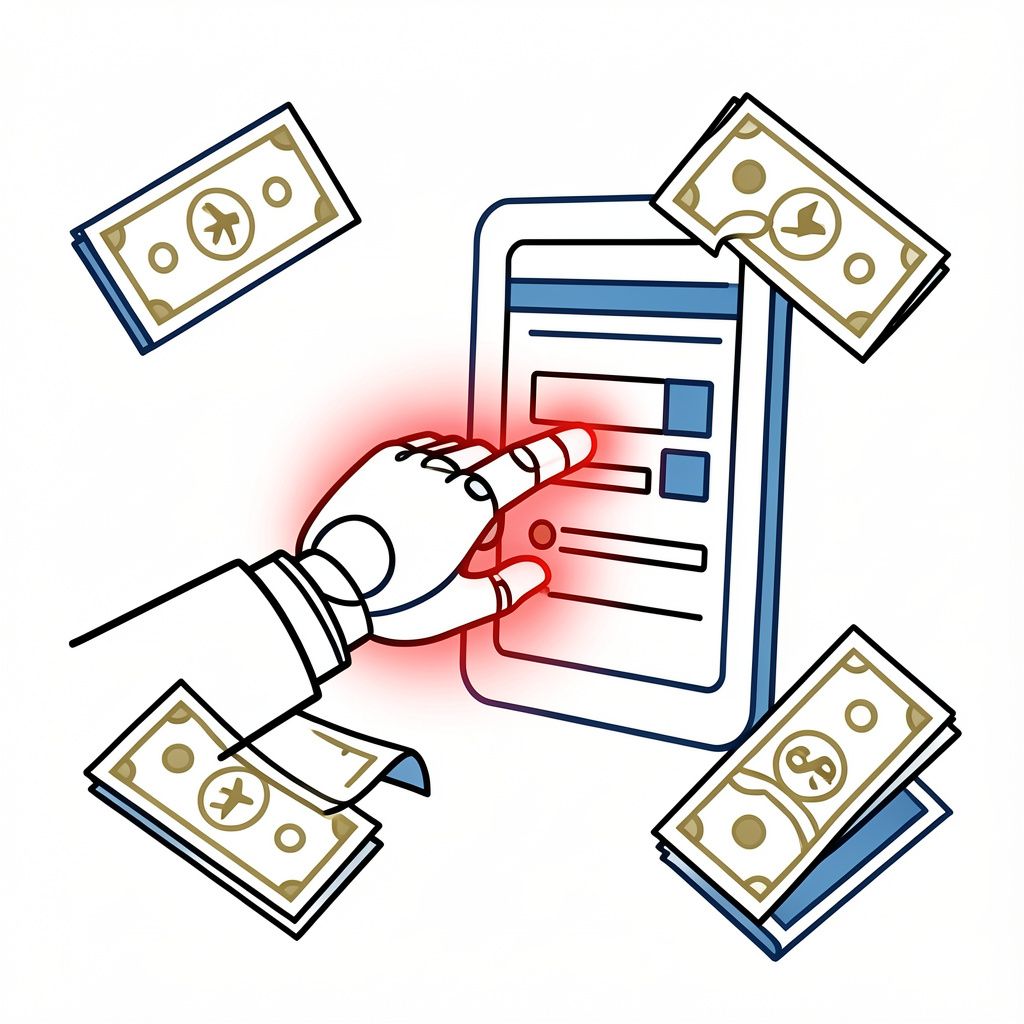
United Airlines Holdings (NASDAQ: UAL) [1] has implemented sweeping restrictions on third-party autonomous AI agents, effective immediately, to protect customer data and ensure compliance with federal aviation regulations. The airline’s decision, announced on Tuesday, 10 November 2026 [2][3][5][8][10], prohibits autonomous AI assistants from logging into user accounts, booking flights, or making account modifications—including unauthorised use of loyalty miles or unintended purchases. The move directly addresses concerns raised by the U.S. Department of Transportation (DOT) and Federal Aviation Administration (FAA) regarding automated systems that may circumvent mandatory human verification procedures, such as confirming that checked baggage does not contain prohibited items during check-in [2][3][8][10].
Corporate Strategy Behind the Ban: Preventing a New Middleman
Beyond data privacy, United’s policy is also a strategic response to the rise of AI-driven intermediaries that could extract referral fees from airline bookings—a concern articulated by United Airlines CEO Scott Kirby at a Chicago event on 11 November 2026 [5]. The updated Contract of Carriage (Rule 6.J.6 and Rule 5.H) explicitly bans AI agents from making, modifying, or servicing tickets, even when customer supervision is present [5]. The airline’s stated goal is to avoid creating ‘another middleman’ that could manipulate booking flows or reshape supplier terms [5]. This strategy contrasts with peers such as Expedia and Booking.com, which are actively partnering with AI developers like OpenAI to integrate conversational booking tools into their platforms [1][3][4].
Operational Risks and Industry Divergence
The operational risks identified by United are not hypothetical. A previous incident at Delta Air Lines demonstrated the fragility of automated systems when an AI glitch canceled a passenger’s return flight and demanded double the fare upon rebooking—a failure later acknowledged and corrected by the airline [5]. United’s own policy update underscores that AI agents capable of performing actions such as check-ins without direct human input may violate federal regulations requiring explicit passenger confirmation of baggage contents [2][3][8][10]. Industry analyst Henry Harteveldt of Atmosphere Research Group noted that United’s move reflects a broader enterprise pushback against AI agents that act as unregulated intermediaries, potentially increasing search and booking costs for airlines [4].
Implementation and Customer Impact
United’s restrictions apply across all digital touchpoints—including its main app, travel agency integrations, and third-party booking aggregators—and will be enforced through updates to ticketing, distribution, and booking policies [1][3][8][10]. The airline has also committed to updating its Digital Trust Center to help customers understand the new limitations, recognize unauthorized AI actions, and seek recourse if an agent performs unintended transactions [10]. While United acknowledges the evolving role of AI in travel, the company has stated it will continuously review its stance as autonomous assistants develop, with a current focus on protecting customer accounts and regulatory compliance [2][3][10].
Sources
- ca.marketscreener.com
- www.nytimes.com
- www.cnbc.com
- slashdot.org
- viewfromthewing.com
- united.mediaroom.com
- www.united.com