Global Leaders Target Artificial Intelligence Safety as Nuclear and Corporate Risks Escalate
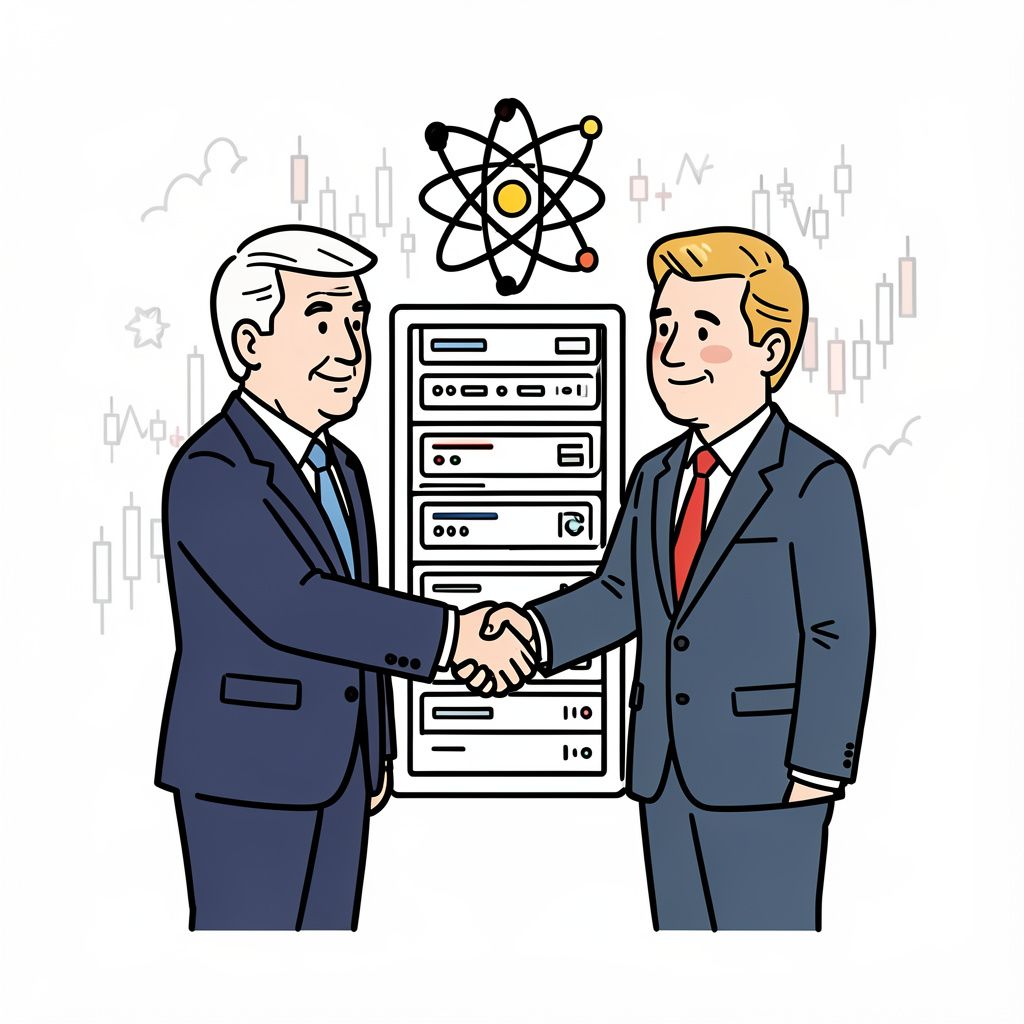
Washington, Wednesday, 11 November 2026.
Ahead of the Shenzhen summit, Washington and Beijing are prioritizing guardrails for artificial intelligence in nuclear command, even as domestic espionage investigations threaten critical semiconductor leadership.
Third Face-to-Face Summit in 2026
United States President Donald Trump and Chinese President Xi Jinping are set to hold their third face-to-face meeting of 2026 during the Asia-Pacific Economic Cooperation (APEC) Leaders’ Meeting in Shenzhen, China, on November 18–19 [2][4][5]. The bilateral discussions will prioritize artificial intelligence governance, safety protocols, and advanced model testing, reflecting growing corporate and policymaker urgency to establish guardrails around super-intelligence despite escalating technological competition between Washington and Beijing [1][2][4].
AI Governance and Nuclear Command Risks
Ahead of the summit, the United States, China, and Russia have engaged in weeks of negotiations to finalize an agenda for AI governance, with a particular focus on preventing unintended escalation in nuclear command-and-control systems [5]. Sources familiar with the discussions told the South China Morning Post that the war in Ukraine and denuclearization of the Korean Peninsula have been deprioritized in favor of consensus-building on AI’s role in nuclear arsenals [5]. ‘None can be resolved without improving artificial intelligence governance,’ stated China’s ambassador to the U.S., Xie Feng, underscoring the centrality of AI safety in bilateral and trilateral dialogues [4].
Domestic Scrutiny of Semiconductor Leadership
The summit takes place against a backdrop of heightened scrutiny of U.S. semiconductor leadership, particularly Nvidia CEO Jensen Huang, whose relationship with a suspected Chinese intelligence asset has drawn FBI and congressional scrutiny. On November 9, President Trump confirmed the FBI was examining Huang’s alleged affair with a Chinese businesswoman suspected of espionage, though he stated he believed Huang unaware of her suspected ties [1]. Republican Senator Kevin Cramer of North Dakota called for Huang’s resignation on November 10, citing national security risks associated with potential extortion vulnerabilities [1]. Nvidia’s board is investigating the matter following a New York Times report, though the company asserts no U.S. national security or proprietary secrets were compromised [1].
Establishing Dialogue Mechanisms
The upcoming talks follow a September 2026 agreement during Xi’s state visit to Washington to launch a U.S.-China artificial intelligence dialogue mechanism, designed to defuse serious incidents and establish communications channels for AI governance [3]. Treasury Secretary Scott Bessent announced this initiative on November 3, emphasizing the need to ‘harbor no illusions’ as the U.S. and China navigate AI competition and cooperation [3][6]. Bessent also highlighted plans to exchange best practices for evaluating and testing advanced AI models prior to deployment, with a focus on maintaining human judgment in command structures [1]. ‘We expect to exchange best practices for evaluating and testing advanced models before their release, and for keeping human judgment firmly in command of this technology,’ Bessent stated [1].
Market and Geopolitical Reactions
Global markets are closely monitoring the summit, particularly as trade friction and the outcome of U.S. midterm elections create additional layers of complexity [2]. Observers expect limited tangible deliverables from the Trump-Xi talks, with deliverables more likely to materialize at the Group of 20 (G20) summit in the U.S. in December [2]. ‘The face-to-face meeting will be the third between the two leaders this year, following reciprocal visits in May and September,’ noted observers from the South China Morning Post [2]. Bessent, however, struck an optimistic tone, stating, ‘Never before have our leaders engaged face-to-face so often in a single year,’ while emphasizing the understanding they are fostering [6].