US Inflation Hits 3-Year High: Why Your Wallet Feels the Pinch
Washington DC, Saturday, 13 June 2026.
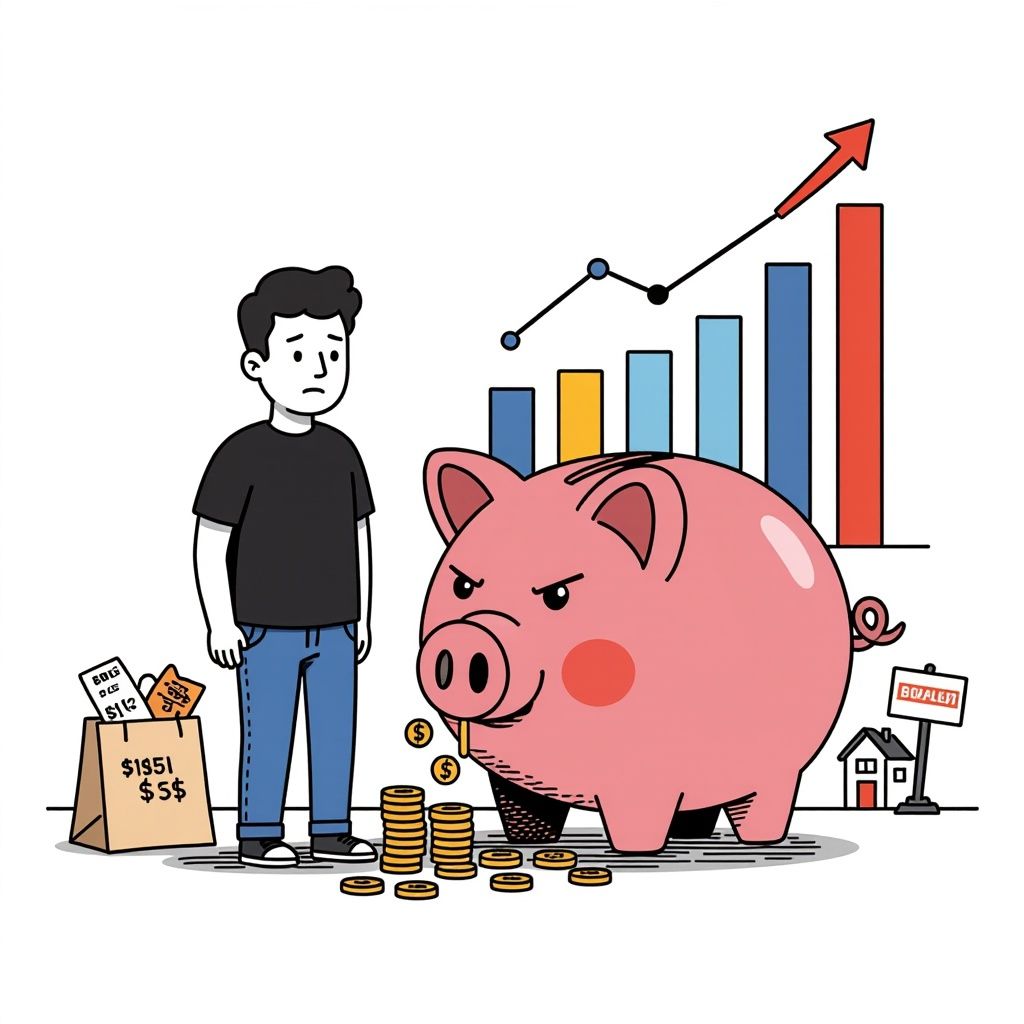
US inflation surged to 4.2% in May 2026—the highest since April 2023—driven by soaring energy, housing, and food costs. With wages growing at just 3.4%, Americans are losing purchasing power. The Fed may delay rate cuts, keeping borrowing costs high for businesses and consumers alike. Here’s what’s really driving the squeeze.
From Stability to Surge: The Inflation Story So Far
Just weeks ago, the narrative around US inflation was one of cautious optimism. In May 2026, inflation expectations had stabilized at 3.5 percent, offering a brief respite from the financial anxiety gripping nearly half of American households [1]. Many felt financially worse off, grappling with deteriorating credit access and rising delinquencies, even as inflation appeared to plateau [1]. However, the latest Consumer Price Index (CPI) report from the US Bureau of Labor Statistics (BLS) shattered this fragile stability. Headline inflation surged to an annual rate of 4.2 percent in May 2026, marking the highest level since April 2023 and exceeding market expectations by a significant margin [2][3]. This abrupt shift underscores the volatility of the current economic landscape and raises critical questions about the Federal Reserve’s next moves.
Energy Prices: The Inflation Wildcard
The primary driver behind May’s inflation spike is the relentless rise in energy costs. The energy index surged by 3.9 percent month-over-month in May 2026, following even sharper increases of 10.9 percent in March and 3.8 percent in April [4]. This acceleration contributed to over 60 percent of the monthly increase in the all-items CPI [4]. Gasoline prices, in particular, have become a flashpoint, rising by 23.4 percent in May alone and 40.9 percent year-over-year [4][5]. The broader energy commodities index, which includes diesel fuel and jet fuel, climbed 40.6 percent over the same period [4]. These figures reflect the ongoing fallout from geopolitical tensions in the Persian Gulf, which have disrupted nearly one-third of the world’s fertilizer supply and sent shockwaves through global energy markets [4]. With crude petroleum prices jumping 11.8 percent in May 2026, the ripple effects are being felt across the entire supply chain, from transportation to manufacturing [5].
The Housing Dilemma: Shelter Costs Outpace Wages
While energy prices dominate headlines, housing costs are quietly exacerbating the inflation crisis. The shelter index, which accounts for roughly one-third of the CPI basket, rose by 4.6 percent year-over-year in May 2026 [6]. This increase is particularly concerning because it outpaces the 3.4 percent annual growth in average hourly earnings, the slowest wage growth since 2021 [4]. For the second consecutive month, inflation has outstripped wage growth, eroding real purchasing power for millions of Americans [4]. The disparity is stark: while nominal wages grew by 3.4 percent, headline inflation surged by 4.2 percent, leaving workers with less disposable income [4]. In the Chicago-Naperville-Elgin metropolitan area, a microcosm of national trends, the CPI-U rose by 1.1 percent in May alone, with shelter costs contributing significantly to the increase [6]. The region’s energy index also surged by 10.3 percent monthly, further squeezing household budgets [6].
Food Prices: A Double-Edged Sword
Food prices present a paradox in the current inflation landscape. While the national food index fell by 0.4 percent in May 2026, it remains 2.4 percent higher than a year ago [4][6]. The decline in grocery store prices (-0.7 percent monthly) was offset by a 5.1 percent year-over-year increase in the cost of food away from home, such as dining out [6]. Specific food categories tell a more nuanced story: fruits and vegetables rose by 4.0 percent year-over-year, while dairy and related products fell by 3.7 percent [6]. The re-acceleration of food prices is largely attributed to the disruption of fertilizer supplies from the Persian Gulf, a critical region for global agricultural production [4]. Analysts warn that these pressures are unlikely to abate soon, as supply chain bottlenecks and geopolitical risks persist [4]. For consumers, this means higher costs at both the supermarket and the restaurant, further straining budgets already stretched thin by energy and housing expenses.
The Federal Reserve’s Tightrope Walk
The Federal Reserve now faces a precarious balancing act. With inflation breaching its 2 percent target and showing no signs of abating, markets are pricing in a potential rate hike by the end of 2026, despite earlier expectations of cuts [4]. The implied Fed Funds rate has risen to 3.87 percent for December 2026, up from 3.62 percent at the start of June [4]. Kevin Warsh, the newly appointed Fed Chair, is expected to hold rates steady during the upcoming Federal Open Market Committee (FOMC) meeting on June 16-17, while dropping the central bank’s easing bias [4]. This shift reflects growing concerns about persistent inflationary pressures, particularly in core services, which remained sticky at 3.4 percent year-over-year in May [4]. The Fed’s challenge is compounded by elevated breakeven inflation rates, with the 2-year breakeven at 3.01 percent and the 5-year at 2.77 percent as of June 9, 2026 [4]. These figures indicate that investors expect inflation to remain above the Fed’s target for the foreseeable future, complicating the central bank’s efforts to stabilize the economy without stifling growth.
What’s Next for Consumers and Businesses?
For consumers, the inflation surge translates into higher costs for essentials like gasoline, housing, and food, with little relief in sight. The erosion of real wages means that even as nominal incomes rise, purchasing power continues to decline [4]. Businesses, meanwhile, are grappling with rising input costs, particularly in energy and raw materials. The PPI data reveals that Stage 1 intermediate demand, which tracks prices for goods and services used in the early stages of production, surged by 3.2 percent in May 2026, the largest increase since December 2009 [8]. This suggests that cost pressures are building across the supply chain, from crude petroleum to industrial chemicals [5][8]. Companies may have no choice but to pass these costs on to consumers, further fueling inflation. For policymakers, the path forward is fraught with uncertainty. The Fed’s next moves will be closely watched, as any misstep could either exacerbate inflation or trigger an economic slowdown. With the next PPI release scheduled for July 15, 2026, and the CPI update following shortly after, the coming weeks will be critical in determining whether the current inflation surge is a temporary blip or the new normal [5][8].
Sources
- wsnext.com
- www.ft.com
- www.bls.gov
- www.mufgamericas.com
- www.bls.gov
- www.bls.gov
- www.bls.gov
- www.bls.gov