Unexpected Drop in U.S. Consumer Spending Ignites Fresh Recession Warnings
Washington, Friday, 12 June 2026.
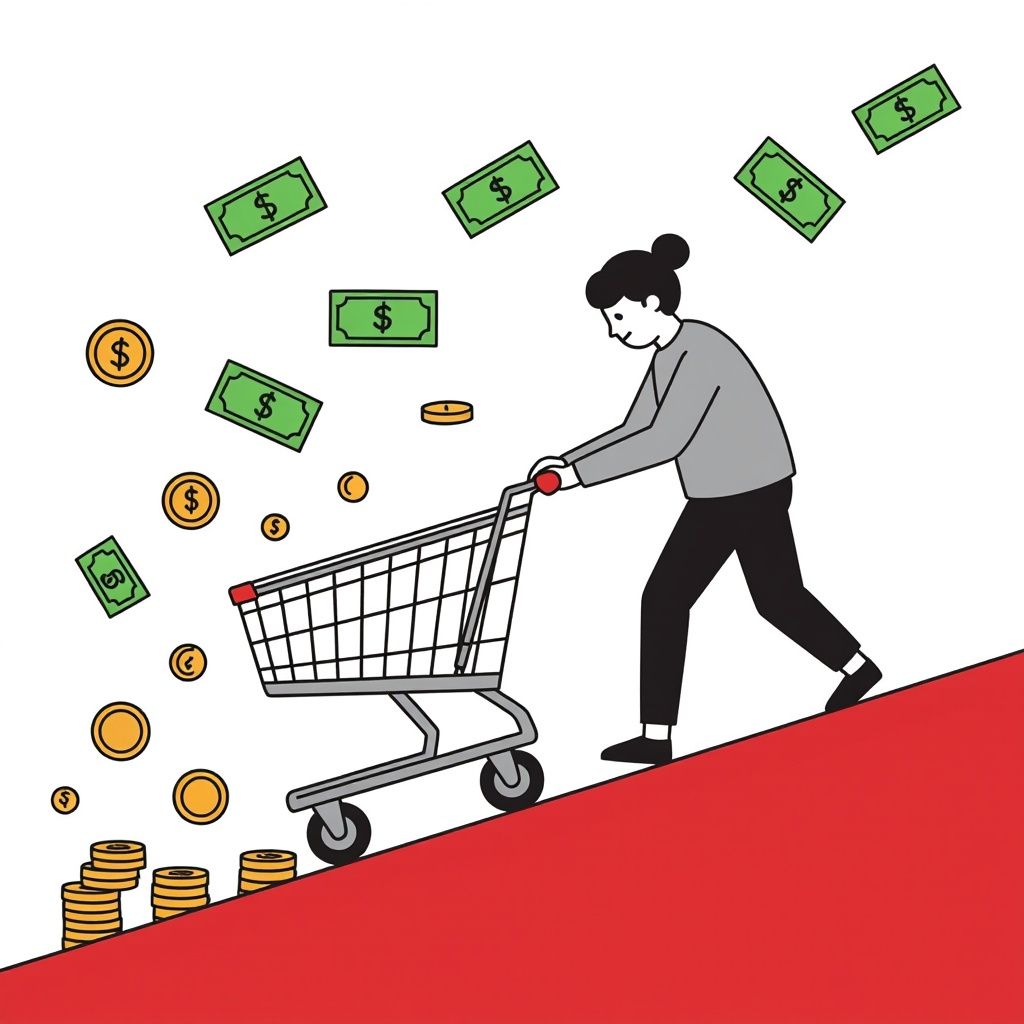
Quietly released Federal Reserve data shows a sharp 1.3% drop in May 2026 consumer spending. Amid rising 4.2% inflation, this unexpected decline signals mounting vulnerabilities and escalating recession risks.
Decoding the Chicago Fed’s Retail Trade Summary
On June 10, 2026, the Chicago Federal Reserve published its Advance Retail Trade Summary, revealing a concerning shift in consumer behavior [1][2]. The data indicates that inflation-adjusted spending on food and services plummeted by 1.3% in May 2026 [1][2]. This represents a stark reversal from a flat 0.0% reading in April 2026 and a 0.8% increase observed in February 2026 [1][2]. Even before adjusting for inflation, nominal spending fell by 0.3% in May 2026 [1][2]. Because consumer spending accounts for nearly 70% of the United States Gross Domestic Product (GDP), a contraction of this magnitude often serves as an early warning sign of broader economic deterioration [1][2].
Labor Market Resilience Versus Economic Warnings
Despite the troubling spending data, the broader economy presents a complex, mixed picture. For instance, the Weekly Economic Index (WEI) published by the Dallas Federal Reserve stood at 2.90% for the week ending June 6, 2026, scaled to four-quarter GDP growth [3]. This figure, while down slightly from 3.22% for the week ending May 30, 2026, remains higher than the 2.57% four-quarter GDP growth recorded through the first quarter of 2026 [3]. Furthermore, the U.S. labor market demonstrated continued resilience in May 2026 by adding 172,000 jobs, keeping the national unemployment rate steady at 4.3% [1][2].
Monetary Policy and Impending Stress Tests
Market participants are now closely monitoring the Federal Reserve’s next moves. The Federal Open Market Committee (FOMC) is scheduled to convene to evaluate these mixed economic indicators, though the exact date of the upcoming policy meeting remains pending [alert! ‘Specific date for the upcoming FOMC meeting was not disclosed in the provided June 10, 2026 reports’] [2]. Interestingly, despite the looming recession fears, financial prediction markets currently estimate a 52% probability that the central bank will execute at least one interest rate hike before December 31, 2026 [1][2]. This pricing suggests that investors remain highly concerned about taming the 4.2% inflation rate, perhaps even more than an imminent economic collapse [1].
Navigating a Precarious Economic Path
The juxtaposition of a cooling consumer base against a historically resilient labor market places policymakers in a precarious position. The calculation of the difference between the headline inflation rate and the core inflation rate stands at 1.3 percentage points, highlighting the disproportionate impact of volatile sectors on the current economic environment [1]. As the economy navigates through the remainder of 2026, the trajectory will largely depend on whether the recent 1.3% contraction in real consumer spending is a temporary anomaly or the definitive start of a broader economic unwinding [1][2].