US Inflation Outlook Remains Stable Despite Growing Personal Financial Anxiety
New York, Tuesday, 9 June 2026.
While US inflation expectations stabilized at 3.5 percent in May 2026, nearly half of Americans report feeling financially worse off amid deteriorating credit access and rising delinquencies.
A Divergent Economic Landscape
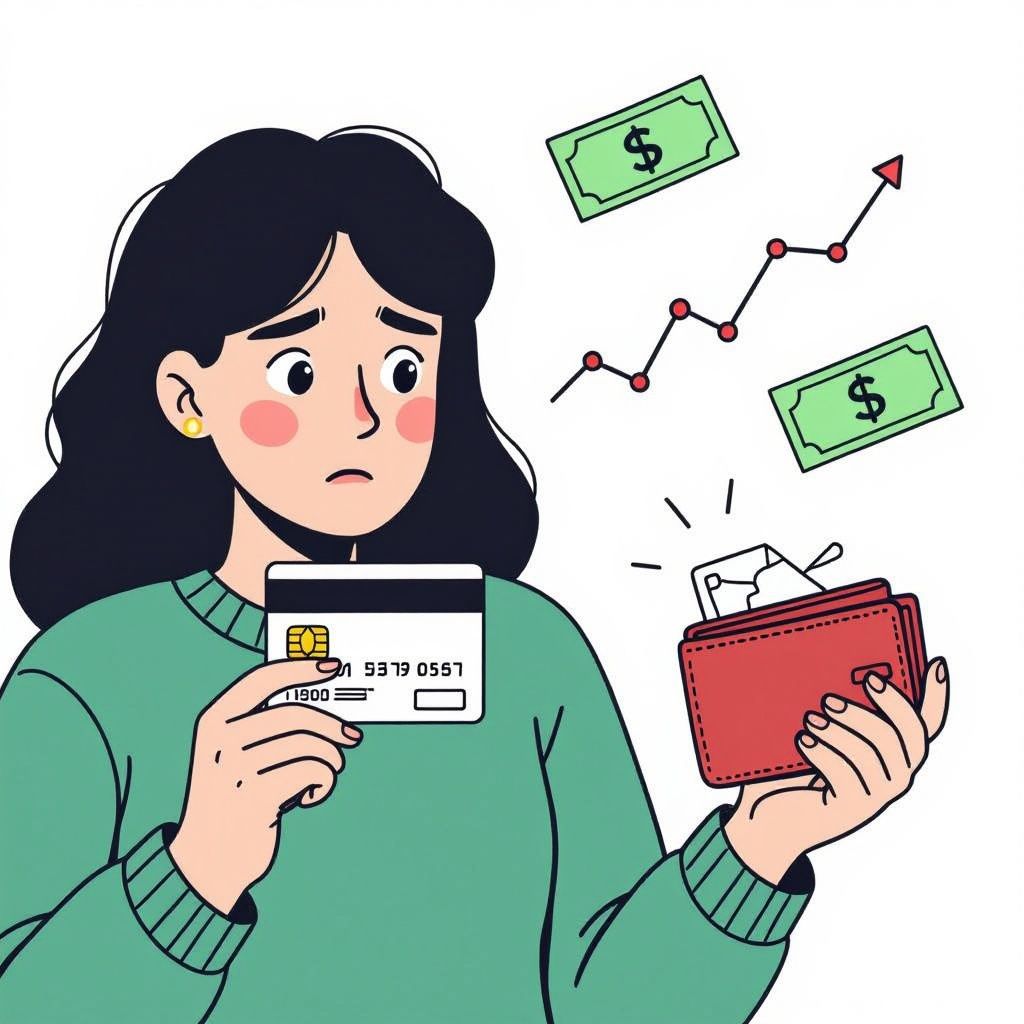
The Federal Reserve Bank of New York released its May 2026 Survey of Consumer Expectations on June 8, 2026, revealing a complex duality in the United States economy [1][5]. On the macroeconomic surface, price stability appears to be taking root. Consumers’ year-ahead inflation expectations decreased slightly to 3.5 percent, down from 3.6 percent in April [1]. Medium- and longer-term expectations remained firmly anchored, with respondents projecting inflation at 3.1 percent over three years and 3.0 percent over five years [1]. However, this stabilization in long-term price outlooks masks a starkly different reality for household balance sheets. Nearly half of Americans now report feeling financially worse off than they did a year ago in June 2025, pushing consumer financial pessimism to its highest level since January 2023 [1][5].
The Fractured Consumer Base
The economic strain is not distributed evenly, creating what analysts describe as a “three-speed consumer economy” [6]. According to the PYMNTS Consumer Expectations Index (PCEI), which tracked sentiment from October 2025 through May 2026, the overall index fell by 0.9 points to 54.5 [6]. Yet, this slight aggregate decline obscures a widening 21-point chasm between different financial tiers [6]. Consumers living paycheck to paycheck with ongoing financial struggles saw their index score drop by 2.8 points to 40.6, reflecting severe erosion in their financial resilience [6]. Conversely, those not living paycheck to paycheck remained relatively insulated, maintaining a steady score of 61.9 [6].
Wage Stagnation and External Shocks
A primary driver of this household distress is the persistent gap between wage growth and the cost of living. In May 2026, U.S. wages increased by 3.4 percent, but this gain was entirely consumed by a 3.8 percent year-over-year Personal Consumption Expenditures (PCE) inflation rate recorded in April [1][5]. This 0.4 percent deficit in real wage growth explains why three-quarters of Americans report that their incomes are failing to keep pace with living expenses [5]. Compounding these domestic challenges are severe external shocks, notably the U.S.-backed war with Iran and resulting trade halts in the Strait of Hormuz, which have previously triggered inflation spikes and continue to threaten global supply chains [1][5].
The Federal Reserve’s Upcoming Challenge
These contrasting economic indicators present a complex puzzle for Federal Reserve policymakers as they prepare for their upcoming meeting scheduled for June 16 to June 17, 2026 [1]. Officials are widely projected to maintain the benchmark interest rate within the 3.50 percent to 3.75 percent range [1]. The central bank must balance the necessity of driving PCE inflation back to its 2 percent target against the risk of exacerbating the financial strain on struggling households [1][3]. As noted by industry observers, deteriorating credit conditions alongside easing inflation expectations create an uncomfortable, stagflation-lite environment for monetary policy [3].