U.S. Household Wealth Growth Hits One-Year Low as Stock Prices Fall
Washington, D.C., Saturday, 13 June 2026.
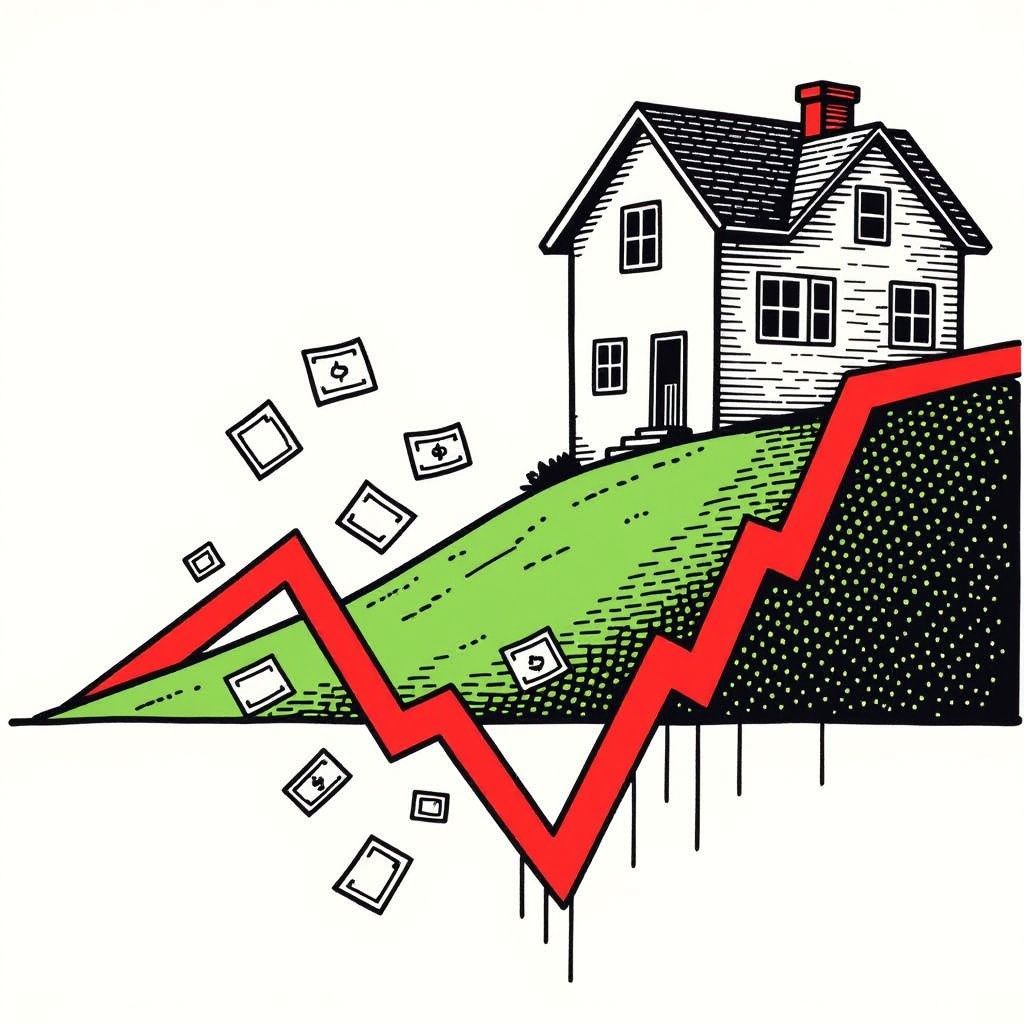
Despite climbing real estate equity, U.S. household wealth experienced its slowest growth in a year during early 2026, heavily dragged down by declining stock market valuations.
The Dynamics of the Q1 2026 Z.1 Report
On June 11, 2026, the Federal Reserve Board officially released its Z.1 Financial Accounts of the United States report for the first quarter of 2026 [1][2]. This comprehensive dataset, which tracks the flow of funds and national balance sheets, revealed that United States household wealth edged higher in the first three months of the year, marking the slowest pace of growth in a year [2][3]. The primary catalyst for this deceleration was a decline in stock prices, which weighed heavily on investment portfolios and offset gains recorded in real estate and other non-equity assets [3].
Real Estate Equity Provides a Buffer
While corporate equity valuations pulled aggregate wealth down, property values provided a crucial stabilizing force for household balance sheets [3]. According to the latest data, the percentage of equity that households hold in their real estate—including properties without a mortgage—rose to 71.6% in the first quarter of 2026, an increase from 71.2% in the fourth quarter of 2025 [4]. This growth in equity occurred alongside a notable deceleration in mortgage borrowing. United States mortgage debt increased by $38 billion in the first quarter of 2026, representing a sharp decrease from the $101 billion increase seen in the final quarter of 2025 and the $53 billion increase in the first quarter of 2025 [4].
Mounting Household Debt and Inflation Pressures
On the liability side of the ledger, total household debt increased by $18 billion during the first quarter of 2026, bringing the total to $18.8 trillion [3]. This gain amounts to a roughly 0.096 percent increase, indicating that while debt is still rising, it is doing so at a manageable pace [3]. However, this nominal increase in debt is occurring against a challenging macroeconomic backdrop. Data released by the Bureau of Labor Statistics on June 10, 2026, showed the inflation rate jumping for the third consecutive month to reach 4.2% year-over-year, up from 3.8% in April [5].
Looking Ahead to Mid-2026 Economic Indicators
As the economy transitions into the middle of 2026, the trajectory of household wealth remains highly dependent on equity market performance and inflation control [3][5]. The Federal Reserve Board of Governors has scheduled a closed meeting for June 16, 2026, to discuss monetary policy issues, a critical step as they navigate the dual mandate of price stability and maximum employment amid 4.2% inflation [5][6]. Additionally, personal saving rates, tracked by the Federal Reserve as a percentage of disposable personal income, will be a vital metric to watch as households attempt to rebuild buffers depleted by rising costs [7]. If equity markets rebound in the second quarter, household net worth could reaccelerate, much like the recovery seen in late 2025 [3].
Sources
- www.federalreserve.gov
- www.linkedin.com
- bingx.com
- calculatedrisk.substack.com
- www.instagram.com
- www.federalreserve.gov
- fred.stlouisfed.org