How the Federal Reserve Leadership Transition is Reshaping Global Markets
Ebene, Wednesday, 29 April 2026.
A new analysis reveals how Jerome Powell’s impending exit as Fed Chair and a strengthening U.S. dollar are triggering significant volatility across global equities and commodities.
A Pivotal Transition at the Federal Reserve
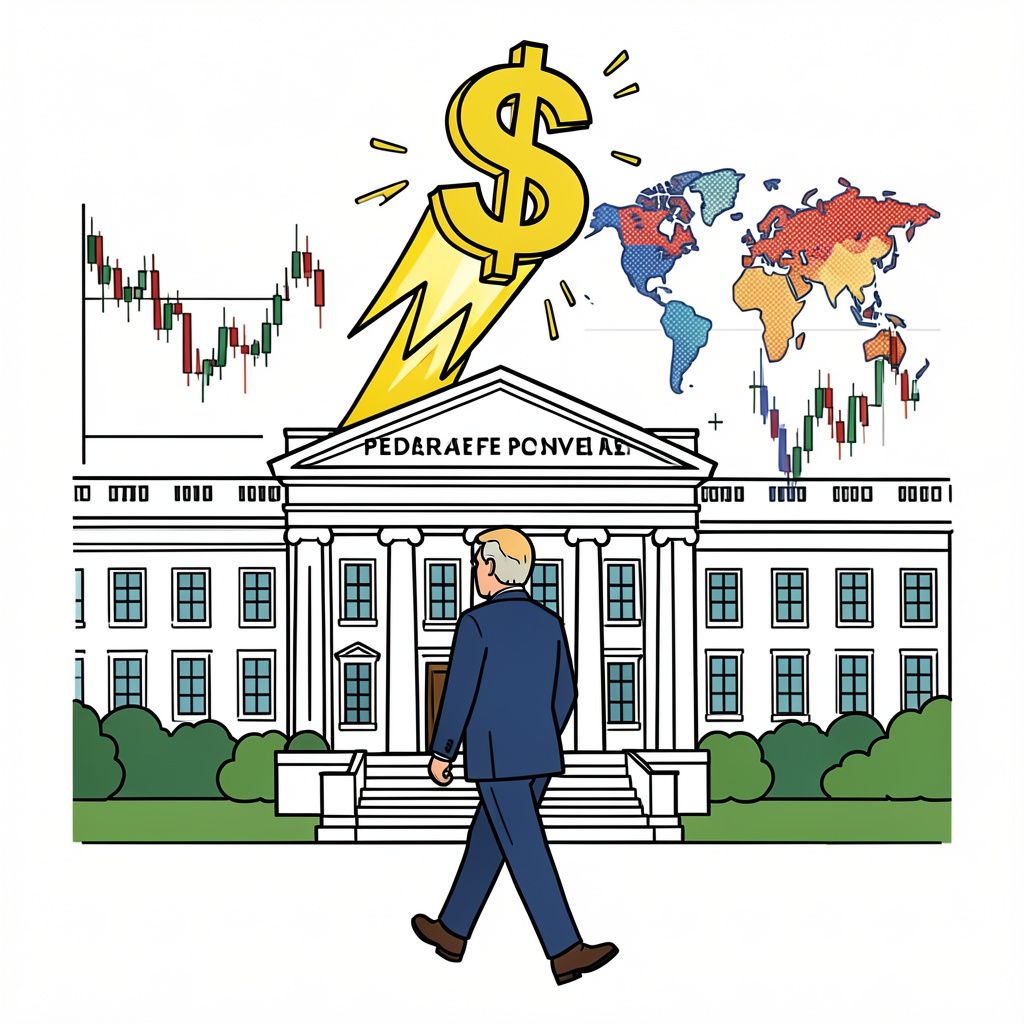
On April 29, 2026, the Mauritius-based financial services firm IUX published a comprehensive market analysis highlighting how recent developments in Federal Reserve leadership have become a primary focus for global markets [1]. The transition at the helm of the U.S. central bank introduces significant uncertainty regarding forward guidance and the future trajectory of interest rates [1]. This leadership shift culminates today, as Jerome Powell is scheduled to deliver his final press conference as Fed Chair [3]. Market commentators have characterized this transition as the “end of an era,” warning that the ensuing 48 hours could dictate the broader financial trends for the remainder of the second quarter of 2026 [3].
The Ripple Effects of a Dominant Dollar
A strengthening U.S. dollar inherently tightens global financial conditions, profoundly influencing capital flows and liquidity across international borders [1]. The IUX analysis details how the combined forces of leadership uncertainty and dollar strength have amplified volatility across multiple asset classes [1]. Historically, a robust dollar exerts downward pressure on dollar-denominated commodities, such as gold and oil, while simultaneously straining emerging-market funding and capital inflows [1].
Geopolitics and Sector-Specific Volatility
Beyond monetary policy, acute geopolitical pressures are actively reshaping the macroeconomic landscape. Tensions in the Strait of Hormuz—a critical maritime choke point that facilitates approximately 20% of the world’s oil supply—have recently driven crude oil prices up by 10 to 15% within a matter of weeks [2]. This energy sector volatility feeds directly into the inflation metrics that central banks are desperately trying to manage [2]. If monetary policymakers deem these energy price spikes as merely transitory, they may proceed with planned policy easing, which historically supports equity markets and commodities [2]. [alert! ‘It remains uncertain exactly how the incoming Fed leadership will interpret the duration and severity of these latest energy shocks’]
Navigating the Next 48 Hours and Beyond
As global markets brace for Powell’s final address today, the immediate focus rests on the forward guidance provided [2][3]. A hawkish tone would likely reinforce the U.S. dollar’s dominance and support bond yields, albeit at the expense of risk-asset growth [2]. Conversely, a dovish stance could provide a vital lifeline to equities and emerging market currencies that have been highly sensitive to recent monetary tightening [1][2].