Federal Reserve to Keep Interest Rates Unchanged at Jerome Powell's Final Meeting
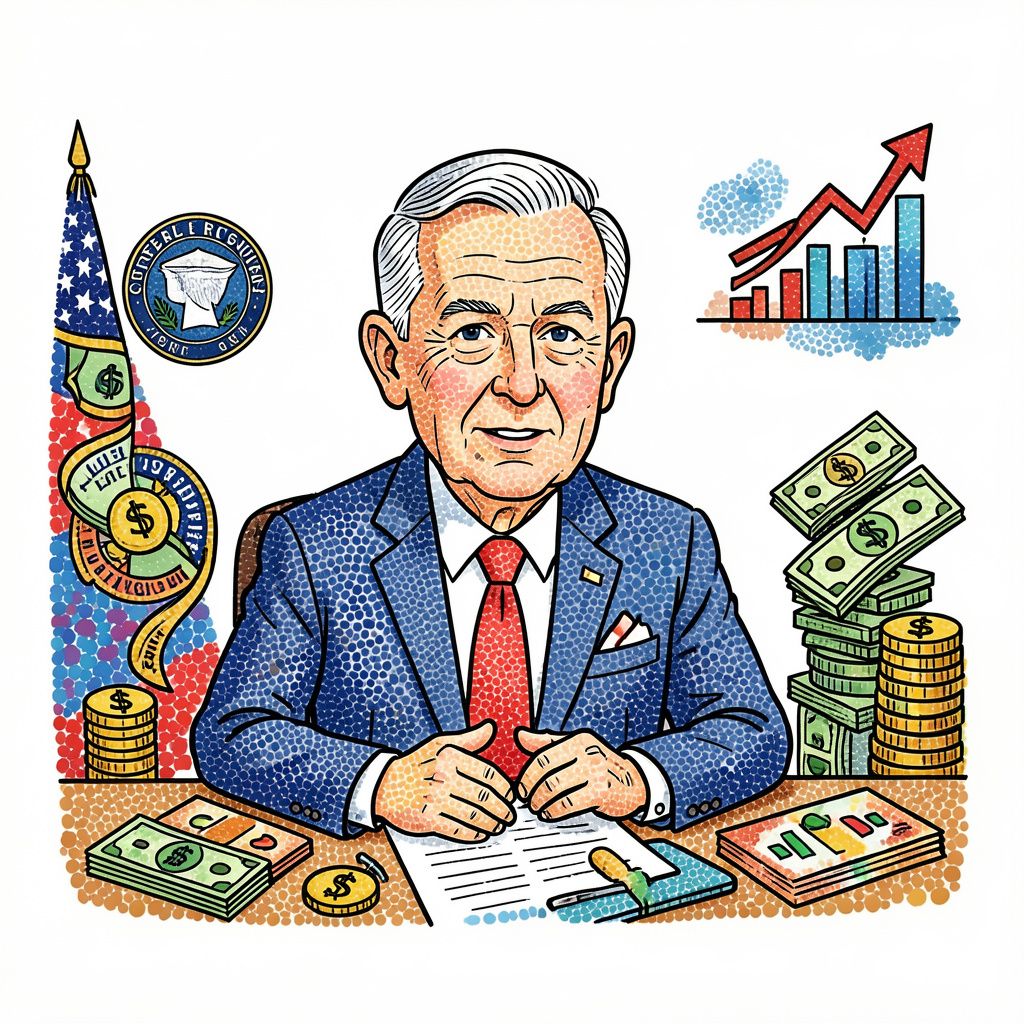
Washington, Wednesday, 29 April 2026.
The Federal Reserve will likely keep interest rates unchanged today during Jerome Powell’s final meeting as chair, resisting political pressure amid an inflation spike fueled by global energy shocks.
Geopolitical Shocks and the Inflation Resurgence
The central bank’s cautious stance is deeply intertwined with a sudden resurgence in inflation, primarily driven by global energy shocks [3][6]. Following the outbreak of the Iran war on February 28, 2026, Brent crude oil prices surged by approximately 50% through late April [6]. This geopolitical crisis has directly impacted American consumers, as the Consumer Price Index (CPI) jumped to 3.3% year-over-year in March 2026, an acceleration of 0.9 percentage points from February’s 2.4% rate [3][8]. This represents the highest annual inflation rate since May 2024 [2][3]. The energy index alone rose 10.9% in March, with a staggering 21.2% increase in gasoline prices accounting for nearly three-quarters of the overall monthly inflation spike [3][8].
A Leadership Transition Amid Economic Uncertainty
Today’s meeting carries historic weight as it is likely Jerome Powell’s final FOMC gathering as Federal Reserve chair before his term expires on May 15, 2026 [2][4]. His anticipated successor, former Fed Governor Kevin Warsh, was nominated by President Trump earlier this year [3][4]. Warsh’s path to confirmation was significantly smoothed on Friday, April 24, when the U.S. Justice Department officially closed its investigation into cost overruns regarding the Fed’s headquarters renovation [3][4]. The closure of this probe satisfied Senator Thom Tillis, a key member of the Senate Banking Committee, who stated he would now support Warsh’s confirmation [4]. Senate Republicans are expected to clear Warsh for a full Senate vote today [1].
Navigating the Dual Mandate
As the Fed navigates this transition, it must balance its dual mandate of price stability and maximum employment against a complex macroeconomic backdrop [5]. While inflation remains sticky, the labor market is showing signs of cooling, albeit remaining solid. The U.S. economy added 178,000 nonfarm payrolls in March, and the unemployment rate sits at 4.3% [3]. Goldman Sachs economists expect the FOMC to reiterate a “wait-and-see” message today, as the ongoing conflict in the Middle East continues to cloud the economic outlook [2].
Sources
- www.nytimes.com
- www.cbsnews.com
- www.kiplinger.com
- www.foxbusiness.com
- www.investopedia.com
- www.reuters.com
- www.facebook.com
- www.forbes.com