Justice Department Ends Probe Into Federal Reserve Chair, Clearing Path for Successor
Washington, Friday, 24 April 2026.
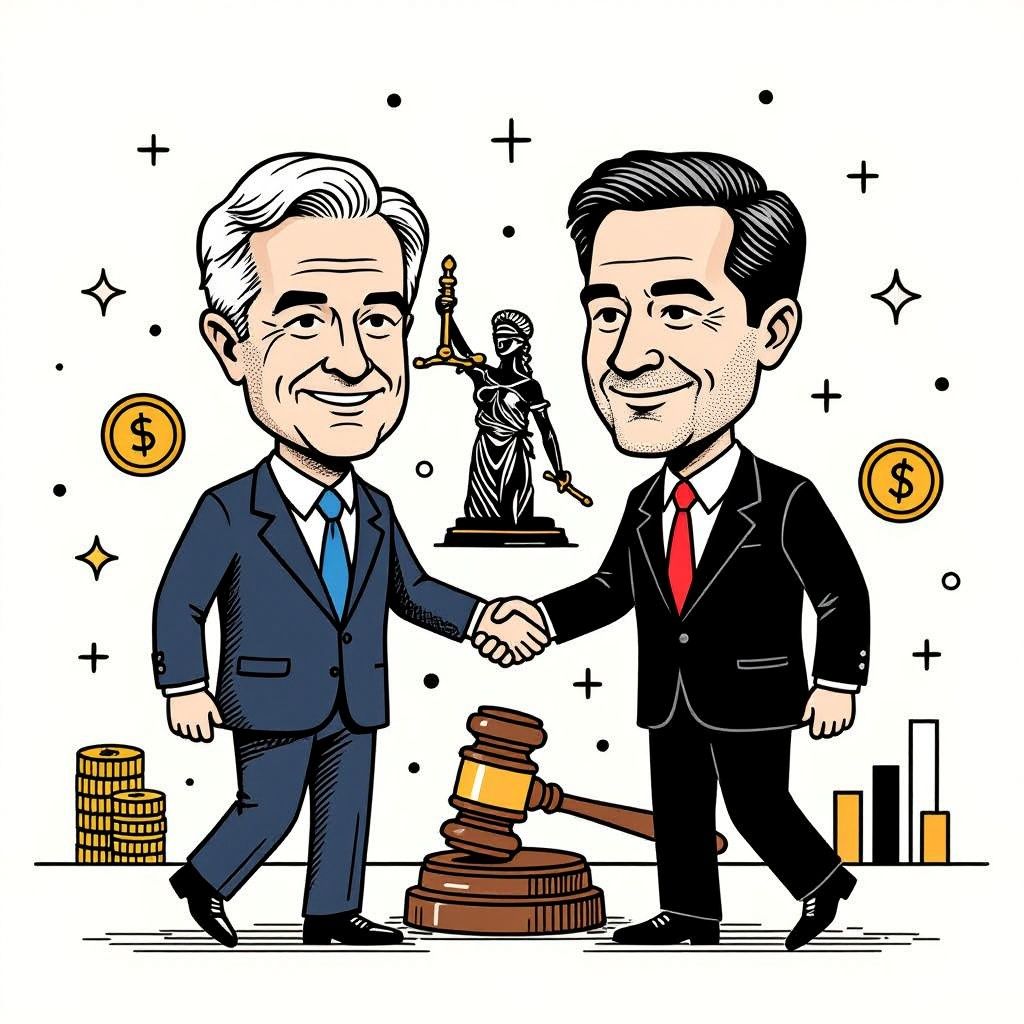
The Justice Department ended its criminal investigation into Federal Reserve Chair Jerome Powell over $2.5 billion renovation costs, removing a major political roadblock for his nominated successor, Kevin Warsh.
A Sudden Pivot by the Justice Department
On Friday, 24 April 2026, U.S. Attorney for the District of Columbia Jeanine Pirro officially announced the closure of the criminal probe into Powell [1][3]. The decision marks a rapid reversal; just two days prior, on Wednesday, 22 April 2026, Pirro told reporters she would “not back off” and was preparing to appeal a court ruling that had hindered the investigation [4]. Instead, Pirro has now deferred the matter to the Federal Reserve’s Office of the Inspector General (IG) [2][4].
Scrutinizing the Headquarters Renovation
The investigation centered on escalating costs associated with the ongoing renovation of the central bank’s headquarters in Washington, D.C. [2]. Approved in 2017 with an initial budget, the project’s projected costs surged from $1.9 billion in 2023 to approximately $2.5 billion by 2025 [2][4]. This represents a staggering cost increase of 31.579 percent over that two-year period. White House spokesman Kush Desai expressed support for the transition to an IG inquiry, stating that American taxpayers “deserve answers about the Federal Reserve’s fiscal mismanagement” [2].
Breaking the Senate Deadlock
The cessation of the DOJ investigation fundamentally alters the political calculus in the Senate [4]. Senator Tillis’s refusal to advance any Fed nominee threatened to create an 11-11 deadlock in the Senate Banking Committee, effectively neutralizing the Republican party’s narrow 12-10 majority [4]. With the probe officially closed, the legislative path is now clear for the swift confirmation of Kevin Warsh, whom President Donald Trump nominated in January 2026 to succeed Powell [1][4].
Independence Under the Microscope
As Warsh prepares to take the helm, the central bank’s operational independence remains under intense scrutiny [1]. During his 21 April 2026 testimony, Warsh explicitly stated that the president “never once asked me to commit to any particular interest rate decision,” pledging to be an independent actor if confirmed [1]. Yet, mere hours after Warsh’s testimony, President Trump contradicted the spirit of that independence in a CNBC interview, stating he “would” be disappointed if Warsh did not immediately cut interest rates upon taking office [1]. As the Federal Reserve navigates this historic leadership transition, the delicate balance between political pressure and monetary policy independence will undoubtedly define the incoming chairman’s tenure [GPT].