India and New Zealand Forge Historic Trade Deal with $20 Billion Investment
New Delhi, Tuesday, 28 April 2026.
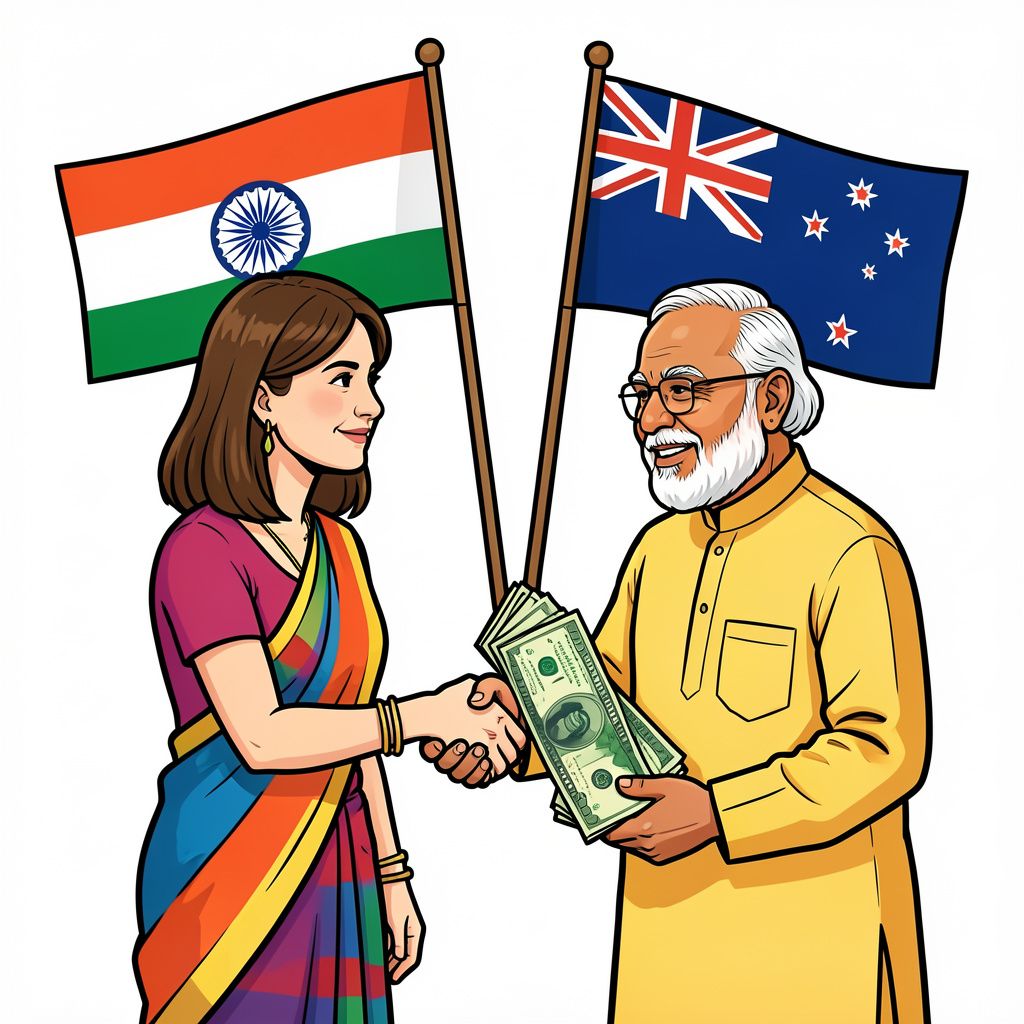
India and New Zealand have signed a landmark trade agreement that eliminates tariffs on all Indian exports and secures a $20 billion investment, strategically reshaping Indo-Pacific economic ties.
Decoding Tariff Eliminations and Market Protection
At the core of the agreement is New Zealand’s unprecedented commitment to eliminate duties on 100 percent of its tariff lines upon the pact’s entry into force [1][2]. This concession covers all 8,284 tariff lines, effectively erasing an average applied tariff of 2.2 percent on Indian goods [1][2]. For labor-intensive Indian sectors such as textiles, apparel, and leather, the impact will be substantial, as these products previously faced tariffs as high as 10 percent [1][2]. By removing these barriers, Indian manufacturers gain immediate, unhindered access to New Zealand’s consumer base of 5.2 million [GPT], leveling the competitive playing field.
A $20 Billion Infusion and Trade Volume Targets
Beyond the exchange of goods, the framework outlines a formidable capital commitment. Wellington has pledged up to $20 billion in investments in India spread over the next 15 years [1][2][3]. This capital injection is targeted at key growth sectors, including education, tourism, construction, financial services, and information technology [2]. To ensure these capital flows materialize, the agreement incorporates a “rebalancing clause” and institutional monitoring mechanisms to review any investment shortfalls [2].
Professional Mobility and Regulatory Alignment
A critical component of the pact addresses human capital and cross-border mobility. The agreement establishes a Temporary Employment Entry provision, which permits up to 5,000 Indian professionals in specified occupations to work in New Zealand concurrently for up to three years [2][4]. Furthermore, it introduces an annual Working Holiday Visa quota, allowing 1,000 young Indians to enter New Zealand for up to 12 months [1][2]. These mobility pathways are specifically designed to support sectors facing skill shortages, such as IT, healthcare, and engineering [1][2].
The 16-Year Journey to Ratification
The signing marks the culmination of 16 years of attempted negotiations, which resumed in March 2025 following a decade-long pause and concluded in December 2025 [1][4]. However, the agreement’s implementation remains contingent on formal ratification processes in both capitals [2]. In New Zealand, the pact will undergo review by the Parliament’s foreign affairs, defence, and trade committee, a process expected to take at least six months [1]. While the opposition New Zealand Labour Party has confirmed its backing, ensuring bipartisan support, the deal faces resistance from the populist minor coalition partner, New Zealand First [3][4]. Meanwhile, the agreement also awaits the official nod from India’s Cabinet before it can legally enter into force [2].