United States Eases Sanctions on Russian Energy to Curb Surging Global Fuel Costs
Washington, Friday, 9 October 2026.
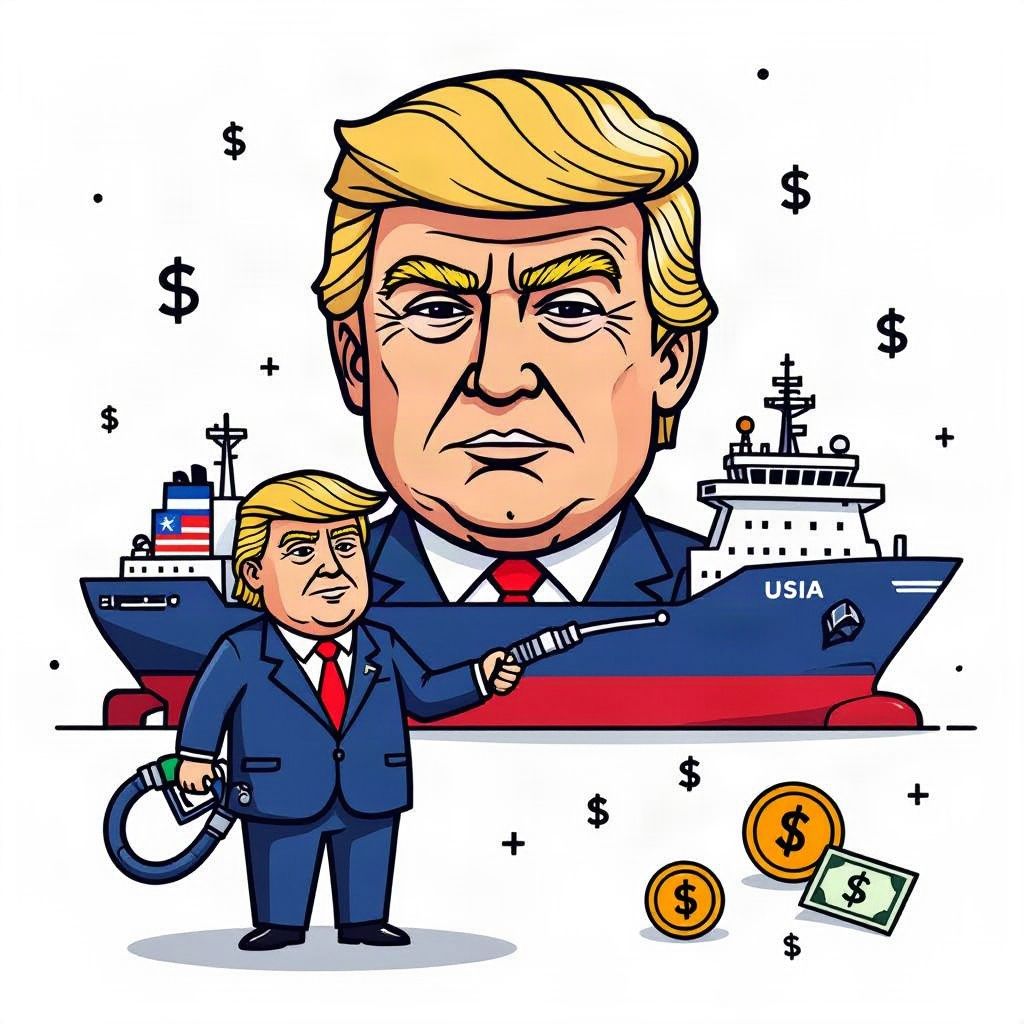
President Trump announced a deal with Russia to supply millions of tons of diesel, prompting the Treasury to temporarily ease sanctions through April 2027 to lower record fuel prices.
Strategic Agreement Announced Amidst Market Volatility
On Friday, 9 October 2026, President Donald Trump announced a definitive agreement with Russian President Vladimir Putin to restore the flow of Russian diesel fuel to United States and global energy markets [1]. The announcement was made via Truth Social, where President Trump stated he concluded a highly successful discussion resulting in Moscow agreeing to supply hundreds of thousands of tons of diesel fuel to the American and global marketplace [3]. This strategic shift aims to alleviate persistent pressure on commercial transport and supply chains caused by global fuel tightness [1]. Executive leaders and trade policy analysts are currently evaluating how this move could recalibrate refined product trade flows and impact domestic pump prices ahead of the midterm elections [1].
Sanctions Relief and Implementation Timeline
To facilitate this energy transfer, the U.S. Treasury Department simultaneously announced it would ease sanctions on Russia through 7 April 2027 [2]. The Office of Foreign Assets Control (OFAC) issued a temporary general license authorizing the sale, delivery, and importation of diesel fuel of Russian Federation origin [2]. The official document posted to the Treasury’s website confirms the authorization is valid through 12:01 a.m. eastern daylight time, April 7, 2027 [7]. This regulatory change marks a significant departure from previous sanctions applied since Russia’s invasion of Ukraine, intended specifically to move diesel fuel onto the market [2].
Supply Volumes and Delivery Schedule
According to the President’s post, the supply agreement stipulates a phased delivery schedule beginning immediately [5]. Russia will supply more than 300,000 tons of diesel initially, followed by 500,000 tons in November 2026, and 1 million tons immediately thereafter [1]. An additional 3 million tons of diesel may be delivered based on the condition of Russia’s refineries [1]. The total committed volume for the initial phase amounts to 1.800 million tons of diesel fuel [5]. This influx is designed to counteract the export ban Moscow imposed in July, which had been extended through the end of October 2026 [2].
Market Reaction and Geopolitical Implications
Following the announcement, European-traded diesel futures fell 4%, though prices remain higher by 135% since the start of the year [2]. Diesel prices in the U.S. have doubled since the war with Iran began in February 2026, creating significant political pressure on Republicans [4]. The average diesel price in the U.S. is currently $6.28 a gallon, down from a record high of $6.53 recorded at the end of September [4]. While the administration projects prices will come down in record numbers, European allies have expressed concern, with German Chancellor Friedrich Merz stating such moves are wrong [2]. Ukrainian President Volodymyr Zelenskyy has previously denounced the lifting of sanctions, arguing it would fund Russia’s war machine [2].
Sources
- www.cnbc.com
- www.nbcnews.com
- www.politico.com
- www.bbc.com
- nypost.com
- x.com
- ofac.treasury.gov
- www.reuters.com
- www.politico.eu
- truthsocial.com