Major Fire Disables U.S. Navy Destroyer in the Pacific, Raising Readiness Concerns
Washington, Thursday, 30 April 2026.
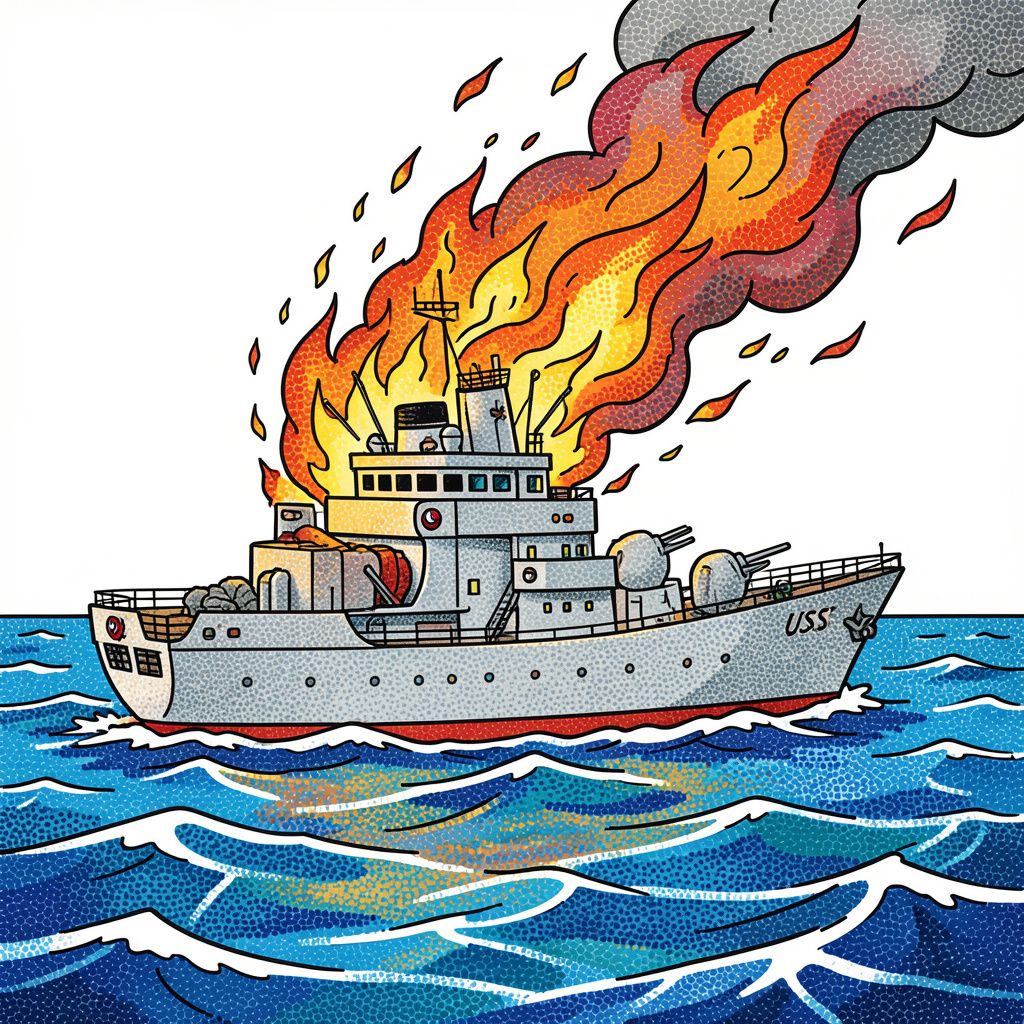
A major fire disabled the USS Higgins in the Pacific. As the third U.S. Navy shipboard blaze in weeks, this incident raises critical operational readiness and maintenance concerns.
Operational Impact in a Critical Theater
Earlier this week, a severe blaze erupted aboard the USS Higgins, an Arleigh Burke-class guided-missile destroyer operating within the U.S. Indo-Pacific Command (INDOPACOM) [1][2]. The fire completely disabled the vessel’s electricity and propulsion systems, leaving the warship unable to maneuver or defend itself effectively [1][2]. As of Wednesday, April 29, 2026, officials reported no injuries among the service members on board [1][2]. However, the exact cause of the fire, the extent of the structural damage, and the timeline for necessary repairs remain entirely unknown [alert! ‘U.S. officials have not yet disclosed the precise location of the vessel, the cause of the fire, or the expected repair schedule’] [1][2].
A Troubling Trend of Shipboard Blazes
The incident aboard the USS Higgins is not an isolated event; it marks the third fire to strike a U.S. Navy vessel in a matter of weeks [1][2]. Earlier in April 2026, a fire broke out on the aircraft carrier USS Dwight D. Eisenhower, resulting in injuries to eight sailors [1][2]. Shortly thereafter, a separate blaze erupted in the laundry spaces of another aircraft carrier, the USS Gerald R. Ford, injuring two additional service members [1][2]. This brings the total number of sailors injured in recent shipboard fires to 10 [1][2].
Legacy of the USS Higgins and Ongoing Vulnerabilities
The disabled destroyer bears the name of Marine Colonel William R. Higgins, a Vietnam War veteran whose tragic history underscores the enduring risks of military service [1][2]. While serving with a United Nations peacekeeping mission in southern Lebanon, Higgins was kidnapped by Hezbollah-linked militants in February 1988 [1][2]. He was tortured and murdered in captivity, with his remains ultimately recovered from a Beirut street in December 1991 [1][2]. He was posthumously awarded the Presidential Citizens Medal and the Prisoner of War Medal [1].