Rubio Outlines Economic Risks Amidst Middle East Tensions and Domestic Threats
Washington, Tuesday, 28 April 2026.
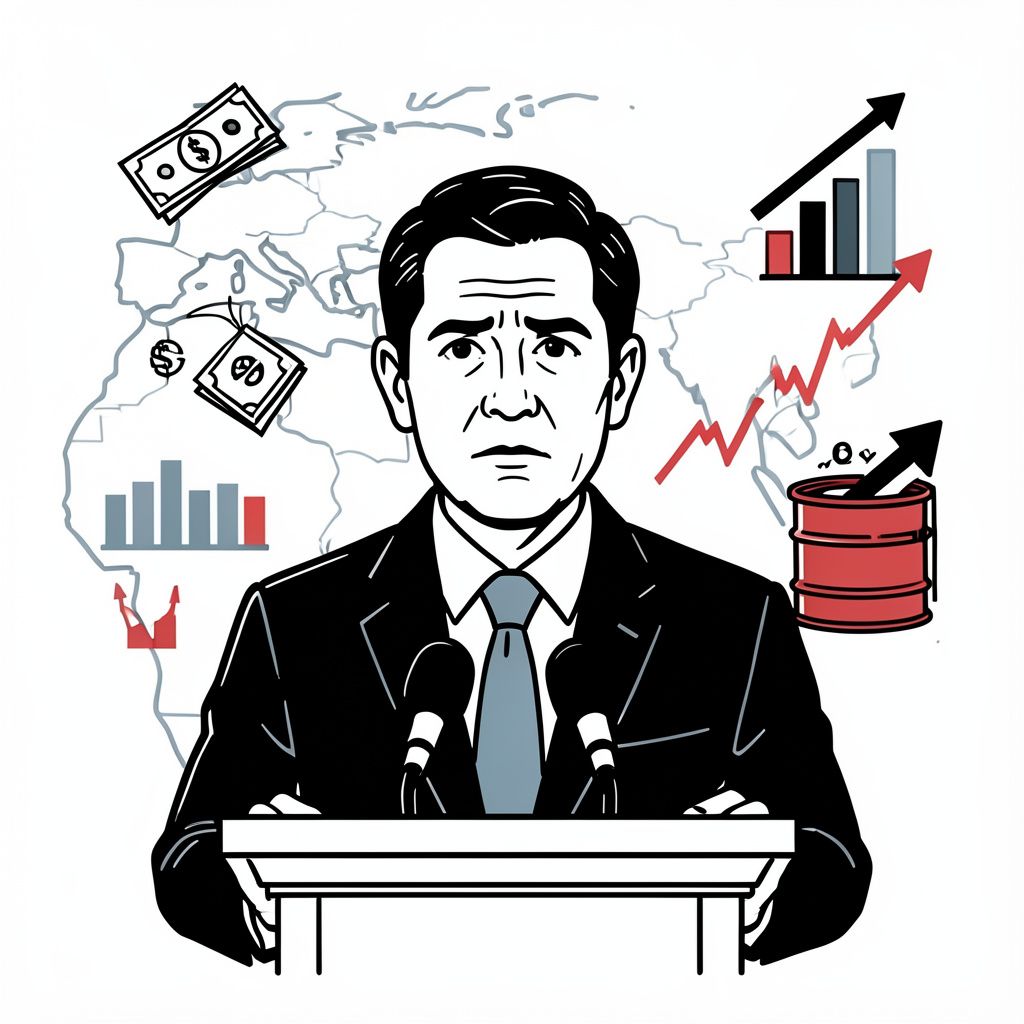
Following a Washington security breach, Marco Rubio addresses escalating US-Iran tensions, warning that Middle East instability threatens global supply chains and pushes oil prices above $100 per barrel.
Security Breaches and Domestic Stability
On April 18, 2026, a significant security breach occurred at the Washington Hilton during the annual White House Correspondents’ Dinner [2]. A 31-year-old suspect from Torrance, California, identified as Cole Tomas Allen, armed with multiple weapons including guns and knives, rushed toward the subterranean ballroom [2]. Secret Service agents quickly subdued Allen, though one law enforcement officer was shot in his bullet-resistant vest [2]. The incident prompted the immediate evacuation of high-level Republican administration officials, including President Donald Trump, Vice President JD Vance, Defense Secretary Pete Hegseth, and Secretary of State Marco Rubio [2].
The Economic Chokepoint of the Middle East
The domestic disruption unfolded against the backdrop of severe international friction, as the United States is currently engaged in an ongoing war with Iran [2][4]. A central driver of global economic instability remains the conflict over the Strait of Hormuz, a critical maritime chokepoint that facilitates roughly 20% of the world’s global oil supply [4]. Iran recently proposed an arrangement to reopen the strait in exchange for the U.S. ending its blockade and easing war conditions [4]. However, Secretary Rubio outlined the administration’s strict policy stance, explicitly warning on April 27 that the U.S. will reject any arrangement allowing Tehran to control passage or impose fees in the international waterway, arguing such a concession would severely undermine international maritime rules [1].
Diplomatic Hurdles and Regional Proxies
Resolving these economic bottlenecks is complicated by Iran’s internal political structure. Secretary Rubio noted that Iran is “deeply fractured internally,” forcing U.S. diplomats to navigate a labyrinth of multiple Iranian factions who must subsequently negotiate among themselves before any consensus can be reached [1]. Rubio highlighted that the country being run by “radical Shia clerics” presents a significant impediment to diplomacy [1]. He emphasized that the Iranian leadership’s revolutionary nature drives them to expand their influence beyond their borders, utilizing proxy groups across the region to project power and destabilize neighbors [1].
Monetary Policy in a Volatile Landscape
The intersection of these geopolitical conflicts and energy shocks is directly shaping domestic monetary policy. With global economic growth projected at approximately 3.1%, central banks are forced to balance the risks of inflation against potential economic slowdowns [4]. The Federal Reserve is widely expected to hold interest rates steady during its policy meetings this week [alert! ‘exact Fed decision outcome pending as of April 28, 2026’] [4]. This anticipated pause on rate cuts is primarily driven by elevated inflation risks exacerbated by the Middle East conflict and the resulting surge in energy costs [4].