Trump Weighs Ukraine Truce and Russian Role in Iran Nuclear Strategy
Washington, Thursday, 30 April 2026.
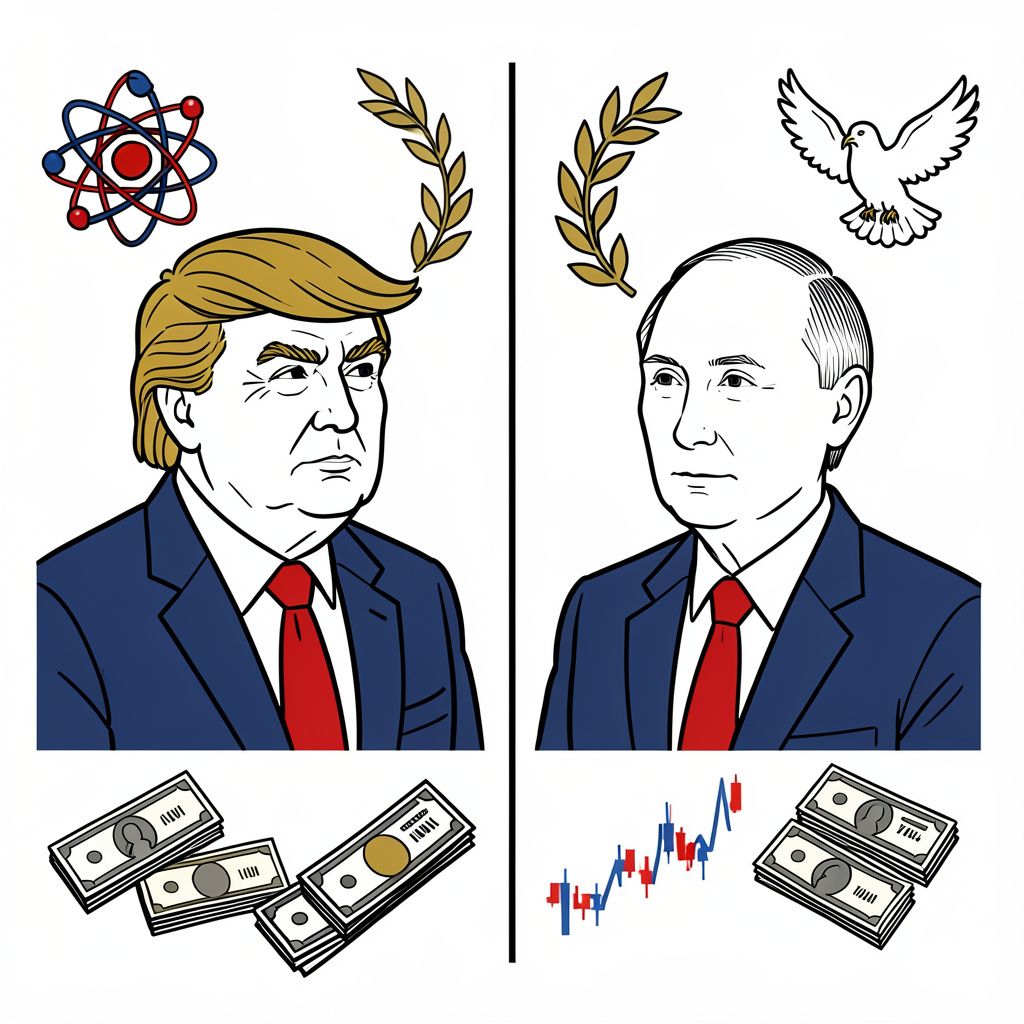
President Trump revealed a 90-minute call with Vladimir Putin, discussing a temporary Ukraine ceasefire for Victory Day and a surprising Russian offer to manage Iran’s enriched uranium.
Lunar Triumphs and Nuclear Diplomacy
On Wednesday, April 29, 2026, Republican President Donald Trump hosted the crew of the successful Artemis II moon mission at the White House [1]. Amid the celebration of American space commercialization, Trump pivoted to international diplomacy, revealing details of a 1.5-hour phone call with Russian President Vladimir Putin that originally occurred on April 22 [2][3][4]. During the exchange, Putin proposed that Russia act as a third-party intermediary to handle 970 pounds of enriched uranium from Iran, aiming to facilitate a potential nuclear agreement [1].
Weighing a Victory Day Truce in Ukraine
The crux of the Trump-Putin dialogue centered on a proposed temporary ceasefire in Eastern Europe, timed to coincide with Russia’s Victory Day celebrations on May 9, 2026 [2][5]. Kremlin foreign policy adviser Yuri Ushakov confirmed Putin’s readiness to declare the truce, a measure Trump actively supported to halt the mounting casualties [2][5]. However, the feasibility of such a pause remains highly uncertain. Previous ceasefires have rapidly collapsed due to mutual violations [2][5].
The Complex Web of the US-Iran Conflict
The diplomatic maneuvering over Ukraine is inextricably linked to the broader Middle Eastern theater. During the April 22 call, Putin welcomed Trump’s decision to extend a ceasefire in Iran but explicitly warned that any U.S. ground operation would be “dangerous” [3]. This dynamic highlights a complex geopolitical paradox: while Russia offers to manage Iranian uranium [1], Western intelligence agencies report that Moscow continues to supply Tehran with intelligence and drones utilized to target U.S. assets in the region [3].
Domestic Instability Shadows Foreign Policy
The administration’s ambitious foreign policy agenda is unfolding against a backdrop of severe domestic turbulence. During the same Artemis II reception, Trump briefly addressed the recent indictment of former FBI Director James Comey, signaling ongoing legal and political friction within the United States [1]. This domestic tension was violently punctuated just days earlier on Saturday, April 25, 2026, when a gunman attempted to storm the White House Correspondents’ Association dinner [6].