US Envoys Pursue Indirect Peace Talks with Iran as Blockades Threaten Global Markets
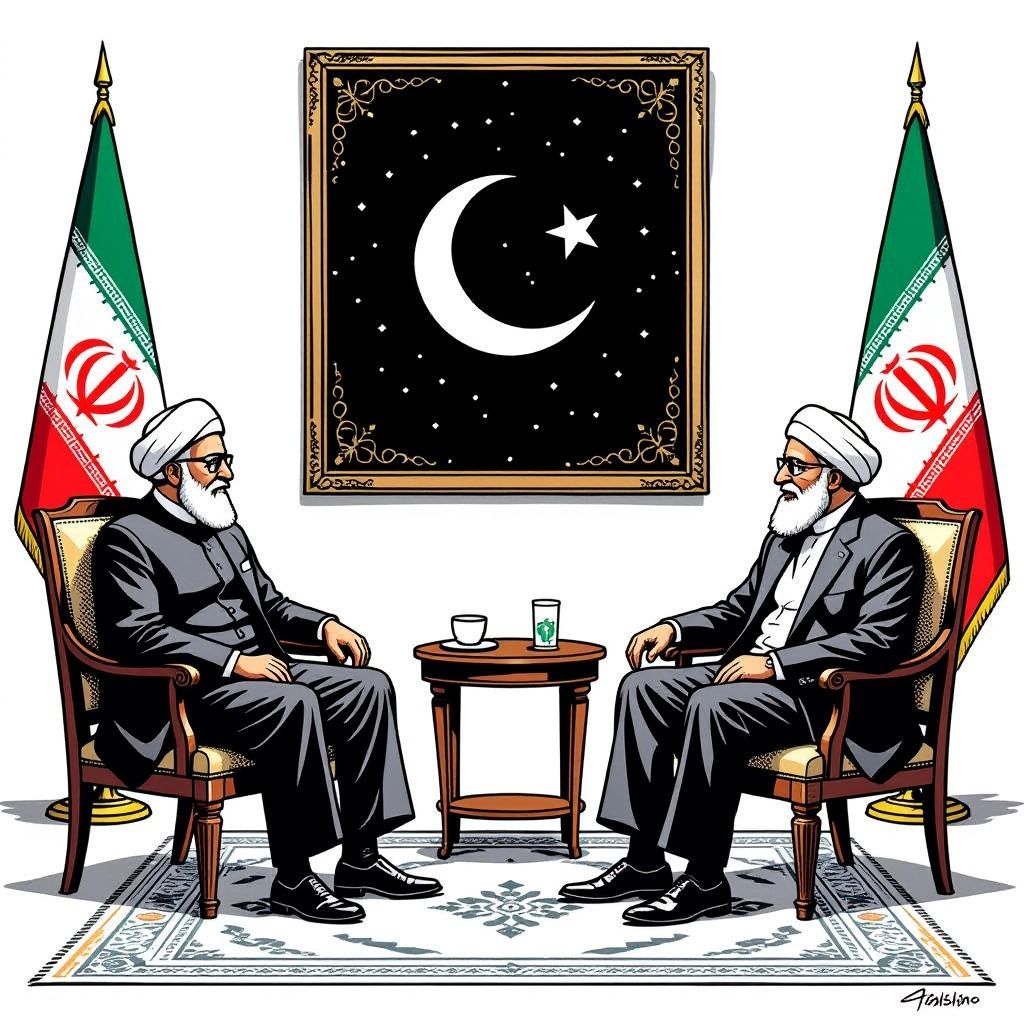
Islamabad, Saturday, 25 April 2026.
As expanding blockades threaten global energy markets, US envoys arrive in Pakistan today seeking critical indirect ceasefire negotiations with Iranian officials to restore economic stability.
Diplomatic Maneuvering in Islamabad
To navigate this escalating standoff, President Trump dispatched envoys Steve Witkoff and Jared Kushner to Islamabad, Pakistan, this weekend of April 25, 2026 [2][5][6]. They are tasked with reviving ceasefire negotiations following the outbreak of war between the US, Israel, and Iran on February 28, 2026 [3]. Iranian Foreign Minister Abbas Araghchi arrived in the Pakistani capital on Friday to meet with Prime Minister Shehbaz Sharif and Armed Forces Chief Asim Munir to discuss Iran’s positions on ending the conflict [4][5]. Despite the presence of key figures from both nations, Iranian officials, including foreign ministry spokesperson Esmael Baqaei, have explicitly stated that no direct bilateral meetings are planned between the US and Iran [4][5].
The Nuclear Equation and Military Posture
A central pillar of these indirect talks is Iran’s advancing nuclear capabilities. Following the US withdrawal from the Obama-era nuclear pact in 2018, Iran accelerated its uranium enrichment program [2]. Today, Iran possesses an estimated 11 tons, or 11,000 kilograms, of uranium at various enrichment levels [2]. Compared to the 299.4 kilogram limit under the 2015 agreement, this represents an increase of approximately 3574.015 percent [2]. This stockpile is sufficient to potentially construct up to 100 nuclear weapons [2]. A critical point of contention remains the retrieval of a half-ton of uranium enriched to 60 percent purity [2] [alert! ‘It is unclear if this specific half-ton cache was completely destroyed during the US bombing of an enrichment tunnel complex in June 2025, as public discourse still emphasizes retrieving it’]. Furthermore, EU foreign policy chief Kaja Kallas has warned that without nuclear experts present, the current negotiations risk producing an agreement significantly weaker than previous pacts [5].
Global Economic Ripple Effects
The geopolitical friction in the Middle East is sending profound shockwaves through the global economy [GPT]. The chokehold on the Strait of Hormuz has forced international shipping companies to drastically alter their logistics, with some businesses paying up to $4 million to transit the Panama Canal as a safer, albeit expensive, alternative [5]. This rerouting is severely straining global supply chains [5].