Lamborghini Abandons Electric Cars Following Ferrari's Disastrous Launch
Sant’Agata Bolognese, Thursday, 28 May 2026.
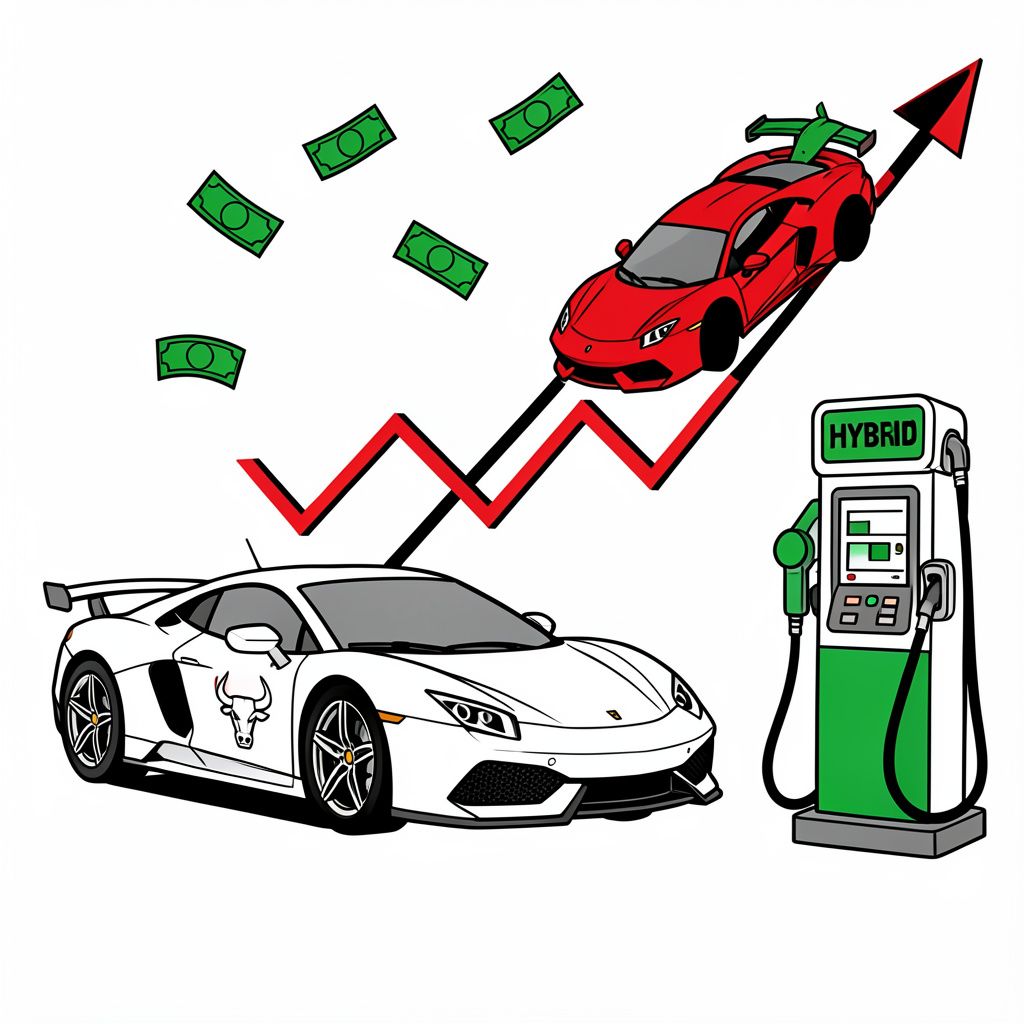
After Ferrari’s first electric vehicle triggered an 8% stock plunge, Lamborghini officially abandoned its own electric car plans, pivoting instead to hybrid vehicles to satisfy luxury buyers.
A Strategic Pivot in Sant’Agata Bolognese
On Wednesday, May 27, 2026, Lamborghini chief executive Stephan Winkelmann publicly justified his company’s strategic pivot away from fully electric vehicles (EVs) [2]. The Volkswagen-owned automaker has indefinitely postponed the launch of its first pure electric models, including the Lanzador gran tourer and the electric Urus SUV [1][2]. Winkelmann stated that observing the luxury market revealed a stagnant acceptance curve for EVs among their target demographic, prompting the brand to double down on plug-in hybrid electric vehicles (PHEVs) instead [1][2]. This declaration arrived just days after rival Ferrari NV (NYSE: RACE [GPT]) faced severe market and consumer backlash following the debut of its first all-electric car, the Luce [1][3].
The Luce Misstep Shakes Maranello
The catalyst for Lamborghini’s vindication was the turbulent reception of Ferrari’s €550,000 ($640,000) Luce EV, which was unveiled in Rome on Sunday, May 24, 2026, with order books opening the following day [3]. Despite boasting formidable specifications—including four electric motors generating over 746 kW of power, a top speed exceeding 310 km/h, and a 0 to 100 km/h acceleration time of 2.5 seconds—the vehicle failed to electrify investors [3]. On Tuesday, May 26, 2026, Ferrari shares plummeted by 8% during intraday trading in Milan before closing 6.4% lower, effectively valuing the company at €53 billion [1][3]. In New York, the stock mirrored this decline, dropping 5.3%, highlighting a cross-market discrepancy of 2.7% in peak intraday sell-offs between the two exchanges [1].
Institutional Backlash and Heritage Concerns
Criticism has not been limited to retail investors and social media influencers; prominent Italian figures have also voiced their dismay [3]. On May 26, 2026, 78-year-old Luca di Montezemolo, who served as Ferrari’s chairman and president from 1991 to 2014, delivered a scathing assessment to the Italian news agency askanews [4]. He warned that the company risks “destroying a legend” and quipped that the Luce is “certainly a car that at least the Chinese won’t copy” [4]. Both Montezemolo and Italian Deputy Prime Minister Matteo Salvini publicly expressed hopes that Ferrari would remove its iconic prancing horse logo from the new electric model [1][4].
The Broader Supercar Market Recalibrates
The contrasting strategies of Italy’s premier automotive exports highlight a broader recalibration within the luxury sector [alert! ‘Sector trends inferred from specific company actions’]. Alongside Lamborghini’s indefinite delays, Germany’s Porsche AG has also decelerated its electrification timeline in response to tepid market interest [3]. By observing the sharp equity drop in Ferrari’s shares as a cautionary tale, legacy supercar manufacturers are recognizing that high-net-worth buyers still equate ultra-luxury with the visceral experience of internal combustion and hybrid powertrains [1][2]. As the launch of pure EVs in this tier is pushed past 2030, capital allocation is firmly rotating back toward advanced plug-in hybrid technologies, securing the immediate future of the combustion engine in the upper echelons of automotive performance [2].