Dodge Unveils Copperhead Supercar in Major Expansion of High-Performance Lineup
Auburn Hills, Thursday, 21 May 2026.
Stellantis is revitalizing Dodge with eight new high-performance models, highlighted by the Copperhead SRT—a stunning Viper-inspired supercar signaling a bold $70 billion commitment to the enthusiast market.
A $70 Billion Strategic Pivot
Following a turbulent fiscal year in 2025 that culminated in a $26 billion loss, Stellantis (NYSE: STLA) is engineering a massive strategic pivot [4]. During an Investor Day presentation at its Auburn Hills, Michigan headquarters on May 20, 2026, the automaker outlined its “FaSTLAne 2030” initiative [1][4]. The sweeping plan injects $70 billion into the company’s operations, with 70 percent of that capital—equating to 49 billion—concentrated on just four of its 14 active brands [4]. The core of this strategy involves reversing previous electrification mandates that eroded profitability, instead leaning heavily into high-margin, internal combustion engine (ICE) performance vehicles [3][4]. According to Stellantis CEO Antonio Filosa, expanding the model lineup for currently profitable divisions like Dodge is a direct mechanism to increase sales volume and bolster overall corporate margins [2].
The Copperhead SRT Strikes
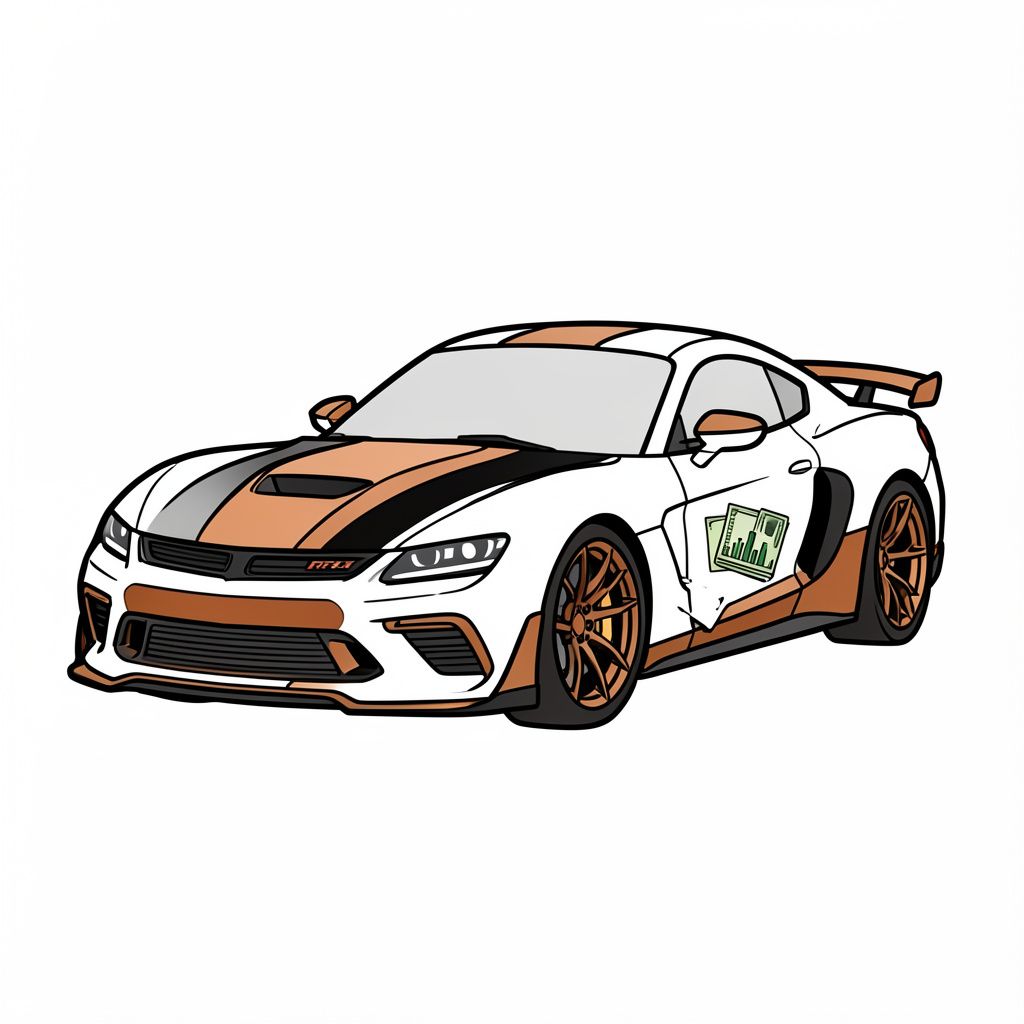
The centerpiece of this high-octane renaissance is the Dodge Copperhead SRT, a flagship two-seater supercar aimed directly at the enthusiast market and competitors like the Ford Mustang GTD [2][7]. Described by industry insiders as a visual mash-up featuring a Charger-inspired front fascia and a Viper-esque rear, the new Copperhead is smaller than the current Charger and boasts aggressive aerodynamics, including a prominent rear wing, sculpted sides with large airflow gashes, and dual tailpipes [1][2][7]. The vehicle showcased at the investor event was finished in light gray with blue racing stripes [2][6]. While specific powertrain details remain unconfirmed, Dodge brand chief Tim Kuniskis noted that a pure electric vehicle (EV) configuration is highly unlikely [2]. Furthermore, Kuniskis clarified that while the Copperhead is not a direct successor to the Viper, it remains “a snake” that authenticates Dodge’s identity as an unapologetic performance brand [2].
Historical Context of the Copperhead
The Copperhead nameplate carries significant historical weight for the American automaker [GPT]. The original Dodge Copperhead concept debuted nearly 30 years ago at the 1997 North American International Auto Show in Detroit [1][2]. Initially conceived as a more accessible alternative to the formidable Dodge Viper, the 1997 concept was equipped with a 2.7-liter V-6 engine and was slated for a 2000 production release with a target price of $30,000 [2][7]. Ultimately, those production plans were scrapped before the vehicle could reach assembly lines [2][7]. Automotive analysts note that the 2026 iteration is significantly more aggressive in both styling and market positioning than its 1990s predecessor, trading its original entry-level sports car ethos for hyper-muscle credibility [7].
Broadening the Brotherhood of Muscle
Beyond the flagship supercar, Dodge’s SRT division is expanding its footprint across the consumer spectrum with a total of eight new performance models planned for US brands by 2030 [1][5]. Among these is the revival of the GLH (“Go Like Hell”) moniker, which will adorn a new midsize muscle crossover positioned as the next-generation replacement for the Hornet [2][3]. The GLH will utilize the new STLA One platform—a shared architecture designed to reduce manufacturing costs by 30 percent—and is expected to deliver nearly 300 horsepower [2][6]. Concurrently, the core Charger lineup is receiving a refresh across both two- and four-door configurations [2][3]. Industry speculation suggests the upcoming Charger SRT variant could feature a supercharged 6.2-liter V8 engine outputting roughly 777 horsepower (579 kW) and 921 Nm of torque, ensuring the brand’s ICE legacy remains intact [3]. Additionally, the Durango SUV, which has utilized its current platform for 16 years, is slated for a comprehensive modernization within the next two years [2][3].
Ram and Jeep Join the SRT Offensive
The SRT performance expansion is not limited to Dodge; it extends robustly into the Jeep and Ram portfolios [1]. Jeep is slated to receive SRT treatments for both the Grand Cherokee and the Grand Wagoneer, alongside a novel Wrangler Scrambler “muscle truck” [1]. Meanwhile, the Ram truck division will introduce two new SRT models to complement the existing 1500 TRX and Rumble Bee variants [1]. These include an SRT-badged Dakota midsize pickup—expected to house a twin-turbo I6 Hurricane engine rivaling the 405-horsepower Ranger Raptor [alert! ‘powertrain expectations remain unconfirmed by manufacturer’]—and a full-sized Ramcharger SUV built on an Extended Range Electric Vehicle (EREV) chassis [1]. By weaponizing its legacy performance badges across diverse vehicle segments, Stellantis is executing a calculated maneuver to capture high-margin sales and restore its financial footing in a rapidly shifting automotive landscape [1][4].
Sources
- carbuzz.com
- www.motortrend.com
- www.carscoops.com
- www.freep.com
- www.germancarforum.com
- www.aol.com
- www.topspeed.com