Eighth Consecutive Legal Defeat: Federal Courts Deny Justice Department Access to State Voter Data
Washington, Thursday, 21 May 2026.
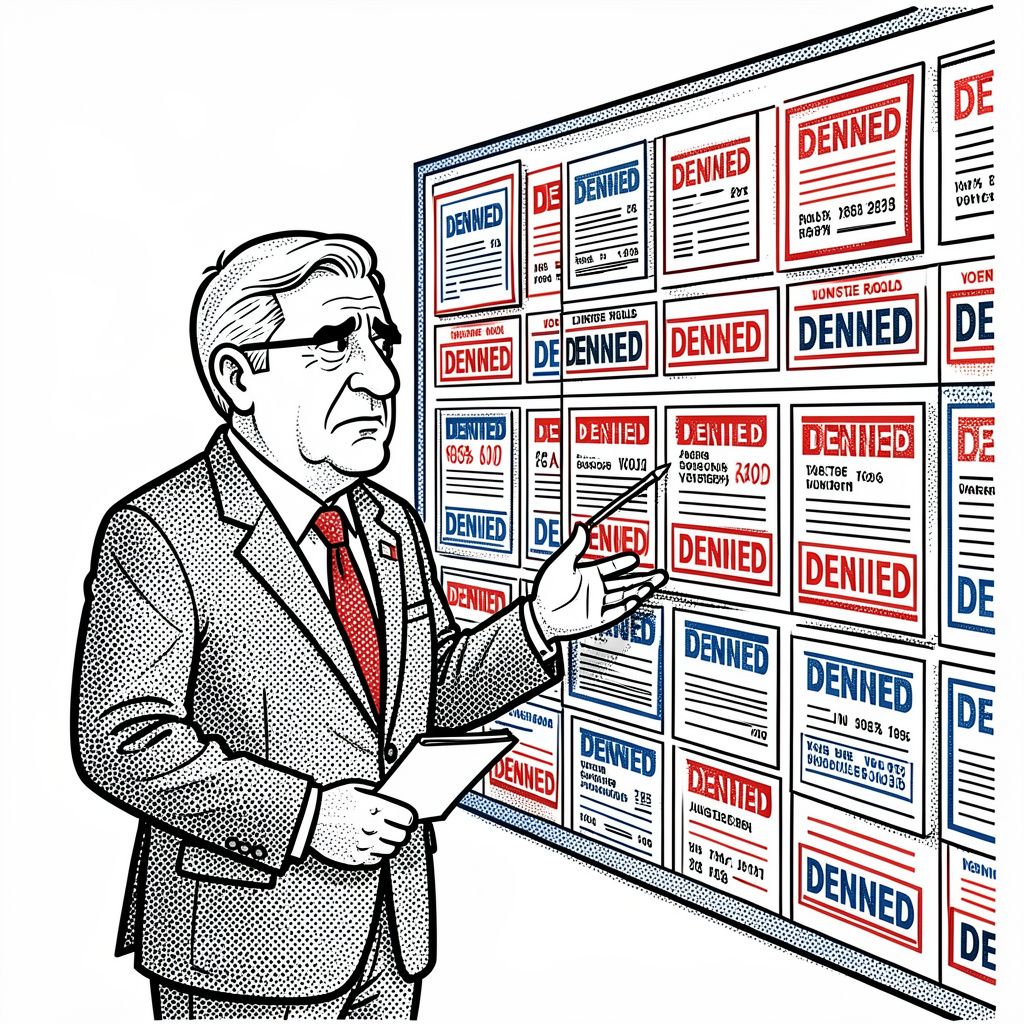
Federal judges in Maine and Wisconsin blocked the Justice Department from acquiring state voter rolls, marking the agency’s eighth consecutive legal defeat in its nationwide push for election data.
A Nationwide Push Meets Judicial Resistance
The Trump administration’s Justice Department has initiated an extensive legal campaign, filing lawsuits against 30 states and the District of Columbia to acquire complete, unredacted voter registration lists [1][2][4]. This effort, which began with initial requests in 2025, represents a broader intent by President Trump to assert increased federal control over historically state-run election infrastructure [2][4]. American elections are traditionally decentralized and administered at the state and local levels [GPT]. However, the administration’s strategy has faced significant headwinds in federal courts. With the dismissals in Maine and Wisconsin on May 20, 2026, the DOJ’s record in these specific data-acquisition lawsuits now stands at 0-8 out of 31 filed cases [1], meaning courts have already struck down 25.806 percent of the administration’s entire litigation portfolio on this issue.
The Legal Framework and State Pushback
The DOJ has consistently argued that it requires these unredacted records to ensure state compliance with the National Voter Registration Act (NVRA) and the Help America Vote Act (HAVA) [1][2]. However, the courts have fundamentally disagreed with this mechanism of enforcement. Judge Walker wrote that granting the United States the right to demand every state’s voter registration list for a “comprehensive, line-by-line audit” would take a “sledgehammer” to the balance Congress carefully established when it mandated states to maintain computerized voter lists [1][2]. According to the rulings, if the DOJ wishes to enforce HAVA and the NVRA, it must rely on the specific pre-suit investigation mechanisms provided within those statutes, rather than looming over state election officials to demand corrections [1][2].
Data Integration and Purge Concerns
Internal communications have shed light on the administration’s intent behind acquiring this sensitive state data. Documents reveal that the DOJ sought to compare state voter rolls against the Department of Homeland Security’s Systematic Alien Verification for Entitlements (SAVE) database to purge suspected noncitizens [5]. In an email dated June 16, 2025, Michael Gates, then a deputy assistant attorney general in the DOJ’s Civil Rights Division, explicitly stated that accessing the SAVE database would allow the department to cross-reference it against state rolls obtained directly under the NVRA [5]. Critics and former DOJ attorneys have argued that the agency lacks the statutory authority for such list maintenance, pointing out that the SAVE program—originally designed to verify eligibility for public benefits like Medicaid and SNAP—has a history of misidentifying citizens due to inaccurate or incomplete data [5]. Gates has since left the DOJ and is running as a Republican candidate for California attorney general in an upcoming June 2 primary [alert! ‘The source does not specify the exact year of the primary, though context implies 2026’] [5].
Broader Scrutiny of DOJ Election Oversight
Beyond the acquisition of voter rolls, the DOJ’s broader approach to election oversight is facing intense scrutiny from lawmakers. On May 20, 2026, a formal letter was sent requesting the DOJ Office of the Inspector General (OIG) to investigate the department’s handling of a federal investigation in Puerto Rico involving alleged election fraud and drug trafficking [6]. Despite federal investigators gathering evidence of a “drug-for-votes” scheme implicating correctional staff and inmates during the 2024 elections, the resulting 34-defendant indictment completely omitted any election-related charges [6]. The inquiry seeks to determine if the DOJ is applying investigative standards evenly across jurisdictions or if political interference played a role in the decision to halt the election fraud prosecution [6].
Sources
- www.democracydocket.com
- www.cbsnews.com
- www.lawforward.org
- statedemocracy.law.wisc.edu
- southsideweekly.com
- hernandez.house.gov