Global Tensions Push Corporations to Invest in Politically Aligned Nations
London, Saturday, 6 June 2026.
A new 20-year study reveals multinational corporations now prioritize political alliances over traditional cost-saving measures, a shift that rewires global supply chains and threatens developing economies.
The Rise of “Friendshoring” in Western Markets
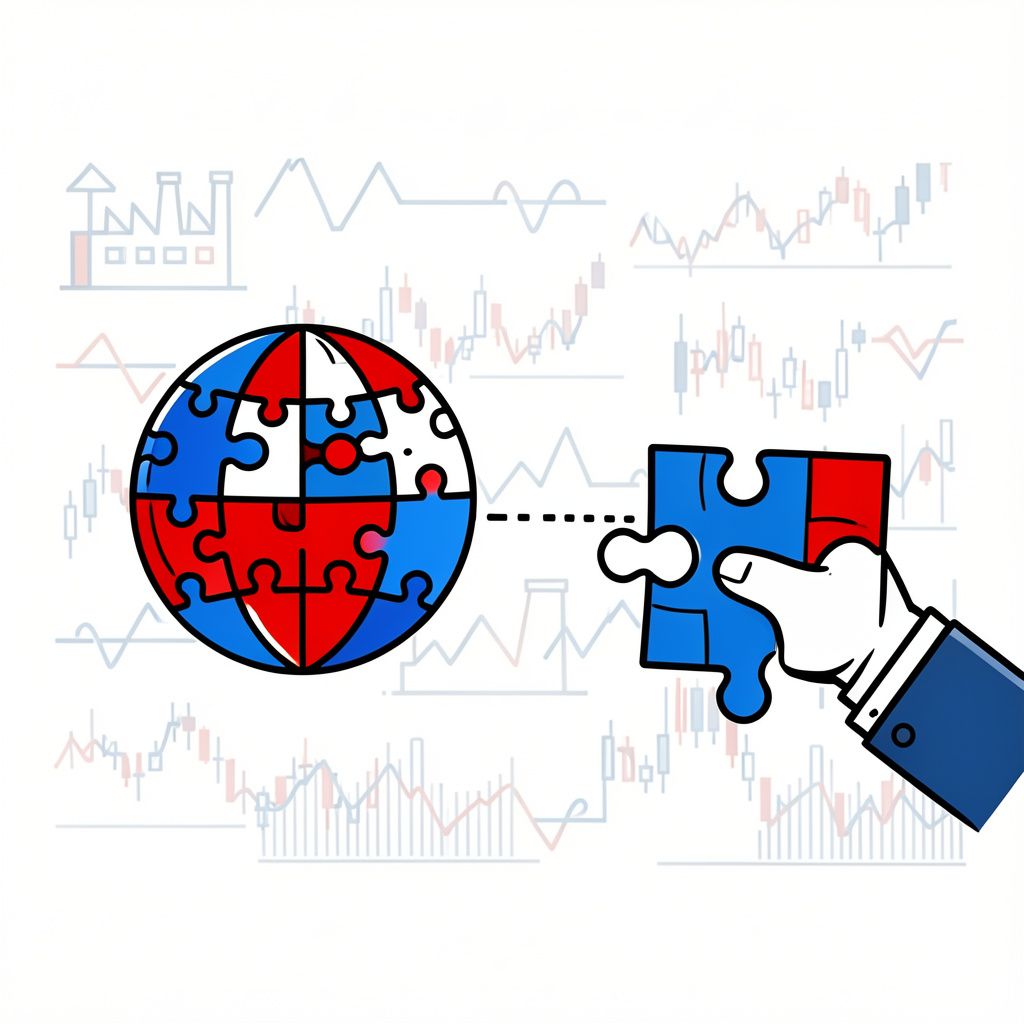
In May 2026, the Journal of Comparative Economics published a comprehensive study examining 20 years of global investment data [1]. Co-authored by Pierre-Louis Vézina of King’s College London and Arti Grover of the World Bank Group, the research highlights a stark transformation in corporate behavior [1]. Following the late 2010s and the subsequent supply chain disruptions of the COVID-19 pandemic, companies originating from advanced Western economies—such as the United States, Canada, and the United Kingdom—have increasingly embraced “friendshoring” [1]. This practice involves directing foreign direct investment (FDI) toward nations that share similar political ideologies, making political alignment a substantially more influential factor today than it was in 2016, exactly 10 years ago [1].
An Asymmetric Global Response
However, the fragmentation of the global economy is far from uniform. The trend of friendshoring is notably absent among firms based in East Asian economies, including Japan, Singapore, and South Korea [1]. Most strikingly, Chinese corporations demonstrate little hesitation in crossing geopolitical divides [1]. In stark contrast to their Western counterparts, Chinese firms are increasingly funneling investments into countries that remain politically distant from Beijing [1]. This asymmetric approach to FDI suggests that while Western corporations are retreating into politically safe enclaves, Eastern entities are capitalizing on the resulting vacuums in the global market [GPT].
Geopolitics and Trade Strategy at the Forefront
The corporate shift toward politically aligned investments mirrors broader macroeconomic and geopolitical transformations. Global trade dynamics are actively shifting toward the Indo-Pacific, largely fueled by the ongoing economic and technological rivalry between the United States and China [2]. This shifting center of gravity, combined with rising domestic political polarization and protectionism, is actively undermining traditional multilateralism and established World Trade Organization (WTO) norms [2]. Reports published prior to June 1, 2026, by the European Center for Populism Studies (ECPS) underscore how the rise of populism on both sides of the Atlantic is actively weakening trust and reshaping global trade policy [2].