North Korea Unveils New Nuclear Facility and Claims Doubled Weapons Capacity
Pyongyang, Thursday, 4 June 2026.
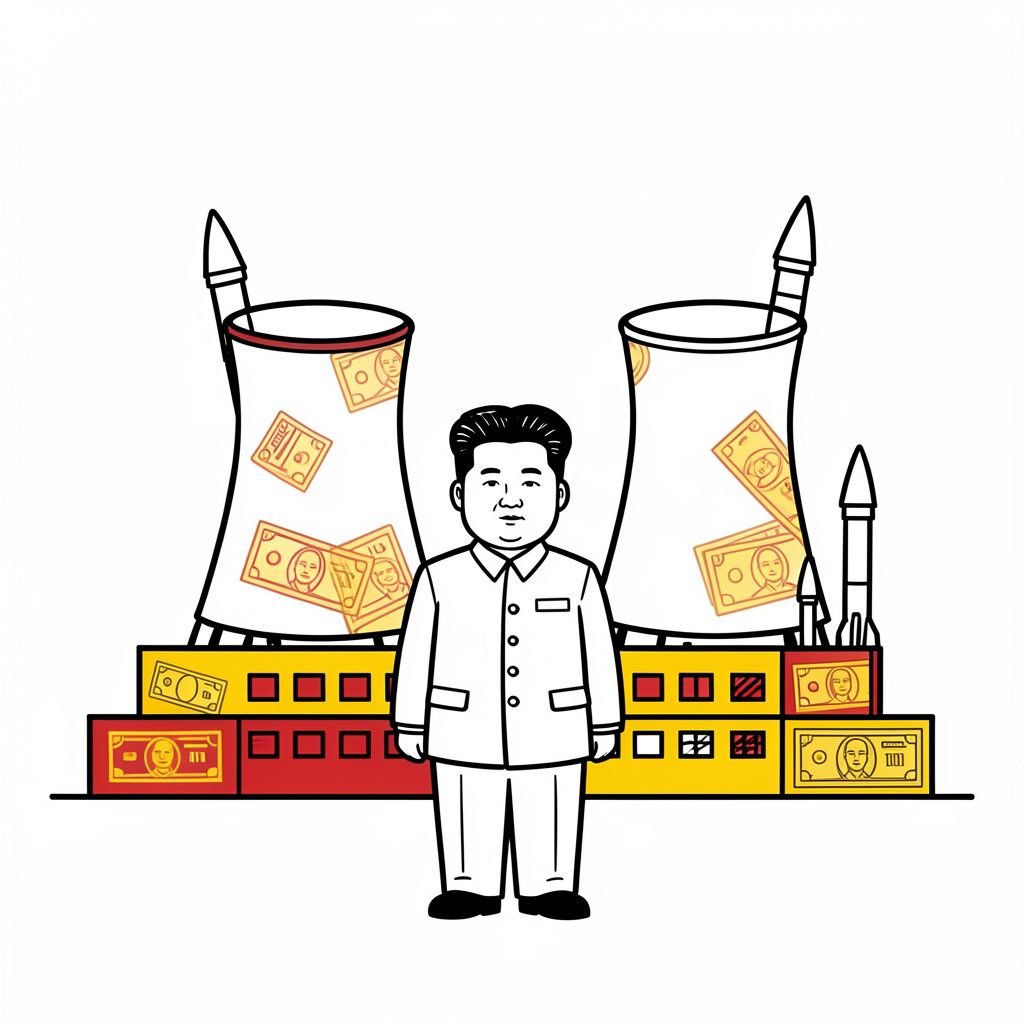
On June 3, 2026, Kim Jong Un unveiled a new nuclear plant, claiming a doubled weapons capacity. This shift toward mass production signals increasing instability in the Asia-Pacific.
A Strategic Shift Toward Mass Production
On Wednesday, June 3, 2026, North Korean leader Kim Jong Un inspected a newly inaugurated nuclear materials production factory, accompanied by directing officials from the Munitions Industry Department of the Central Committee of the Workers’ Party and the Nuclear Weapons Institute [2][3]. The highly publicized visit, reported by state media on Thursday, June 4, 2026, showcased Kim walking past densely packed rows of cylindrical centrifuges essential for highly enriched uranium production [1][3]. During the tour, Kim announced that the country’s capacity to produce weapons-grade nuclear material has more than doubled over the past five years [1][2]. He emphasized an “exponential” ramp-up in state nuclear forces, transitioning the strategic focus from research and development directly into mass manufacturing and munitions [1].
The Geopolitical Timing and Deterrence Strategy
The timing of this revelation is meticulously calculated to maximize geopolitical leverage [GPT]. The June 3 inspection coincided exactly with local election day in South Korea, as well as the immediate aftermath of follow-up negotiations between Washington and Seoul regarding a bilateral security agreement on nuclear-powered submarines and spent nuclear fuel reprocessing [2][5]. Park Won-gon, a professor at Ewha Womans University, noted that Pyongyang frequently accuses the international community of applying a double standard, particularly as South Korea pursues civilian nuclear reprocessing agreements with the United States [5]. By unveiling this facility now, North Korea is visibly reasserting its self-proclaimed status as a nuclear-armed state and pushing back against what it perceives as shifting regional military dynamics [2][5].
Global Nuclear Context and Regional Instability
North Korea’s localized expansion is part of a broader global trend of nuclear proliferation [GPT]. According to the 2026 edition of the Nuclear Weapons Ban Monitor, 2025 represented the ninth consecutive year of growth in deployable nuclear weapons [1]. The global inventory of available nuclear warheads has climbed to 9,745, possessing a combined explosive yield equivalent to more than 135,000 Hiroshima bombs [1]. Russia leads this global stockpile with over 5,400 weapons, leaving the remaining 4345 warheads distributed among the other eight nuclear-armed states [1]. Within this context, North Korea’s arsenal is also expanding rapidly; as of March 2026, the country possessed enough fissile material to produce up to 90 warheads, having already assembled approximately 50 [1]. This means they have assembled roughly 55.556 percent of their potential stockpile based on available materials [1].
Sources
- www.cnn.com
- www.yonhapnewstv.co.kr
- www.yna.co.kr
- www.bloomberg.com
- www.rfa.org
- eiec.kdi.re.kr
- www.vietnam.vn