Record Inflation and Policy-Driven Price Hikes Threaten Republican 2026 Midterm Prospects
Washington, Sunday, 31 May 2026.
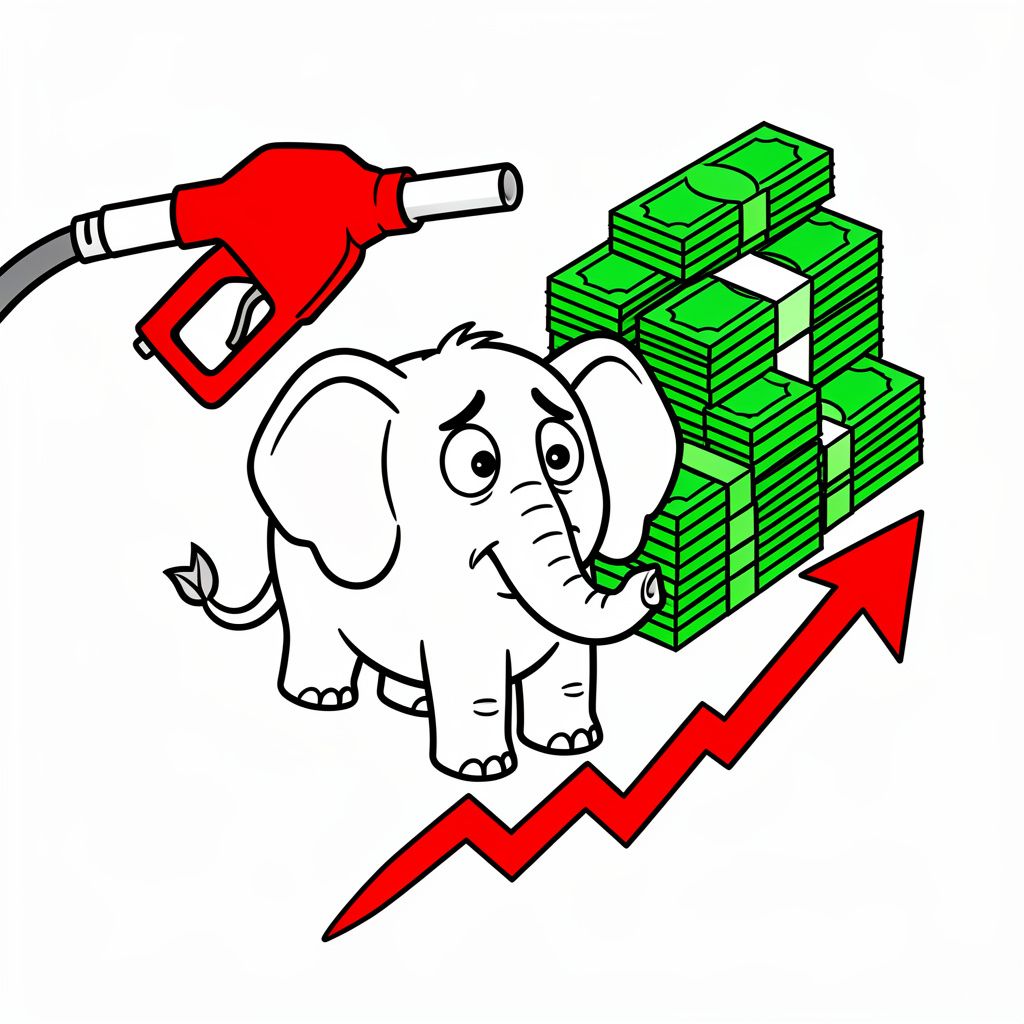
Driven by tariffs and a 50% fuel price surge from the Iran conflict, April’s 3.8% inflation spike severely threatens the Republican congressional majority this November.
The Anatomy of the April 2026 Inflation Spike
On May 21, 2026, the Commerce Department revealed that the primary inflation gauge accelerated to 3.8 percent in April 2026, marking its highest level since May 2023 [2][6]. Core inflation, which strips out volatile food and energy sectors, also climbed to 3.3 percent from 3.2 percent the previous month [2][6]. This sustained upward pressure is actively eroding American purchasing power, with inflation-adjusted personal income falling for the third consecutive month [2][6]. While Treasury Secretary Scott Bessent dismissed the price spikes as “transitory” on May 26, 2026, the reality on the ground paints a starkly different picture for consumers facing surging costs for groceries, clothing, and utilities [2][6].
Policy Choices and Supply Shocks
Much of this inflationary pressure can be traced directly to the Trump administration’s legislative and geopolitical maneuvers. Although President Trump campaigned on a promise to end inflation “starting on day one,” current metrics show prices rising faster than wages [5]. The implementation of aggressive economic tariffs in April 2025 drove up the prices of durable goods by up to 3.8 percent in the subsequent 13 months leading to January 2026 [1]. Furthermore, President Trump’s 2025 decision to terminate enhanced Affordable Care Act subsidies has severely impacted household budgets. Average health insurance premiums skyrocketed by 58 percent, and average deductibles increased by 37 percent to a record $3,706 [1]. Consequently, projections indicate that up to 6 million Americans may drop their health coverage entirely over the course of 2026 [1].
Voter Sentiment and Electoral Vulnerability
The convergence of these economic factors is creating a perilous political landscape for the Republican Party as the November 2026 midterm elections approach. A May 2026 New York Times/Siena poll of registered voters revealed that President Trump’s approval rating is underwater by 42 percentage points regarding the cost of living, and 31 points on the broader economy [1]. A separate Public First survey found that a plurality of Americans believe their financial situation has deteriorated since Trump took office, a sentiment shared by 18 percent of his own 2024 voters [3]. Over 60 percent of respondents explicitly cited the Iran war as a driver of their increased overall expenses [3].
The Path Forward to November
The administration’s messaging strategy remains focused on long-term normalization. White House spokesperson Kush Desai argued that once traffic through the Strait of Hormuz resumes, Americans will witness plummeting gas prices, real wage growth, and cooling inflation [3]. However, the timeline for such geopolitical stabilization remains highly uncertain [alert! ‘Geopolitical conflicts involving the Strait of Hormuz are historically unpredictable, making exact timelines for economic normalization speculative’]. In the interim, other economic indicators are flashing warning signs. U.S. gross domestic product grew at a sluggish 1.6 percent annual rate in the first quarter of 2026, a downgrade from initial estimates, while the 30-year fixed mortgage rate recently climbed to a nine-month high of 6.53 percent [2][4][6].