United States Deploys Third Aircraft Carrier to the Middle East
Washington, Friday, 2 October 2026.
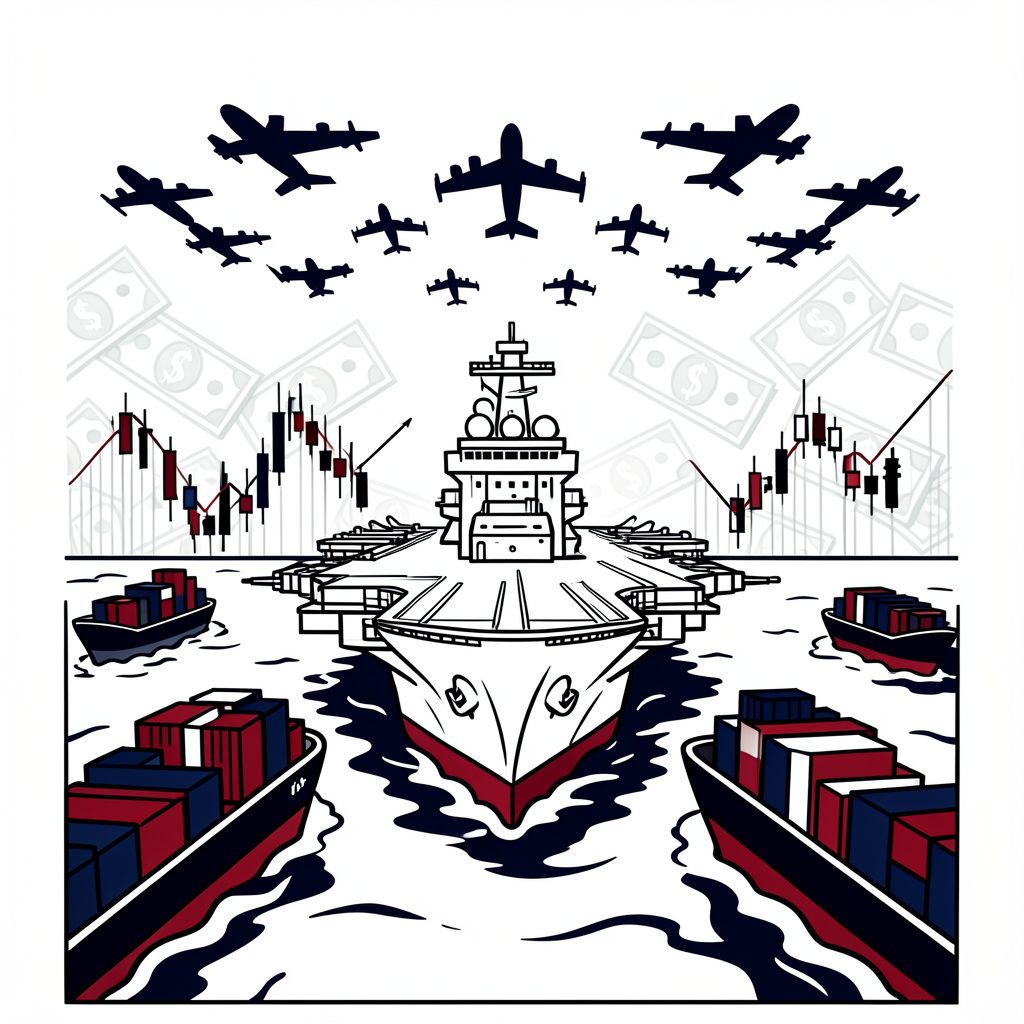
The Pentagon is sending 10,000 additional troops and a third aircraft carrier to the Middle East following recent attacks on five commercial vessels in the Strait of Hormuz.
Strategic Military Deployment
The Pentagon has ordered the deployment of a third aircraft carrier strike group alongside Marine units to the Middle East, a move confirmed by multiple defense officials [1][5][7]. The USS Theodore Roosevelt carrier and the USS Makin Island Amphibious Ready Group departed from the port of San Diego during the week of September 28, 2026 [1][6]. These assets are expected to be positioned near Iran by the end of November 2026, adding to the approximately 50,000 U.S. military personnel already stationed in the region [1][3]. The deployment includes up to 10,000 additional sailors and Marines, representing a significant surge in force presence [1][7]. This increase amounts to a 20 percent increase in personnel, signaling a substantial escalation in military posture [1][3][7].
Geopolitical Tensions and Diplomatic Efforts
This military buildup occurs amid heightened geopolitical risks, with five commercial vessels reportedly struck by projectiles in the Strait of Hormuz within a 72-hour period [1]. On October 1, 2026, a supertanker with a capacity of 2.5 million barrels of oil caught fire after being hit off the coast of Oman, further threatening global energy supply stability [1][2]. Diplomatic efforts remain deadlocked; although Iran proposed a seven-day roadmap to reopen the Strait of Hormuz and resume nuclear talks via Qatar in late September 2026, President Donald Trump rejected the plan [3][4]. Concurrently, Secretary of State Marco Rubio ordered Iranian Foreign Minister Abbas Araghchi’s delegation to depart New York early following the failure of indirect talks [2]. On October 1, 2026, the U.S. Treasury also sanctioned Iran’s auto and rail sectors, targeting entities in the UAE, Hong Kong, Turkey, and Indonesia to reduce Tehran’s revenue [2][3].
Political Timeline and Market Implications
Political leadership has issued fresh warnings regarding potential strikes against Iran, with President Trump stating in an interview published on October 1, 2026, that renewed large-scale strikes were possible after the November midterm elections [1][4]. The U.S. military buildup is expected to be complete by November 2026, coinciding with the electoral timeline [2][6]. Global market investors are closely monitoring energy supply stability and potential crude oil price spikes due to the risk of disruption in major shipping lanes [2][6]. Treasury Secretary Scott Bessent noted the impact on crude oil markets, while Defense Secretary Pete Hegseth confirmed forces are ready to proceed [2][6]. The escalation highlights severe geopolitical risks that could disrupt trade flows through the Strait of Hormuz, a critical chokepoint for global energy transport [1][3].
Future Outlook and Regional Stability
By the end of November 2026, the U.S. intends to have three aircraft carriers and two amphibious landing groups positioned around Iran [3][6]. President Trump indicated in an interview conducted in late September 2026 that he is considering escalating bombing campaigns following the elections, though he declined to specify targets [4][7]. Public sentiment reflects caution, with nearly 70% of Americans believing the conflict is not worth fighting as of October 1, 2026 [3]. The situation remains fluid, with the U.S. maintaining a network of at least 19 military sites in the region to support operations [6]. Investors and corporate leadership continue to assess the potential for prolonged disruption to energy markets and regional stability [2][7].
Sources
- www.democracynow.org
- www.cnbc.com
- www.aljazeera.com
- www.theguardian.com
- www.bloomberg.com
- www.aljazeera.com
- www.wsj.com
- www.instagram.com