President Trump Reaffirms Bond with Kim Jong Un as Diplomatic Re-engagement Looms
Washington, Wednesday, 30 September 2026.
U.S. President Donald Trump downplayed North Korea’s expanding nuclear arsenal and touted his friendship with Kim Jong Un, signaling potential diplomatic talks amidst ongoing global energy disruptions.
A Personal Alliance in Washington
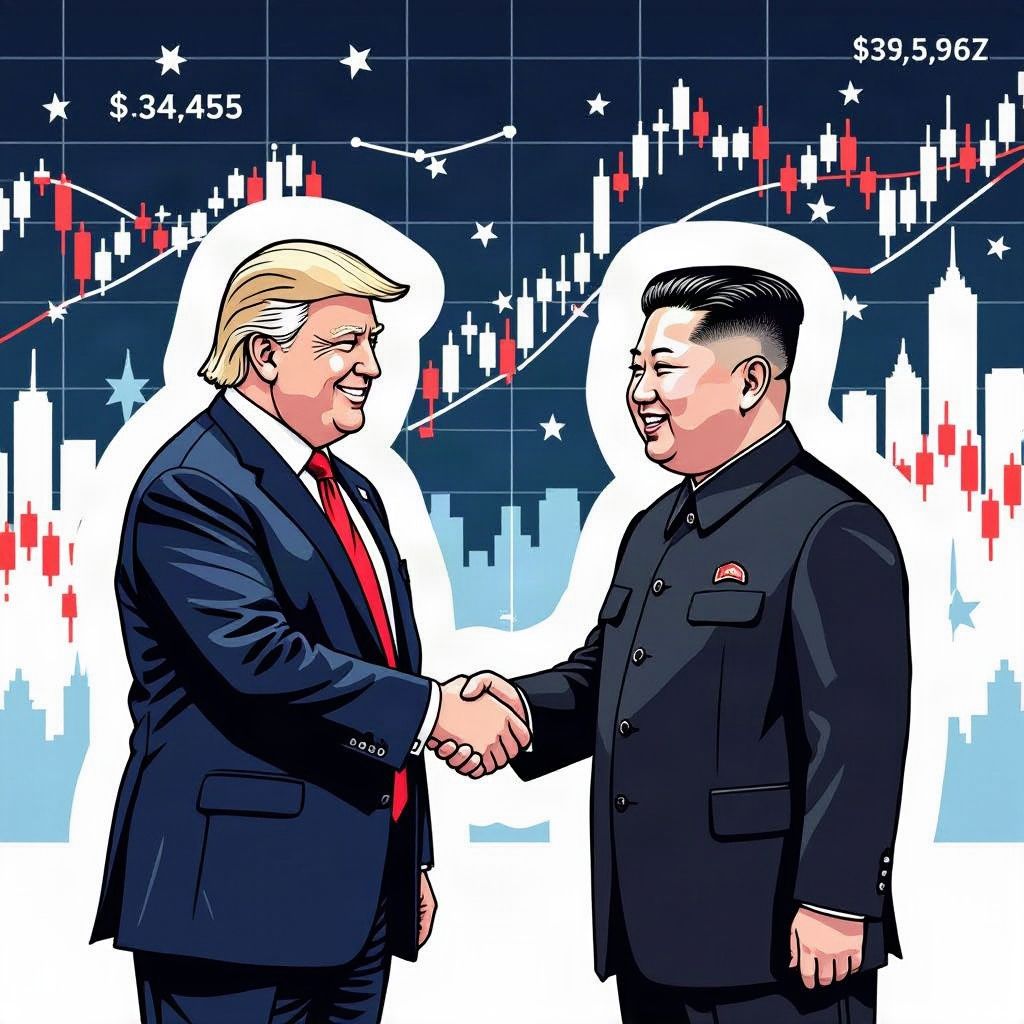
Speaking in Washington, DC, on September 29, 2026, Republican President Donald Trump publicly minimized the threat of North Korea’s nuclear capabilities while emphasizing his strong personal relationship with the country’s leader, Kim Jong Un [1][2]. When questioned about why North Korea is permitted to maintain a nuclear arsenal while Iran is not, Trump defended his stance by characterizing Kim as a close ally [1][2]. “He happens to be a friend of mine, Kim Jong Un, he’s a friend of mine,” Trump stated, asserting that he is one of the only global figures with whom the North Korean leader maintains a positive relationship [1][2]. This rhetoric signals a clear intent by the administration to pursue diplomatic re-engagement rather than immediate containment [1].
The Geopolitical and Domestic Pressure
These diplomatic overtures occur during a highly sensitive political and economic period. In February 2026, the United States and Israel initiated a war against Iran, which has severely disrupted global energy supplies, inflated domestic fuel costs, and weighed heavily on President Trump’s approval ratings ahead of the upcoming November 2026 midterm elections [1]. By contrasting his diplomatic approach toward North Korea with the active conflict against Iran, Trump appears to be campaigning on his unique ability to manage hostile foreign leaders through personal diplomacy [1][2]. He reassured the public of Kim’s restraint under his administration, claiming, “As long as I’m around, he’s going to be fine” because of their mutual respect [1][2].
Discrepancies in Nuclear Intelligence
Despite the President’s efforts to downplay the threat, official intelligence reports present a much more concerning picture of Pyongyang’s military capabilities. On September 22, 2026, South Korea’s Defence Minister Ahn Gyu-back reported that North Korea actually possesses between 80 and 120 nuclear warheads [1]. This official estimate significantly contradicts Trump’s public claim that the regime holds only 57 warheads [1]. The discrepancy of up to 63 warheads on the high end, or 23 on the low end, highlights a potential gap between the administration’s public messaging and the intelligence assessments shared by key regional allies [1]. Trump conceded that the arsenal is “pretty large,” but maintained it remains vastly inferior to that of the United States [1].
A History of Escalation and Provocation
This diplomatic leniency stands in stark contrast to North Korea’s highly active military posture in recent weeks. Throughout September 2026, Pyongyang has executed multiple provocations, including deploying a warship on September 7, firing ballistic missiles on September 12, and formally dismissing a United Nations nuclear watchdog resolution on September 19 [1]. Since the breakdown of the historic 2018 and 2019 bilateral summits—where talks collapsed over U.S. demands for complete denuclearization—Kim has significantly expanded his nuclear-capable missile arsenal [1]. Furthermore, North Korea has strengthened its geopolitical position by aligning closely with China and Russia, particularly in relation to the ongoing war in Ukraine [1].
Future Outlook and Diplomatic Risks
Looking forward, President Trump has expressed a clear intent to transition this personal rapport into formal diplomatic policy. He previously announced plans to hold in-person talks with Kim Jong Un before the end of 2026 [1]. While no concrete policy changes or treaty agreements have been implemented yet, the prospect of a late-2026 summit could dramatically reshape security dynamics in East Asia [1][GPT]. However, critics worry that bypassing traditional diplomatic channels and ignoring South Korea’s intelligence assessments may alienate regional allies and do little to halt Pyongyang’s actual nuclear expansion [1][GPT].