Federal Reserve Shifts Strategy to Focus on Artificial Intelligence and Quieter Policy
Jackson Hole, Friday, 4 September 2026.
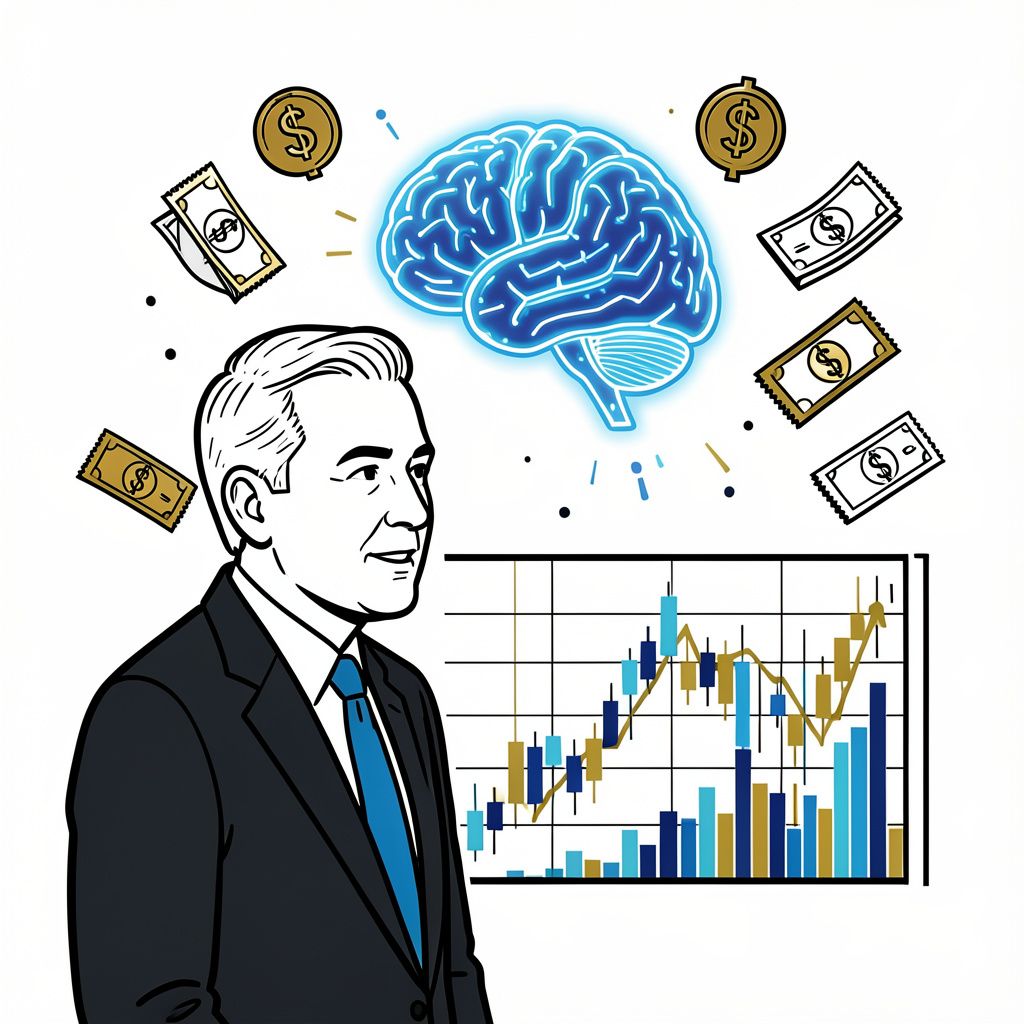
Federal Reserve Chair Kevin Warsh announced plans to abandon traditional forecasts, leveraging artificial intelligence productivity gains to curb inflation while actively tracking corporate AI pricing models.
Federal Reserve Shifts Strategy to Focus on Artificial Intelligence and Quieter Policy
Federal Reserve Chair Kevin Warsh announced plans to abandon traditional forecasts, leveraging artificial intelligence productivity gains to curb inflation while actively tracking corporate AI pricing models. On Friday, 28 August 2026, Warsh delivered his inaugural keynote address at the Jackson Hole Economic Symposium, signaling a fundamental shift in monetary policy away from standard forward guidance [1]. The Chair outlined a vision where structural productivity gains driven by AI technology could allow the economy to expand without generating price pressures, suggesting a more hands-off regulatory approach [1]. This strategic pivot aims to provide businesses with greater macroeconomic stability through predictable, less disruptive Federal Reserve communications [1].
Redefining Federal Reserve Communication
Warsh emphasized a “quieter Fed” approach, prioritizing real-time economic data and money supply movement through the private sector over lagging monthly government reports on inflation and employment [1]. During the address, he stated that transparency in communications about future policy decisions is not a virtue unto itself, marking a departure from traditional quarterly interest rate projections [1]. The Fed maintains a dual mandate of maximum employment and a 2% inflation target, which Warsh stated are mutually reinforcing rather than contradictory goals [1]. He noted that price stability is not self-executing and that high inflation itself is very harmful to economic prosperity [1].
AI and Productivity Dynamics
A specific task force dedicated to analyzing the impact of AI on productivity and the labor market views AI as a potential new factor of production that necessitates adjustments to monetary policy [1]. The Fed, under Warsh’s tenure, intends to closely monitor the pricing models and token evolution of major AI companies, including chipmakers, energy producers, and cloud providers, to assess long-term productivity impacts [1]. Warsh has previously characterized AI as a significant positive development for the US economy and a testament to American ingenuity [1]. This ongoing monitoring status reflects the active formation of task forces and their focus on AI as a new variable in economic conduct [1].