New York City Public Schools Ban Generative AI for 600,000 Younger Students
New York, Wednesday, 2 September 2026.
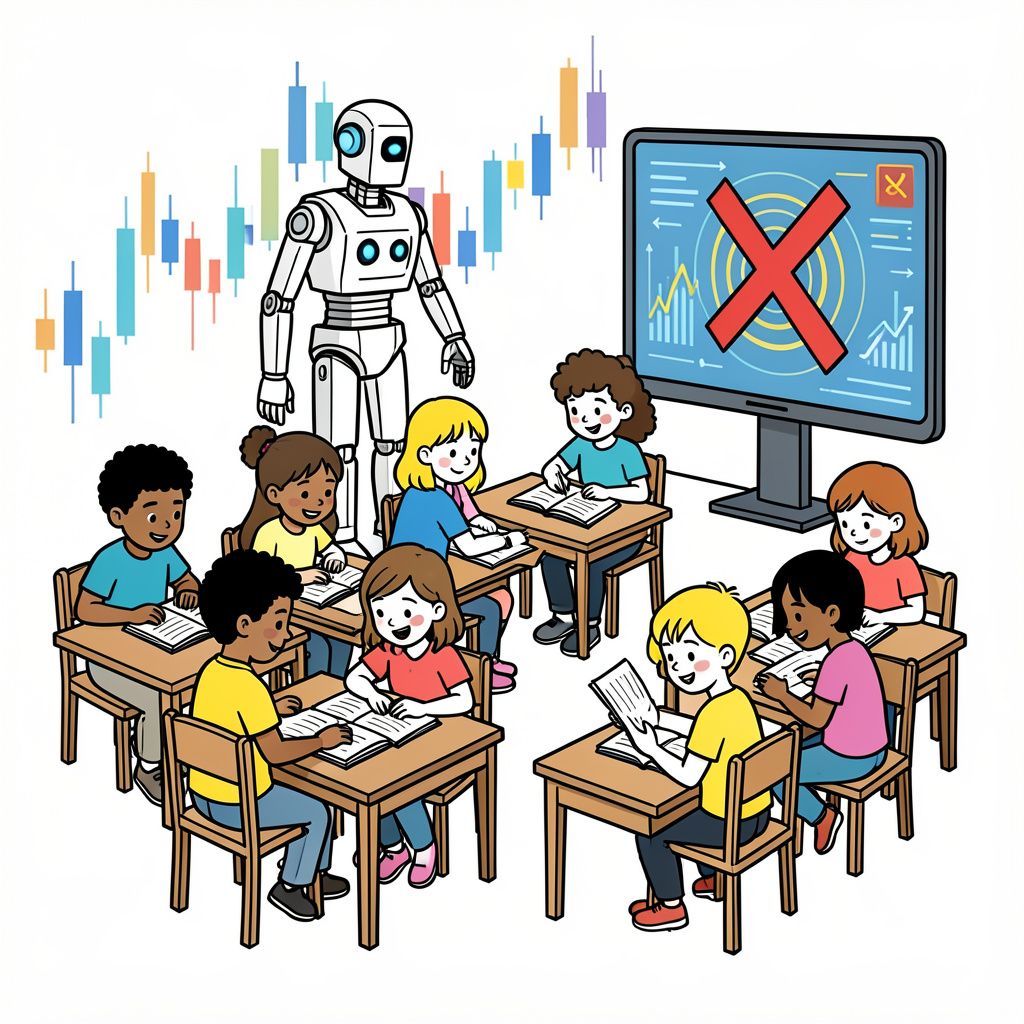
New York City has instituted a one-year generative AI ban for students through eighth grade, curbing tech integration to prioritize human interaction and limit classroom screen time.
Policy Announcement and Scope
New York City Public Schools, the largest school district in the United States, has finalized a policy prohibiting generative artificial intelligence tools for students from 2-K through eighth grade [1][3]. The decision was formally released on Wednesday, 2 September 2026, marking a significant shift in the district’s approach to educational technology [4][5]. Mayor Zohran Mamdani and Schools Chancellor Kamar Samuels announced the one-year moratorium, which affects nearly 600,000 students, representing approximately two-thirds of the total enrollment [1][2]. This regulatory move signals a cautious stance on early AI adoption, prioritizing foundational learning methods over rapid technological integration [3].
Screen Time and Classroom Restrictions
Accompanying the AI ban are strict screen time guidelines intended to limit daily device usage for younger students [4]. For students in grades 3 through 5, individual device screen time is capped at 30 minutes per day, while middle school students in grades 6 through 8 are limited to 45 minutes [3][4]. Students from preschool through second grade are not permitted to use individual devices in class, although smart boards remain allowed [4][5]. These measures aim to reduce distractions and ensure that technology does not overshadow hands-on learning experiences [6].
Teacher Guidelines and High School Exceptions
While student access is restricted, educators retain permission to use approved AI tools for administrative tasks such as lesson planning and translation [1][5]. However, teachers are explicitly prohibited from using AI for grading, behavior monitoring, counseling, or developing special education plans [4][6]. High school students will face restricted access rather than a full ban, with opportunities for AI literacy lessons and participation in limited pilot programs [1][3]. These exceptions allow older students to engage with the technology in controlled environments focused on ethics and critical thinking [2].
Political and Community Response
The policy rollout follows significant pressure from parent advocacy groups and more than 50% of the NYC City Council, who urged City Hall to implement a moratorium on expanding AI use [1][4]. Michael Mulgrew, President of the United Federation of Teachers, noted that parents are rightfully protective of their children amid reports of AI-related risks [1]. Critics of previous宽松 guidelines argued that early AI exposure could erode critical thinking skills, a concern addressed by the new restrictions [1][3]. The Department of Education plans to form a coalition including parents and experts to oversee future policy adjustments [3].