Gen Z Consumer Spending Remains Resilient Across Income Tiers
New York, Wednesday, 5 August 2026.
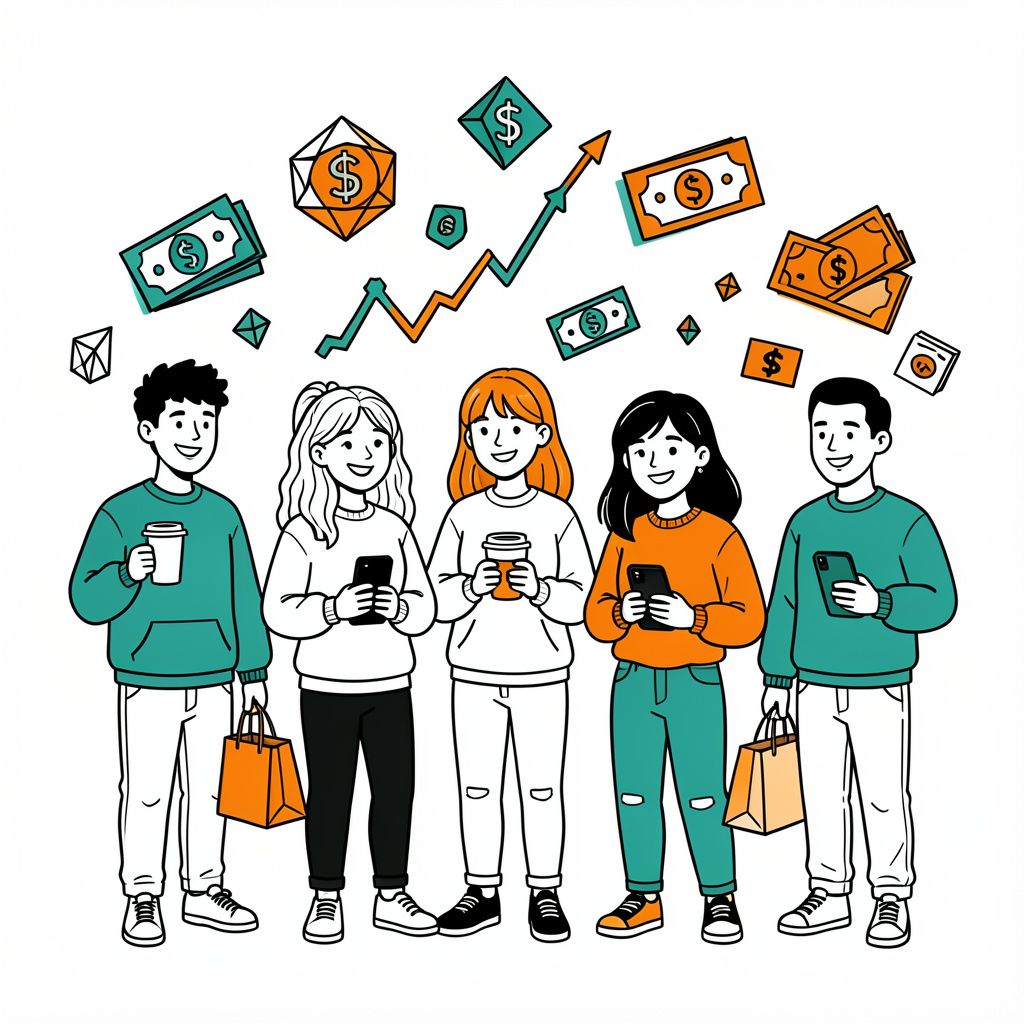
Despite vocal anti-capitalist sentiment, Generation Z maintains steady consumer spending across all income levels, defying traditional economic split trends through prioritization of smaller, everyday purchases.
Economic Resilience Amidst Ideological Shifts
Despite widespread cultural rhetoric critiquing corporate capitalism, Generation Z continues to demonstrate robust spending across all income tiers, defying expectations of a K-shaped economic divergence [1]. Data from August 2026 indicates that within the Gen Z cohort, there is almost no spending growth gap between high-income and low-income households, a sharp contrast to other generations experiencing significant economic divides [1]. This resilience persists even as 53% of Gen Z views socialism favorably compared to 45% for capitalism, suggesting a complex relationship between ideological leanings and actual market behavior [1]. Bank of America Institute reports reveal that 42% of Gen Z live paycheck to paycheck, a figure that increases to 73% for those earning under $50,000 annually, representing a 31 percentage point disparity based on income levels [1].
The High Cost of Social Connection
Rising living costs are increasingly pricing Generation Z out of traditional social activities, including concerts, festivals, and nightlife, as of August 2026 [2]. Nearly 75% of Gen Z adults say staying in is now their default weekend plan, citing saving money and recharging mentally as top reasons [4]. This shift impacts romantic interactions as well, with Bank of America data revealing 51% of Gen Z spends $0 monthly on romantic dates, rising to 72% among single Gen Z individuals [1]. Furthermore, people in their 20s and 30s are dating less than earlier generations did, with the high cost of going out cited as a primary reason [5].
Inflation Risks and Future Spending
Looking ahead, market traders predict a 24% chance inflation will reach more than 4.5% in 2026, adding pressure to household budgets [2]. Despite this uncertainty, Gen Z is still spending on things they want to, not just necessities, suggesting a nuanced story beyond headline numbers [1]. However, 24% of Gen Z report delaying relationship stages due to financial constraints, highlighting the long-term economic impact of current spending pressures [1]. As August 2026 concludes, the demographic continues to navigate complex economic landscapes, balancing anti-capitalist sentiments with active participation in the consumer economy [1].