American Families Face Deepening Financial Divide in Mid-2026
New York, Tuesday, 4 August 2026.
U.S. household debt reached a record $18.8 trillion in mid-2026 as low-income consumers rely heavily on credit, while high earners continue driving broader economic growth.
Record Debt and Divergent Spending Patterns
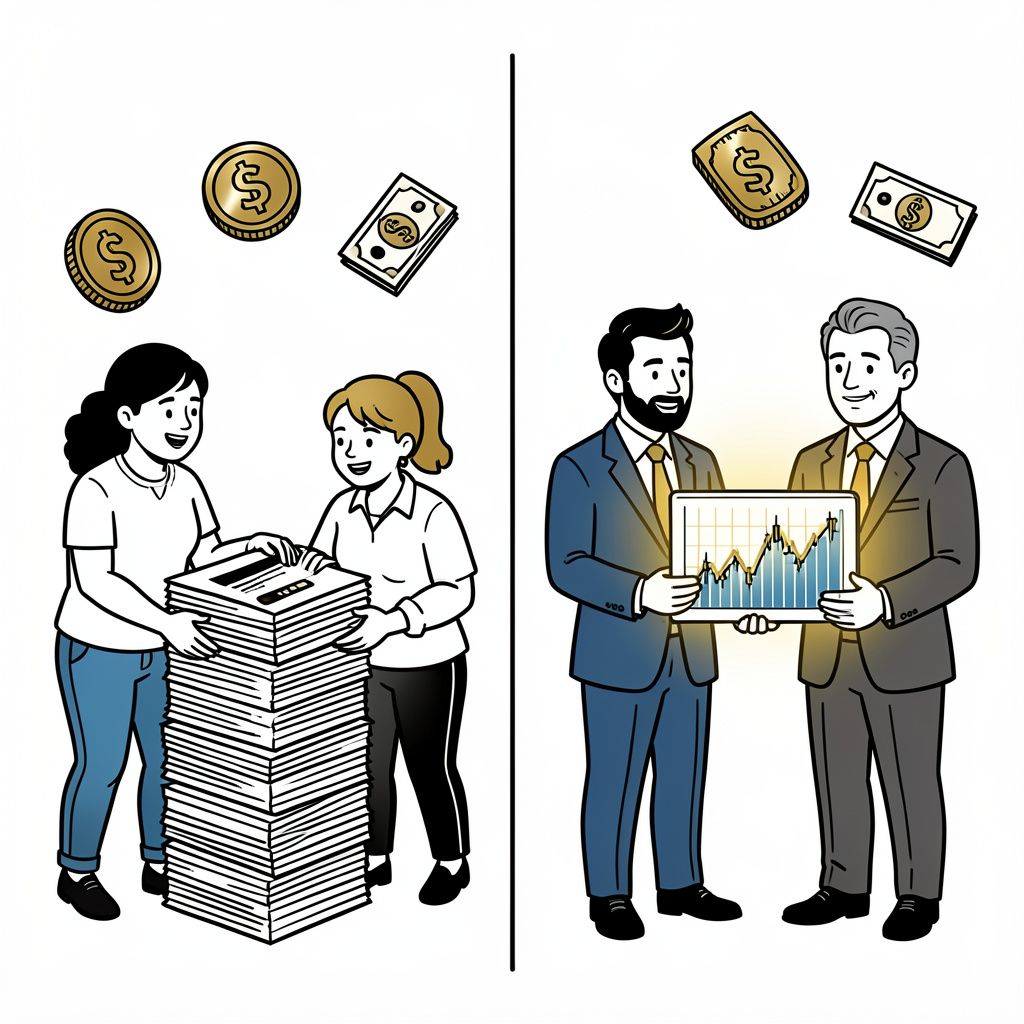
The United States economy is currently exhibiting a pronounced K-shaped trajectory, where higher-income households maintain stability through asset growth while lower-income demographics face increasing financial strain [1]. Economists at the Federal Reserve Bank of New York characterize this environment as one where consumer spending is sustained by concentrated power among top earners rather than broad-based income growth [1]. This divergence is evidenced by the U.S. personal saving rate, which fell to 2.7% in June 2026, a figure significantly below the historical long-run average [1]. Concurrently, reliance on credit has surged, with U.S. consumer credit card balances reaching $1.252 trillion in the first quarter of 2026 [1]. This balance represents a substantial increase from pandemic-era lows, highlighting a dependency on borrowed funds to maintain consumption levels [1].
Housing Market Disparities Across Regions
Real estate data from mid-2026 further illustrates the economic divide, with luxury home prices rising approximately five times faster than non-luxury home prices nationally [5]. In West Palm Beach, Florida, the top 5% of homes sold for $4.51 million during the three months ending May 2026, which is roughly 8.902 times the price of typical non-luxury homes in the area [5]. In stark contrast, median home sale prices in Coffeyville, Kansas, dropped to $62,463 in May 2026, marking a 28.2% decline year-over-year [5]. This disparity underscores the uneven impact of inflation and interest rate policies on different geographic and economic segments [5]. Such conditions suggest that while headline growth may appear stable, the underlying resilience of the broader population is weakening [1].
Market Outlook and Economic Resilience
Financial experts warn that declaring the end of this economic divergence is premature, as structural inequalities persist into August 2026 [3]. Senior Portfolio Manager Kristen Goodman noted on August 2, 2026, that navigating this economy requires focusing on controllable factors like financial planning rather than broad headlines [2]. Academic analysis suggests that economies relying on a narrow base of spenders lack long-term viability, prompting calls for policies that widen access to wealth-building tools [1]. As the Labor Department prepares to release employment data, the focus remains on whether job growth can offset the cumulative inflation affecting lower-income households [5]. Ultimately, growth metrics from the last quarter do not guarantee stability when the foundation of consumer spending is increasingly fragile [1].