Why Trump’s Versailles Dinner Could Reshape U.S.-Europe Relations
Paris, Thursday, 18 June 2026.
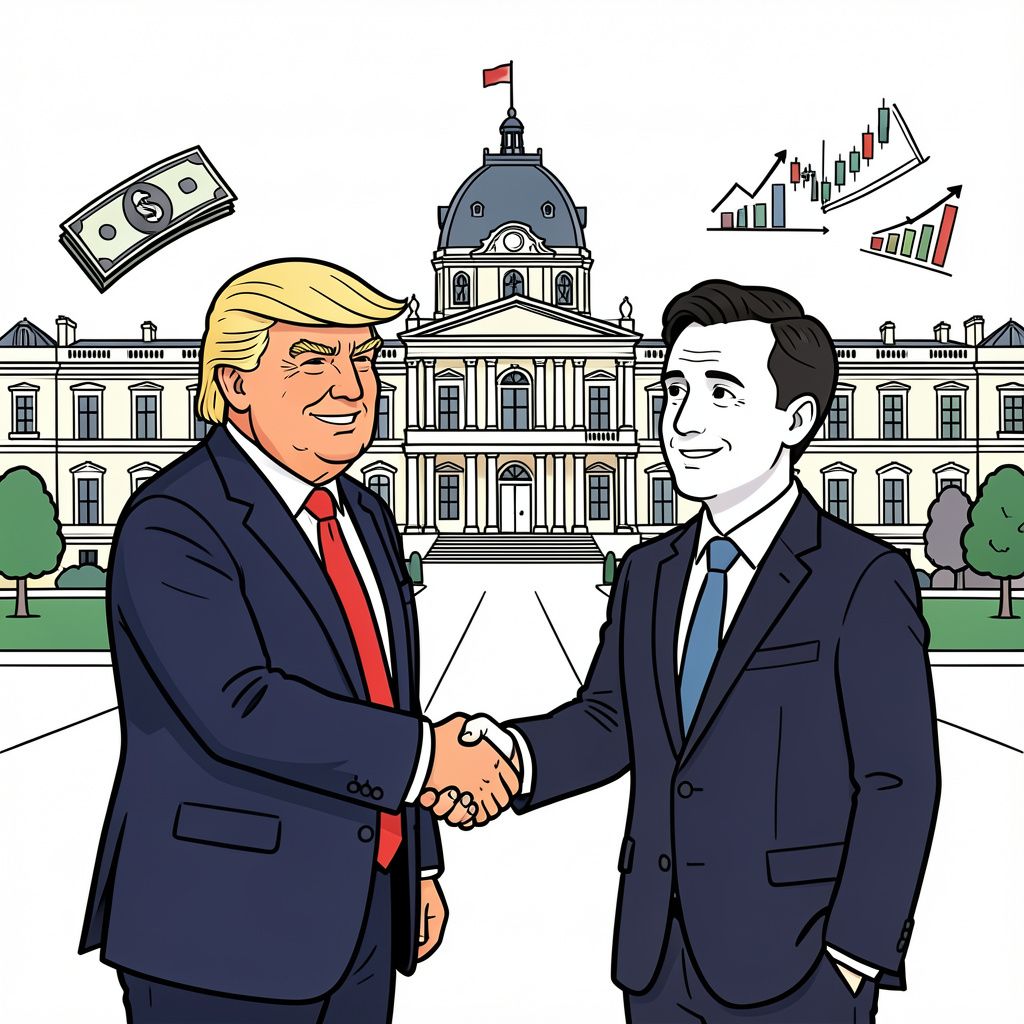
Donald Trump’s dinner at Versailles with Emmanuel Macron isn’t just a lavish affair—it’s a strategic move. Held in the same palace where Louis XIV once ruled, this meeting marks the first U.S. presidential visit to Versailles in over 60 years. Analysts say Macron’s invitation signals a bold attempt to reset transatlantic ties, with trade, security, and climate deals on the table. The stakes? A potential thaw in tariffs and tech regulations that could redefine global economic alliances.
From Geneva Protests to Versailles Diplomacy: A Shifting Landscape
The contrast between Geneva’s fiery protests and Versailles’ gilded halls could not be starker. Just days before the G7 summit, 20,000 demonstrators clashed with police in Switzerland, setting cars ablaze and vandalizing UN offices in a display of public anger over global inequality and climate inaction [1]. Yet by June 17, 2026, the focus had shifted to diplomacy—specifically, to the Palace of Versailles, where French President Emmanuel Macron (La République En Marche!) hosted former U.S. President Donald Trump (Republican Party) for a dinner that analysts say could recalibrate transatlantic relations [2][3]. The invitation, extended amid Macron’s final months in office (his second term ends in 2027, with constitutional limits barring a third consecutive run [4]), was more than symbolic. It marked a deliberate effort to engage Trump, whose influence in U.S. politics remains formidable despite his 2024 electoral loss [2]. The dinner followed three days of bilateral talks in Évian-les-Bains, where trade tariffs, technology regulations, and energy partnerships dominated the agenda [5].
Versailles: A Stage for Strategic Diplomacy
Macron’s choice of Versailles—a palace synonymous with absolute monarchy and the French Revolution—was no accident. The venue, which spans 800 hectares and contains 2,300 rooms, has long been a tool of French diplomatic theater. In 2017, Macron hosted Russian President Vladimir Putin at Versailles, touring the grounds in an electric golf cart before a joint press conference in the Gallery of Battles [2]. In 2023, King Charles III and Queen Camilla were received in the Hall of Mirrors, a space where the Treaty of Versailles (1919) was signed, formally ending World War I [2]. For Trump, the invitation to dine in the Lower Gallery—a space opening onto the gardens and lined with statues commissioned by Louis XIV—was a nod to his self-proclaimed affinity for “the real deal” over mere opulence. “It was not gold leaf,” Trump remarked, emphasizing the palace’s historical authenticity [2]. The last U.S. president to be hosted at Versailles as a primary guest was John F. Kennedy in 1961, making Trump’s visit the first in over 60 years [2].
A Dinner of Substance, Not Just Spectacle
Despite Macron’s insistence that the dinner was “not a gala,” the evening was steeped in ceremonial grandeur. Reports suggest a red carpet, a tour of the Hall of Mirrors, and even a fireworks display—elements that contrasted sharply with the protests in Geneva [6]. The guest list and menu remain undisclosed, but the timing was deliberate: the dinner coincided with the 250th anniversary of the United States’ Declaration of Independence, a fact Macron highlighted as a celebration of Franco-American friendship [6]. The gesture was also a strategic move to preempt criticism of Trump’s disruptive foreign policy record, including his role in escalating tensions in the Strait of Hormuz, which the G7 communiqué later acknowledged [7]. Macron’s approach appeared to pay off. Trump, who had threatened to impose tariffs on European wines ahead of the summit, remained engaged throughout the G7 proceedings—a notable shift from his past behavior at international gatherings [7].
The G7 Communiqué: A Diplomatic Victory for Macron
The G7 summit’s final communiqué, signed unanimously by all seven leaders, marked a diplomatic win for Macron. The document referenced Trump’s name three times, specifically praising his role in securing an agreement with Iran over the Strait of Hormuz [7]. While the communiqué omitted mention of Trump’s earlier actions that had escalated tensions in the region, French diplomats framed the concessions as a small price for tangible results. “If the price to pay is citing Trump three times, it’s not expensive given the outcomes,” one unnamed diplomatic source told Le Dauphiné [7]. The summit, which had opened under the shadow of potential trade wars, concluded with a commitment to deeper U.S.-EU cooperation on technology and energy, though specific policy changes remain under negotiation [5].
Sources
- wsnext.com
- www.theguardian.com
- www.lesoir.be
- www.instagram.com
- www.ledauphine.com
- www.lesoir.be
- www.ledauphine.com