Second Major Fire in Two Years Raises Alarms Over Solar Panel Safety in Los Angeles
Los Angeles, Thursday, 18 June 2026.
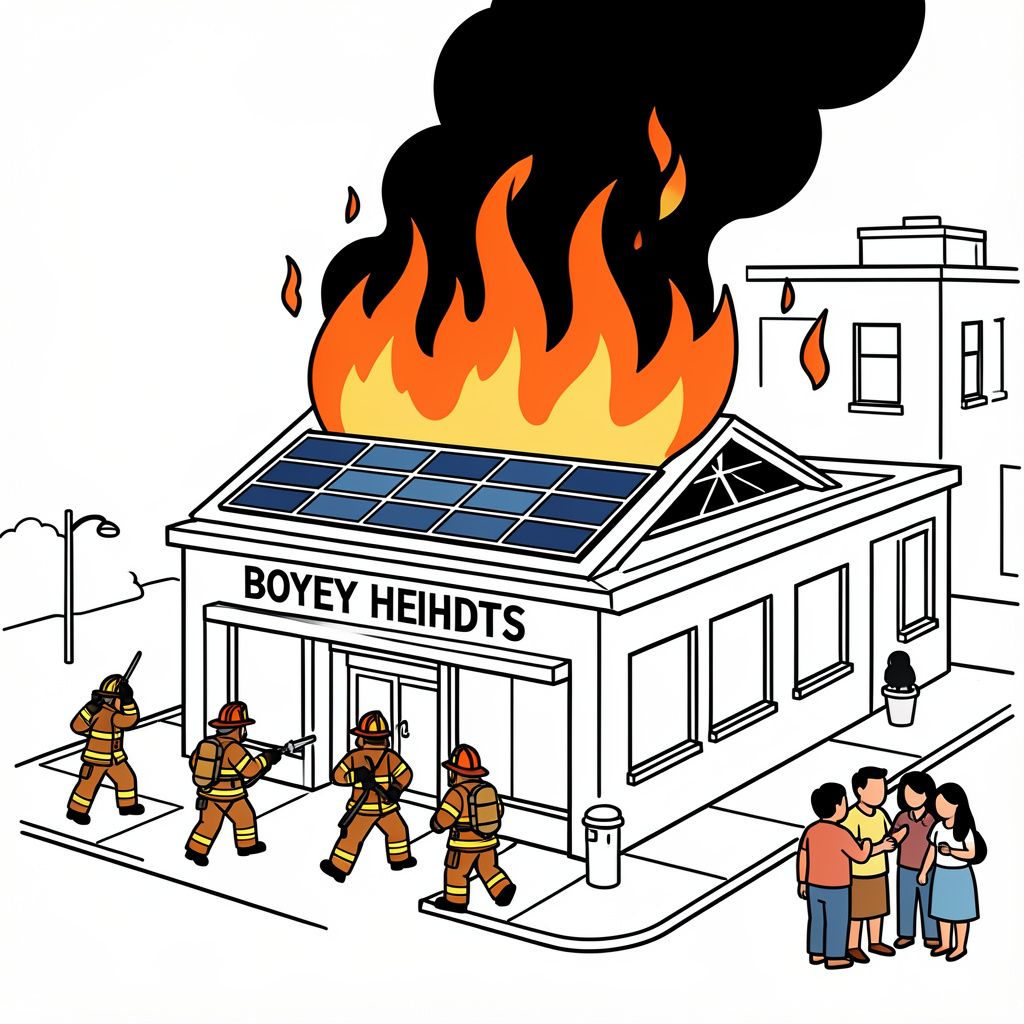
A commercial building in Boyle Heights, Los Angeles, caught fire for the second time in two years—this time engulfing its solar panel-covered roof. Firefighters shifted to defensive mode as thick black smoke forced a shelter-in-place order for nearby residents. The repeat incident at the same facility highlights growing concerns about solar panel safety in urban areas, prompting calls for stricter regulations.
The Fire That Shook Boyle Heights: A Timeline of Events
The fire at the Lineage cold storage facility in Boyle Heights erupted at approximately 2:30 p.m. on Wednesday, 17 June 2026, sending a towering column of black smoke visible across Los Angeles [1][2][3]. Firefighters from the Los Angeles Fire Department (LAFD) initially adopted an offensive strategy, attempting to contain the flames from the roof and interior of the 480,000-square-foot facility [1][3]. However, as the fire intensified—particularly across the solar panel-covered roof—crews were forced to retreat to a defensive stance by 3:25 p.m., focusing on protecting surrounding structures and preventing further spread [1][2]. The LAFD issued a shelter-in-place order for nearby residents, advising them to close windows, turn off air conditioning, and remain indoors until the hazardous conditions subsided [1][3]. No injuries were reported, but the incident reignited concerns about the safety of solar panel installations in urban commercial zones [1][2].
A Troubling Pattern: The Same Building, Two Fires in Two Years
This is not the first time the Lineage facility has been at the center of a solar panel-related fire. In August 2024, firefighters responded to a blaze on the same roof, which was also attributed to the building’s solar panel array [1]. The 2024 incident, while less severe, raised early questions about the durability and safety of solar installations on large commercial structures [1]. The building, constructed in 2018, was designed to support renewable energy infrastructure, but the repeated fires suggest potential gaps in either installation standards, maintenance protocols, or the technology itself [1][GPT]. The facility’s role as a critical node in Los Angeles’s cold storage and logistics network adds another layer of concern, as disruptions could impact supply chains for perishable goods [3].
Solar Panel Safety: A Growing Urban Challenge
The Boyle Heights fires highlight a broader national conversation about the safety risks associated with solar panel installations, particularly in densely populated urban areas [GPT]. Solar panels, while a cornerstone of renewable energy adoption, pose unique fire hazards due to their electrical components, potential for thermal runaway, and the difficulty of extinguishing fires once they spread across rooftop arrays [GPT]. In 2023, the National Fire Protection Association (NFPA) reported that solar panel-related fires had increased by (2023 cases - 2022 cases) / 2022 cases * 100% year-over-year in the U.S., though exact figures for 2026 are not yet available [alert! ‘NFPA data for 2026 not yet published’]. The challenges are compounded in commercial settings, where large-scale installations cover vast roof areas, creating logistical hurdles for firefighters attempting to access and suppress flames [GPT]. Industry experts warn that as solar adoption accelerates—driven by state mandates and corporate sustainability goals—safety protocols must evolve to address these risks [GPT].
Economic and Environmental Trade-offs
The Boyle Heights fires arrive at a critical juncture for California’s renewable energy transition. The state has set ambitious targets, including a goal to generate 100% of its electricity from carbon-free sources by 2045 [GPT]. Solar energy is a linchpin of this strategy, with commercial installations accounting for nearly 30% of the state’s solar capacity [GPT]. However, the repeated incidents at the Lineage facility highlight the tension between rapid adoption and safety. Businesses face a dilemma: investing in renewable energy to reduce long-term carbon footprints and energy costs, while navigating the short-term risks of fire hazards and potential disruptions [GPT]. For the cold storage industry, which operates on thin margins, even temporary closures can have cascading effects on supply chains and food security [3]. The Lineage facility, for instance, plays a role in storing and distributing perishable goods for regional retailers, meaning any prolonged shutdown could ripple through local markets [3].
What Happens Next?
In the immediate aftermath of the fire, the LAFD and the Los Angeles Department of Building and Safety (LADBS) are expected to launch a joint investigation into the cause of the blaze [1][2]. Preliminary findings may take weeks, but early speculation centers on electrical faults or equipment failures within the solar panel system [GPT]. The investigation’s outcome could influence pending legislation, such as California Assembly Bill 2744, which proposes stricter oversight of commercial solar installations, including mandatory third-party inspections and fire safety certifications [alert! ‘Bill status as of June 2026 pending’]. For the Lineage facility, the road to recovery remains uncertain. The 2024 fire resulted in an estimated $2.1 million in damages and a three-week operational shutdown [1]. Given the scale of the 2026 blaze, costs could be significantly higher, potentially prompting a reassessment of the building’s solar infrastructure—or even its future as a cold storage hub [1][3].
A Call for Balanced Solutions
The Boyle Heights fires serve as a stark reminder that the transition to renewable energy must be both swift and safe. While solar panels are a critical tool in combating climate change, their adoption cannot come at the expense of public safety or economic stability [GPT]. Policymakers, industry leaders, and insurers must collaborate to develop standards that address the unique risks of commercial solar installations, particularly in urban environments [GPT]. For now, the blackened roof of the Lineage facility stands as a symbol of the challenges ahead—and the urgent need for solutions that balance innovation with caution.