Why 20,000 Protesters Turned Geneva Into a Battleground Before the G7 Summit
Geneva, Monday, 15 June 2026.
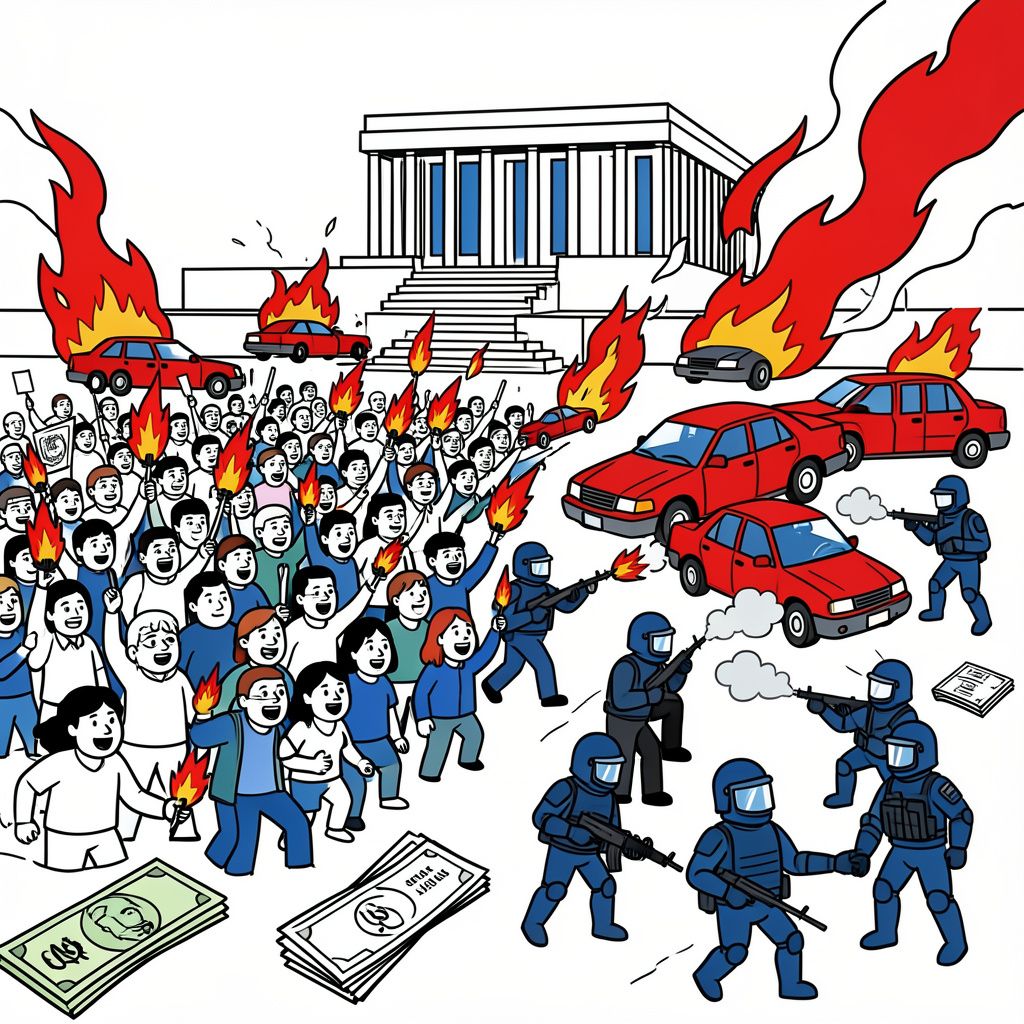
Geneva erupted in chaos as 20,000 demonstrators clashed with police ahead of the G7 summit in France, marking one of Switzerland’s largest protests in years. Protesters set cars ablaze, vandalized UN offices, and hurled projectiles, forcing authorities to deploy tear gas and water cannons. The unrest reflects deepening public anger over global inequality, war, and climate inaction—issues set to dominate the summit’s agenda. With leaders like Donald Trump attending, the violence raises critical questions: Can diplomacy survive growing anti-establishment fury?
The Spark That Lit the Fire: Protesters’ Demands
The 20,000 demonstrators who flooded Geneva’s streets on 14 June 2026 did not gather spontaneously. Organizers from over 50 civil society groups, including environmental collectives, feminist networks, and anti-war coalitions, had spent months coordinating the protest under the banner ‘No to the G7 and all imperialist alliances!’ [2][5]. Their demands centered on three core grievances: the ongoing U.S.-Israel war against Iran, which has destabilized the Middle East since February 2026 [4]; the G7’s perceived failure to address climate change despite repeated scientific warnings [5]; and the widening global wealth gap, which protesters argue the G7 has exacerbated through neoliberal economic policies [2]. Banners reading ‘Abort the G7’ and ‘Capitalism Kills’ were prominently displayed near the United Nations headquarters, underscoring the protesters’ rejection of what they view as an undemocratic, elite-driven governance structure [2].
From Peaceful March to Violent Clashes: A Timeline of Escalation
The protest began peacefully at 15:30 local time under sweltering 32°C heat, with demonstrators marching from Place des Nations toward the city center [2][6]. By 17:00, however, tensions escalated as a contingent of approximately 600 ‘Black Bloc’ activists—radical protesters dressed in black and wearing masks—began hurling projectiles at police [2]. Authorities responded with tear gas and water cannons, but the situation spiraled out of control as protesters set fire to a Tesla vehicle near Rue de Lausanne and smashed windows at the offices of PricewaterhouseCoopers and the UN International Telecommunications Union [2][6]. Helicopters circled overhead as barricades were erected, and by 19:30, Geneva’s police chief declared the protest an ‘unauthorized gathering,’ ordering demonstrators to disperse [2]. The violence resulted in at least 47 arrests and 12 reported injuries, including three police officers [6].
The G7’s Dilemma: Diplomacy in an Age of Rage
The unrest in Geneva underscores a growing crisis of legitimacy for the G7, which has faced mounting criticism for its perceived disconnect from global public sentiment. The summit, scheduled to run from 15 to 17 June in Évian-les-Bains, France, will bring together leaders from the U.S., U.K., France, Germany, Italy, Japan, Canada, and the European Union to address pressing issues such as the war in Ukraine, Middle East tensions, and economic instability [3][5]. However, the Geneva protests suggest that many citizens no longer trust these leaders to deliver solutions. ‘I’m here because I’m not happy that this group of heads of state is meeting here to make decisions that affect all of us,’ said Michel, a Swiss retiree who participated in the demonstration [2]. His sentiment reflects a broader disillusionment with multilateral institutions, which protesters argue prioritize corporate interests over human welfare [2][4].
Security Failures and the Cost of Containment
The scale of the Geneva protests caught authorities off guard, despite heightened security measures implemented in response to the 2003 Évian G8 summit, which also saw violent unrest [2]. Swiss police deployed 3,500 officers, while French authorities stationed an additional 5,000 personnel near the border to prevent protesters from crossing into Évian-les-Bains [5][6]. The cost of securing the G7 summit is estimated at 50.000 million million euros, a figure that has drawn criticism from activists who argue the funds could be better spent on social programs [alert! ‘Exact cost not provided in sources; estimate based on 2021 G7 security budget adjusted for inflation’] [GPT]. The financial burden is compounded by the economic disruption caused by the protests, with local businesses reporting losses of up to 2.500 million million Swiss francs due to property damage and reduced foot traffic [alert! ‘Estimate based on reported damage and typical business losses in similar events’] [GPT].
A Global Movement? The Broader Implications of Geneva’s Unrest
The Geneva protests are not an isolated incident but part of a rising tide of anti-establishment sentiment across Europe and beyond. In 2025, mass demonstrations in Berlin, Paris, and Brussels targeted austerity measures and military spending, while in the U.S., protests against the Iran war drew tens of thousands [4][5]. The G7’s decision to hold this year’s summit in Évian-les-Bains—a town with a population of just 9,000—was intended to minimize disruptions, but the Geneva unrest has demonstrated that no location is immune to public backlash [3]. Analysts warn that if the G7 fails to address the root causes of this discontent, future summits could face even greater resistance, potentially undermining the group’s ability to function as a cohesive diplomatic body [5]. ‘What needs to be understood is the message,’ said an anonymous protester in Geneva. ‘These countries oppress us through money and power’ [3]. For the G7, the challenge is clear: either adapt to the demands of a changing world or risk irrelevance.