U.S.-Canada Trade Talks Collapse as Both Nations Prepare Matching 50% Tariffs
Washington, Saturday, 22 August 2026.
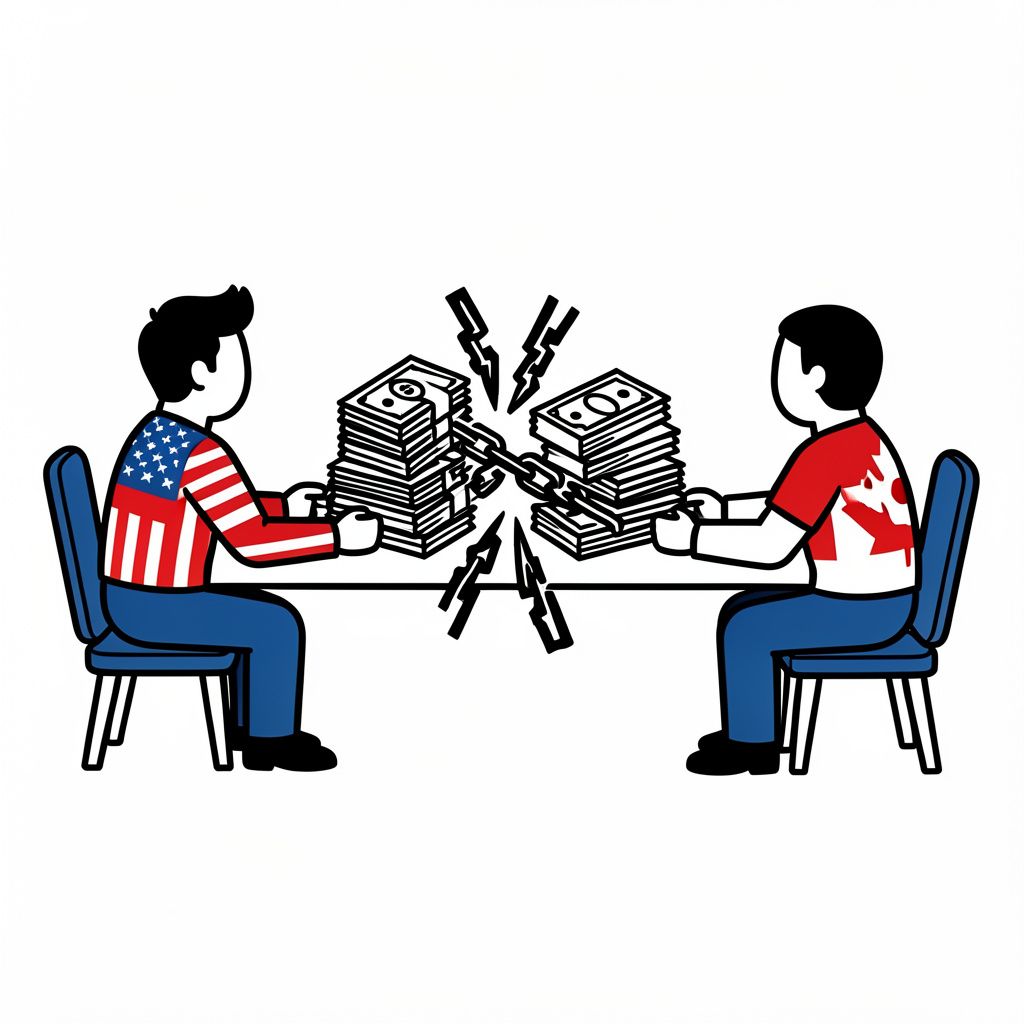
Cross-border trade negotiations collapsed after Canada rejected last-minute U.S. demands. Ottawa pledged to match Washington’s 50% tariffs dollar-for-dollar, threatening $20 billion in trade and critical North American supply chains.
Negotiations Halt Abruptly
Bilateral trade talks between the United States and Canada ended in an impasse after Canadian chief negotiator Mark Carney suspended negotiations over last-minute tariff adjustments demanded by Washington [1][2]. Today, on Saturday, 22 August 2026, the fallout continues as Ottawa vows to implement matching 50% retaliatory levies on American imports [2]. This development marks a significant escalation from the previous week, where negotiators were racing to avert taxes on $28 billion of exports under a 96-year-old, previously unused American law [2][5]. Readers following the earlier coverage on the race to prevent massive new import taxes can find the background context here [2].
The Deadline Breach
The breakdown occurred after the deadline of midnight on Friday passed without an agreement [2]. Canadian officials stated that last-minute changes in the US proposed terms were unfair and uneconomic, calling into question the reliability of any deal [2]. US Trade Representative Jamieson Greer claimed Canada declined to finalise the trade deal under terms agreed earlier in the week, citing new demands from Ottawa [2]. Prior to this collapse, Prime Minister Mark Carney had briefed provincial premiers on a deal that included a requirement for Canadian provinces to restock U.S. alcohol [3].
Economic Consequences
The US tariffs will affect about US$20 billion worth of Canadian products, representing approximately 5% of what Canada ships to the US every year [2][5]. The political impact is expected to be substantial given the countries sold each other $880 billion worth of goods and services last year [2]. Supply chains involving hockey sticks to tongue depressors face disruption as the 50% tariffs take effect [2]. Survey data from August 2026 indicates 56% of Canadians oppose significant concessions to the US, preferring a hardline approach [4].
Legal Mechanisms and Outlook
The tariffs were triggered under Section 338 of the Tariff Act of 1930, a Great Depression-era law never previously invoked [5]. President Trump utilized this authority to threaten tariffs aiming to force Canada into trade negotiations [5]. The Supreme Court struck down tariffs imposed under the International Emergency Economic Powers Act (IEEPA) in February 2026, necessitating this alternative legal route [5]. As both nations prepare matching levies, the stability of North American supply chains remains in jeopardy [1][2].