Global Intelligence Agencies Break Silos to Fight Modern Threats
Washington DC, Thursday, 18 June 2026.
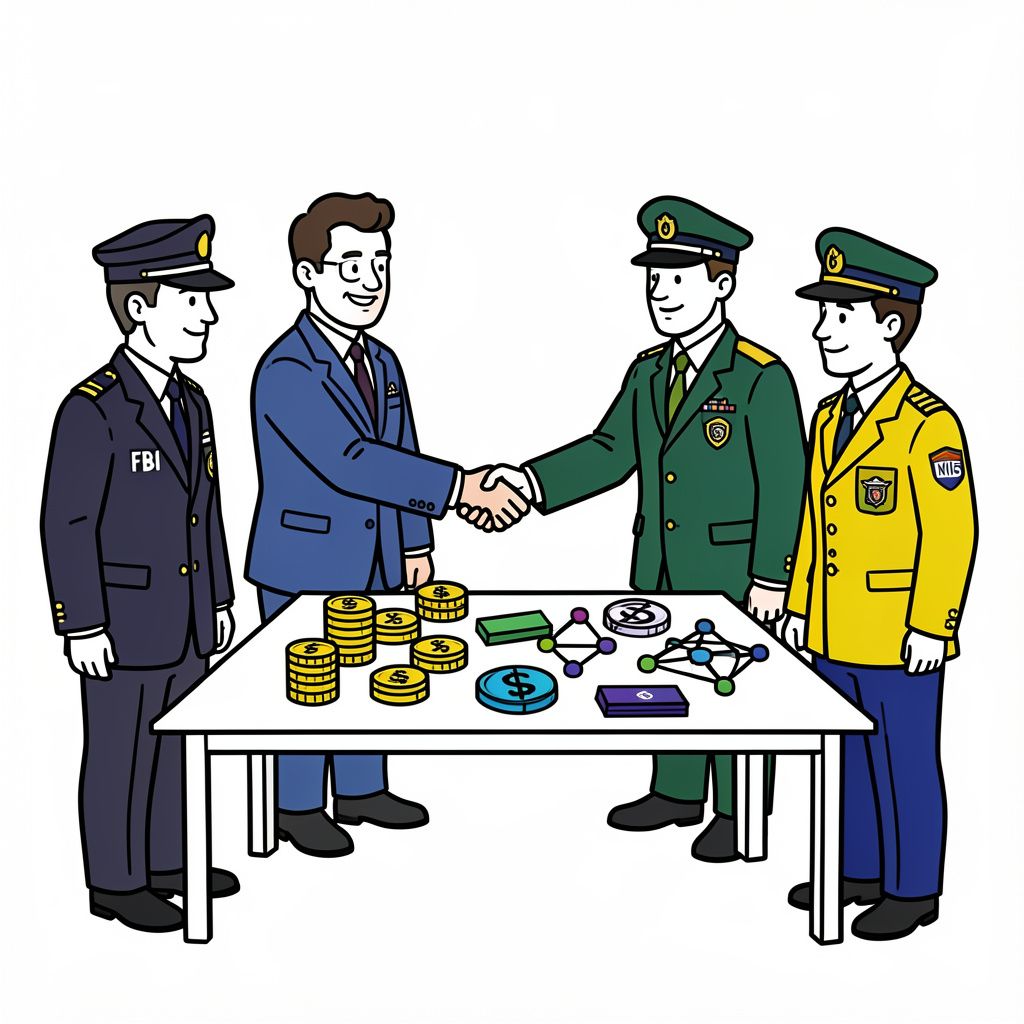
Intelligence agencies worldwide are dismantling traditional barriers, forming unprecedented cross-sector alliances to combat cyber warfare, disinformation, and hybrid conflicts. The shift comes as criminal networks exploit digital tools, cryptocurrencies, and encrypted platforms, ignoring jurisdictional boundaries. A striking fact: adversaries collaborate seamlessly—why shouldn’t defenders?
The New Threat Landscape: Criminal Networks Without Borders
By June 2026, the global threat landscape has evolved into a complex web of interconnected criminal networks that operate with alarming efficiency across jurisdictions. These networks exploit digital tools, cryptocurrencies, and encrypted communication platforms to facilitate cross-border money laundering schemes and dark market operations [1]. The Organisation for Economic Co-operation and Development’s (OECD) 2026 Anti-Corruption and Integrity Outlook report highlights how criminal actors have weaponised digital transformation, creating seamless operational ecosystems that transcend traditional law enforcement boundaries [2]. Europol’s latest assessments confirm that organised crime groups now function as flexible, multidisciplinary networks, combining expertise from multiple criminal specialties to execute sophisticated operations [1]. The most concerning development is their ability to ignore organisational and sectoral boundaries entirely, treating public and private infrastructure as equally viable targets [1].
The Collaboration Paradox: Why Defenders Struggle Where Criminals Thrive
While threat actors demonstrate seamless cross-sector collaboration, intelligence agencies face systemic challenges in matching this operational fluidity. Nadia Tuominen, Community Champion at i2 Group, articulated the fundamental asymmetry in a 15 June 2026 interview: “Threat actors do not distinguish between public and private sectors. They do not operate according to organisational charts. They do not recognise the boundaries that separate intelligence, investigations, technology operations, and executive leadership” [1]. This operational agility allows criminal networks to combine capabilities from multiple sources without institutional friction, while intelligence organisations remain constrained by legacy structures. The World Economic Forum’s Global Cybersecurity Outlook 2025 identified cybercrime-as-a-service models as a key enabler of this criminal collaboration, creating specialised ecosystems where different actors contribute discrete components to larger criminal enterprises [1].
The Cross-Disciplinary Imperative
Modern intelligence operations require unprecedented integration of multiple disciplines to effectively counter emerging threats. Analysts, investigators, technology specialists, systems architects, operational leaders, and executive decision-makers must collaborate in real-time to understand and respond to sophisticated adversarial operations [1]. The i2 Group’s Community Champion emphasised this shift in operational philosophy: “If adversarial criminal actors can collaborate with each other for their greater success, then absolutely we should be doing the same for the greater good” [1]. This collaborative model extends beyond traditional intelligence agencies, encompassing private sector entities and international partners. The approach reflects a fundamental recognition that no single organisation possesses all the necessary expertise to counter modern threats, which often combine cyber elements, financial fraud, and information warfare components [1].
Technology as Both Enabler and Challenge
Artificial intelligence and machine learning have emerged as critical tools in the intelligence community’s collaborative efforts, offering potential solutions to information overload challenges. These technologies enable pattern recognition across vast datasets and facilitate real-time information sharing between disparate organisations [1]. However, their implementation presents new challenges. Cognitive offloading to AI systems risks creating new vulnerabilities, as analysts may become overly reliant on automated decision-support tools [1]. The technology itself has become a battleground, with state actors increasingly using AI platforms as instruments of strategic influence, as demonstrated by recent platform shutdowns in Africa that served as warnings about the weaponisation of digital infrastructure [3].
The Workforce Crisis in Intelligence Operations
Intelligence organisations face a growing workforce crisis that threatens their collaborative efforts. Tuominen highlighted the stark reality: “The workload is increasing. The number of people available to do it is decreasing. And opportunities to talk about how to address these issues in impromptu scenarios have diminished” [1]. This staffing shortage occurs at a time when operational complexity is increasing exponentially. The shift to hybrid work environments has reduced informal interaction opportunities that were previously crucial for knowledge sharing and analytical quality [1]. Workforce resilience has become a critical concern, with organisations struggling to maintain operational tempo while developing the cross-disciplinary skills necessary for modern intelligence operations. The skills shortage extends beyond technical capabilities, encompassing the ability to work effectively in collaborative, cross-sector environments [1].