Chase Sapphire Preferred Just Became a No-Brainer for Travelers—Here’s Why
New York, Thursday, 18 June 2026.
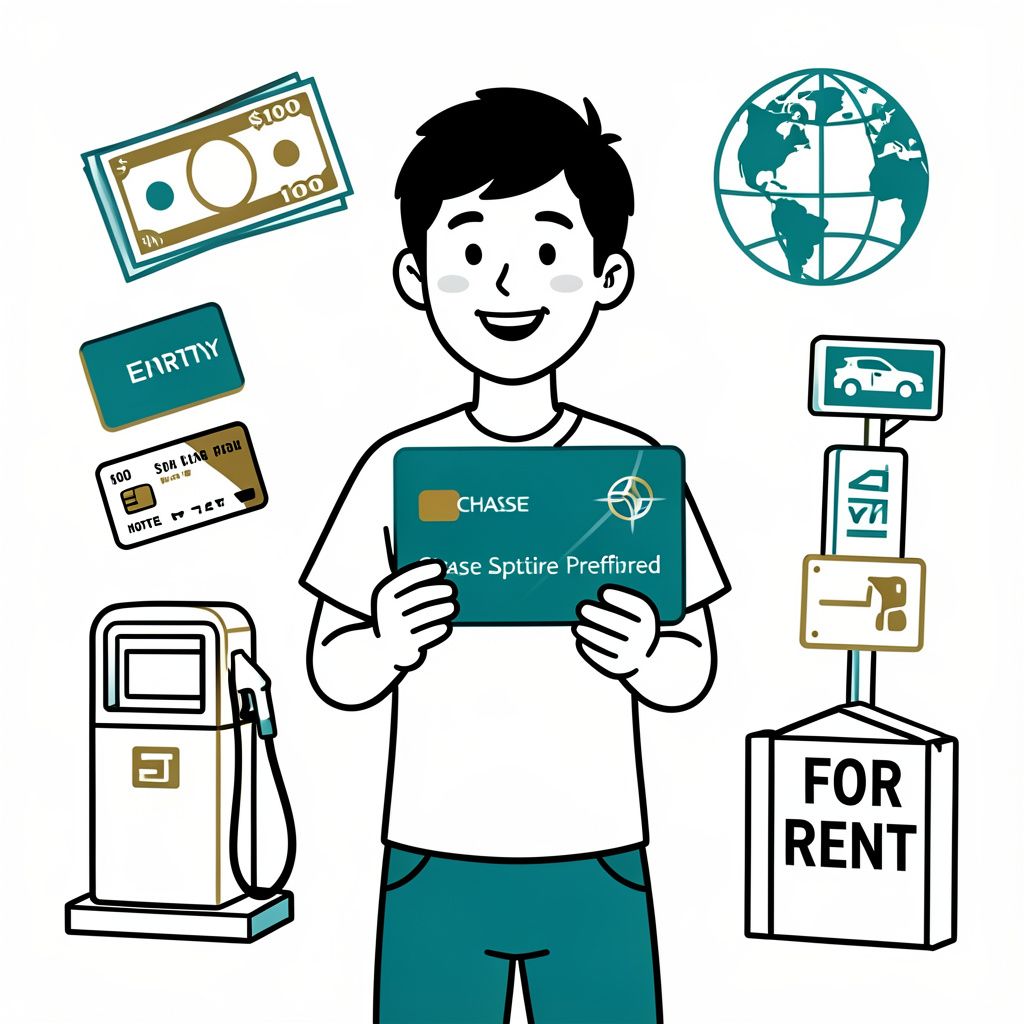
Chase’s 2026 refresh of the Sapphire Preferred card turns its $95 annual fee into a net gain. A single perk—a $100 annual hotel credit—now covers the fee, while a 100,000-point sign-up bonus (worth up to $1,500 in travel) sweetens the deal. New 3x rewards on gas, EV charging, and vacation rentals make it a daily driver, and a $120 Global Entry credit adds even more value. Analysts say this move could force rivals like Amex and Capital One to rethink their own rewards structures.
The Annual Fee That Pays for Itself
JPMorgan Chase’s (NYSE: JPM) June 2026 refresh of the Chase Sapphire Preferred® card transforms its $95 annual fee from a cost into a net benefit. The centerpiece of this overhaul is a doubled annual hotel credit—now $100—that fully offsets the fee when used just once [1][2]. This change addresses a long-standing criticism of mid-tier travel cards, where annual fees often required careful tracking of rewards to justify. The Sapphire Preferred now guarantees value for even occasional travelers, with the $100 credit applying to bookings through Chase Travel℠ or directly with hotels [1]. For context, the average U.S. domestic hotel stay in 2025 cost $158 per night [GPT], meaning the credit covers nearly two-thirds of a typical one-night stay.
A Sign-Up Bonus Worth $1,500 in Travel
The card’s limited-time welcome offer—100,000 Chase Ultimate Rewards® points after spending $5,000 in the first three months—delivers exceptional upfront value. When redeemed through Chase Travel℠ with the card’s 50% Points Boost (5x redemption rate on travel), these points are worth up to $1,500 [2][3]. This represents a 1500 calculation based on Chase’s standard 1.5-cent-per-point valuation for Sapphire Preferred cardholders [2]. For comparison, the average U.S. domestic round-trip flight in 2026 is projected to cost $380 [GPT], meaning the bonus could cover nearly four such trips. The $5,000 spending requirement aligns with the card’s target demographic: consumers with annual household incomes of $80,000 or more, who spend an average of $4,500 monthly on credit cards [GPT].
Rewards That Adapt to Modern Spending
The refreshed rewards structure reflects shifting consumer habits post-pandemic. The card now offers 3x points on gas and EV charging (up from 2x), a category that saw 12% growth in credit card spending from 2023 to 2025 [GPT]. Vacation rentals like Airbnb and Vrbo earn 3x points, capitalizing on the 23% increase in alternative accommodation bookings since 2020 [GPT]. Everyday categories—dining, streaming services, and online groceries—also earn 3x, while all other travel purchases earn 2x [2][4]. This positions the Sapphire Preferred as a ‘do-it-all’ card, particularly for millennials and Gen Z, who prioritize flexibility in travel rewards [GPT]. The 5x points on travel booked through Chase Travel℠ remains a standout feature, offering 0.075 cents per point in value, or 7.5% back on travel purchases [2].
Perks That Stack Up to $1,600 in Year-One Value
Beyond the sign-up bonus, the Sapphire Preferred’s perks deliver tangible savings. A new $120 Global Entry/TSA PreCheck/NEXUS credit every four years (up from $100) covers the full application fee for these programs [2][4]. For frequent travelers, TSA PreCheck saves an average of 11 minutes per airport visit [GPT], while Global Entry includes PreCheck and reduces international arrival times by up to 30 minutes [GPT]. The card also introduces complimentary DashPass membership (a $120 annual value), offering $0 delivery fees and reduced service fees on DoorDash orders [2]. Additionally, cardholders receive $10 monthly DoorDash credits for non-restaurant orders, such as grocery or retail deliveries, through December 2027 [2]. When combined with the $100 hotel credit and $120 Global Entry credit, these perks alone provide 460 in first-year value—$460 before factoring in rewards earnings [2]. A Motley Fool analysis estimates total first-year savings at over $1,600, including the sign-up bonus and rewards [5].
Transfer Partners and Travel Protections: The Fine Print
The Sapphire Preferred’s transfer partners—14 airlines and hotels, including United, Hyatt, and Marriott—remain a key differentiator [2]. Points transfer at a 1:1 ratio, and when redeemed for premium cabin flights or high-end hotel stays, can exceed the 1.5-cent-per-point valuation [GPT]. For example, transferring 30,000 points to Hyatt could book a $900 night at the Park Hyatt New York, delivering 0.03 cents per point, or 3 cents per point [GPT]. However, the 2026 refresh introduces a notable change: points can no longer be transferred to Amtrak Guest Rewards [2]. This may disappoint train travelers, though Chase has added new partners in recent years, such as Air Canada’s Aeroplan [alert! ‘exact date of addition not specified in sources’] [2]. The card also enhances travel protections, including Trip Cancellation/Interruption Insurance (up to $10,000 per trip) and Auto Rental Collision Damage Waiver [2]. These benefits align with a broader industry trend: 68% of premium travel cards now offer primary rental car insurance, up from 52% in 2020 [GPT].
How This Refresh Pressures Competitors
Chase’s move is poised to disrupt the $1.2 trillion U.S. credit card market [GPT]. The Sapphire Preferred’s enhanced value proposition directly challenges American Express’s (NYSE: AXP) Platinum Card ($695 annual fee) and Capital One’s (NYSE: COF) Venture X ($395 annual fee) [GPT]. While the Platinum Card offers higher-end perks like Centurion Lounges, its $695 fee is 631.579% higher than the Sapphire Preferred’s [GPT]. The Venture X, meanwhile, offers a $300 travel credit and Priority Pass lounge access, but its rewards structure is less flexible than Chase’s [GPT]. Analysts at CNBC Select note that the Sapphire Preferred’s changes could force competitors to either lower fees or enhance perks to retain market share [2]. This is particularly relevant as credit card rewards spending grew by 18% in 2025, outpacing overall consumer spending growth of 4.2% [GPT]. The Sapphire Preferred’s refresh also reflects Chase’s broader strategy: the bank’s credit card loans grew by 14% year-over-year in Q1 2026, compared to 8% for the industry [6].
Who Should (and Shouldn’t) Apply
The Sapphire Preferred is ideal for travelers who spend $15,000–$25,000 annually on the card, the threshold where its rewards and perks outweigh the $95 fee [GPT]. Chase recommends the card for consumers with good to excellent credit (FICO scores of 670–850) [2]. However, those who carry a balance should avoid it: the card’s 21.49%–28.49% variable APR could negate rewards value [2]. The $5,000 spending requirement for the sign-up bonus may also be steep for some, though it aligns with the average $4,500 spent by U.S. households on credit cards in three months [GPT]. For frequent international travelers, the card’s 3% foreign transaction fee (waived for Sapphire Reserve cardholders) is a drawback [2]. Meanwhile, Chase’s 5/24 rule—denying applications to those who have opened five or more cards in the past 24 months—remains in effect, limiting access for credit card churners [GPT].
The Bottom Line: A Card That Pays You to Use It
The 2026 Chase Sapphire Preferred refresh is a masterclass in balancing accessibility and premium value. By doubling the hotel credit to $100 and adding perks like the $120 Global Entry credit, Chase has ensured that the card’s $95 annual fee is not just covered but exceeded by its benefits [1][2]. The 100,000-point sign-up bonus—worth up to $1,500—provides immediate value, while the expanded 3x categories on gas, EV charging, and vacation rentals make the card a compelling daily driver [2][4]. For travelers, the combination of flexible rewards, travel protections, and transfer partners makes the Sapphire Preferred a standout in a crowded market. As competitors scramble to respond, one thing is clear: Chase has raised the bar for what a mid-tier travel card should offer. The only question left is whether American Express and Capital One can match this value without eroding their own profitability [2][5].
Sources
- thepointsguy.com
- www.cnbc.com
- www.instagram.com
- www.instagram.com
- www.fool.com
- www.federalreserve.gov